


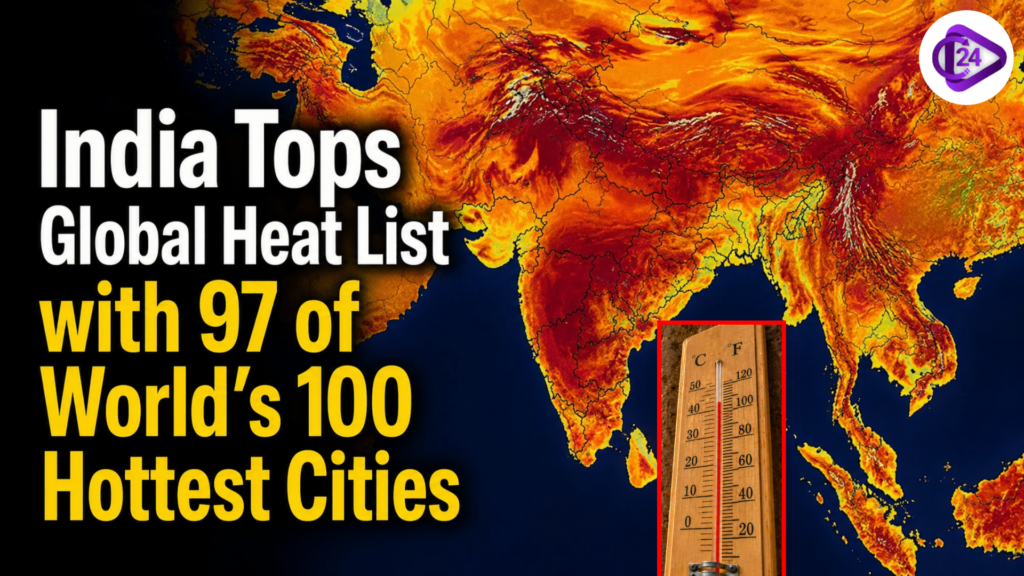
One of the hottest heatwaves in recent years for the Indian nation, with 97 of the top 100 warmest cities in the world being situated in India on 22 May 2026. The analysis of global temperature and weather monitoring showed a few localities of Uttar Pradesh, Bihar, Rajasthan, Odisha, Madhya Pradesh and Maharashtra being hotter than 45 C, while numerous rural cities in northern and central parts of India were under a state of heat wave. The India Meteorological Department (IMD) had cautioned people against lengthy exposure to extreme heat across India via issuing warnings and advisories. With higher temperatures, there have been concerns about public health, dehydration, power demand, and climate-related risks throughout the country.
Key Points of 97 of the World’s 100 Hottest Cities Are in India
- On 22 May 2026, India had 100 out of the world’s 100 hottest cities, including 97 cities.
- This extreme heat wave struck northern, central and eastern India.
- The temperature in Balangir, Odisha, was almost 48℃ and among the hottest cities in the world.
- The air temperature was recorded at 47-48°C in two other districts, namely Sasaram, Bihar and Varanasi, Uttar Pradesh.
- The affected states were very seriously affected in terms of the number of people affected, such as Rajasthan, Uttar Pradesh, Bihar, Madhya Pradesh, Odisha and Maharashtra.
- Sri Ganganagar (Rajasthan) and Bharatpur in Rajasthan touched the level of 44–45°C.
- The India Meteorological Department (IMD) released severe alerts for heatwaves for multiple areas.
- Heat waves occur when the temperature is a lot higher than normal for the season.
- With continued hot weather, dehydration, heatstroke, and heat exhaustion were risks.
- Hundreds of suspected heat stroke (HS) patients were reported in Andhra Pradesh during the season.
- Hospitals in affected states and regions observed higher rates of HRI.
- High temperatures and low humidity exacerbated heat stress.
- Excessive exposure caused roads, railings, and public facilities to become very hot.
- Weather monitoring organisations indicated that India had the highest temperatures in the world, day after day.
- Meanwhile, there was a previous report that made headlines back in the world for all the top 50 hottest cities in the world being in India on the same day.
- Climate change and rising global temperatures are associated with increased heatwaves, according to experts in climate.
- The IMD added that it is urging people to remain hydrated and avoid doing outdoor activities during the hottest part of the day.
- States stepped up emergency preparations and messages to minimise the effects of heatwaves on lives.
- Cooling needs added to the load on the power grid.
- In the future, frequent extreme heat events could impact future health, water supply and agriculture, experts warned.
PYQs on Heatwaves and Climate Change
| Exam Name | Year | Question | Options | Correct Answer |
| UPSC Prelims | 2023 | Heatwaves in India are primarily associated with: | A. Western Disturbances B. High atmospheric pressure and dry winds C. Cyclonic rainfall D. Ocean currents | B. High atmospheric pressure and dry winds |
| SSC CGL | 2022 | Which organization issues heatwave warnings in India? | A. ISRO B. IMD C. DRDO D. NITI Aayog | B. IMD |
| RRB NTPC | 2021 | Heatstroke is mainly caused due to: | A. Excessive cold B. Extreme heat exposure C. Water pollution D. Lack of sunlight | B. Extreme heat exposure |
| State PCS | 2020 | Which gas is mainly responsible for global warming? | A. Oxygen B. Nitrogen C. Carbon Dioxide D. Helium | C. Carbon Dioxide |
| SSC CHSL | 2019 | A heatwave is generally declared when temperatures remain abnormally: | A. Low B. Moderate C. High D. Humid | C. High |
Supreme Court Allows Sedition Trials
Conclusion
The heatwave of 2026 has been particularly remarkable because it is a reminder of how much impact climate change and increasingly hotter temperatures have had on India. Some 97 out of the 100 hottest urban areas in the world were in the country, and millions were exposed to highly unsafe heat. The extreme weather jeopardised daily life, potential water shortages and electricity demands, and posed an additional health risk. The India Meteorological Department has once again made heat-related health precautions and made them well-known. Long-term solutions to mitigate the impact of climate-related extreme events like heatwaves on vulnerable populations, such as through assessments of climate vulnerabilities, long-term infrastructure investments, sustainable urban planning, water conservation, and public awareness, are needed.