Day: May 22, 2026
Statehood Demand

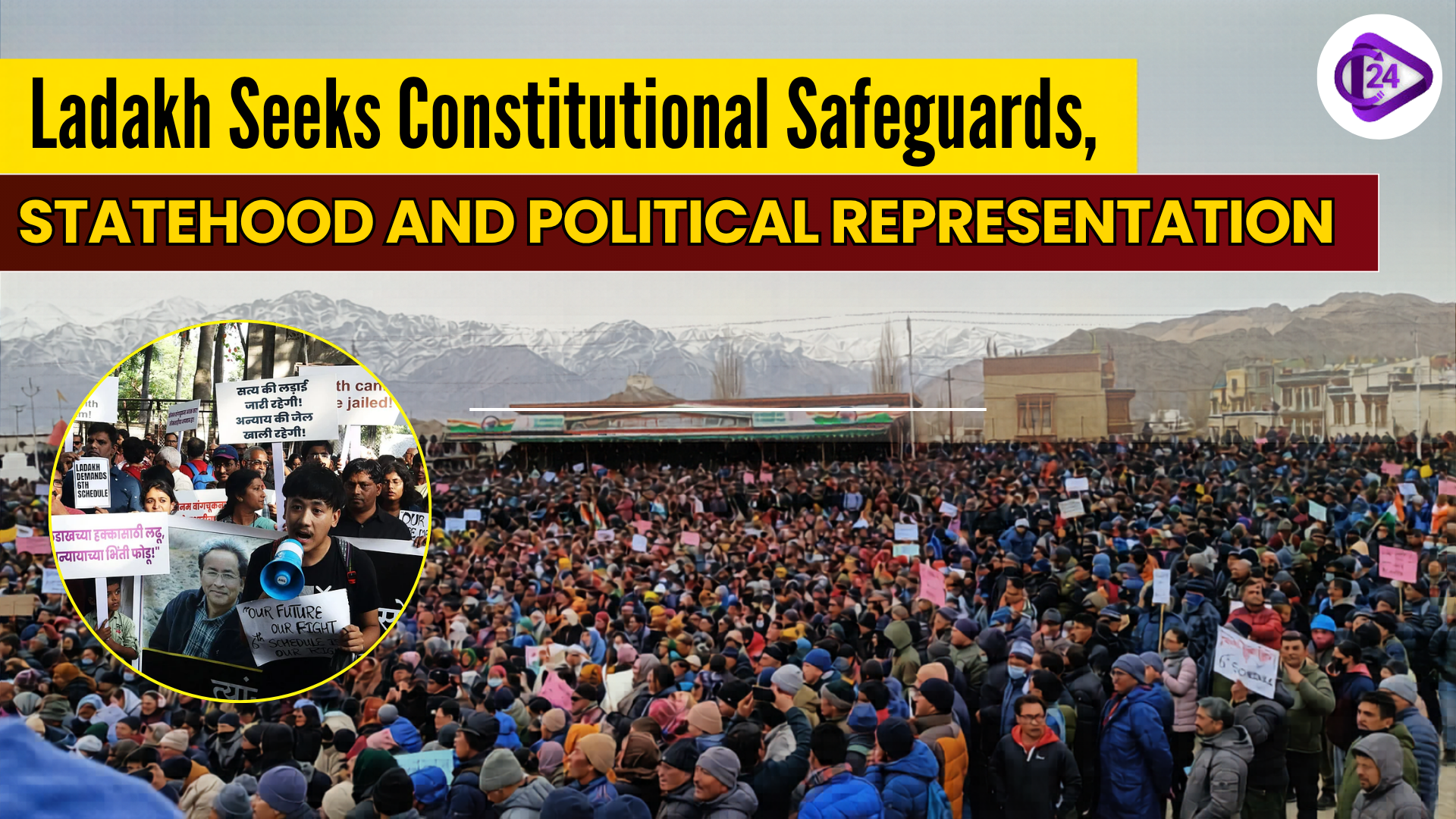
Ladakh Seeks Constitutional Safeguards, Statehood and Political Representation

The UT of Ladakh has pitched its cause for giving constitutional protections, restoring statehood, and increasing political representation. Civil society groups representing the Leh Apex Body (LAB) and Kargil Democratic Alliance (KDA) have been seeking protection of land, job, culture and identity for Ladakh, which they want to be accorded Sixth Schedule status by the Central Government. These demands started to grow after Article 370 was scrapped in 2019 and Ladakh was made a Union Territory of the country. Protestors have been holding marches and hunger strikes for democratic rights and, above all, parliamentary representation and a guarantee under the Constitution for the protection of the fragile Himalayan region, led by climate activist Sonam Wangchuk.

Why Ladakh Is Seeking Statehood, Political Representation 

  • Ladakh civil society groups are demanding constitutional safeguards under the Sixth Schedule of the Constitution.
  • The Leh Apex Body (LAB) and Kargil Democratic Alliance (KDA) are leading the movement in Ladakh.
  • Ladakh became a Union Territory in August 2019 after the bifurcation of the former state of Jammu and Kashmir.
  • Protesters are demanding statehood for Ladakh to ensure democratic governance and local autonomy.
  • The Sixth Schedule provides safeguards for tribal areas through autonomous district councils.
  • Ladakh’s population is largely tribal, and locals seek protection of land, employment, and cultural identity.
  • Sonam Wangchuk has led awareness campaigns and hunger strikes over the issue.
  • Protesters have also demanded separate Lok Sabha seats and representation in the Rajya Sabha.
  • The Ministry of Home Affairs held discussions with Ladakh representatives regarding their demands.
  • The region is strategically important because of its borders with China and Pakistan.
  • Protest groups argue that constitutional safeguards are necessary to preserve Ladakh’s ecological balance and indigenous traditions.
  • The demands have become a major political and constitutional issue in the Himalayan region.

Important PYQs on Ladakh

Exam Name Year Question Options Answer
UPSC Prelims 2020 The Sixth Schedule of the Constitution deals with? A. Emergency Provisions B. Tribal Areas Administration C. Fundamental Duties D. Citizenship B. Tribal Areas Administration
SSC CGL 2022 Ladakh became a Union Territory in which year? A. 2014 B. 2016 C. 2019 D. 2021 C. 2019
CDS Exam 2021 Which ministry handles Union Territory administration in India? A. Ministry of Defence B. Ministry of Home Affairs C. Ministry of Tribal Affairs D. Ministry of Law B. Ministry of Home Affairs
State PCS 2023 The Sixth Schedule currently applies mainly to tribal areas of? A. Northern India B. Southern India C. Northeastern India D. Western India C. Northeastern India
NDA Exam 2021 Which Article of the Constitution deals with the formation of new states and alteration of areas? A. Article 1 B. Article 2 C. Article 3 D. Article 5 C. Article 3

Taiwan Travelogue Wins International Booker Prize

Conclusion on Ladakh Statehood and Sixth Schedule Demand

As rising activism for statehood, constitutional protection and regional development in Ladakh continues, this can be interpreted as expressing concerns about identity and governance issues. Tribal groups in the region feel that the Sixth Schedule protection will help safeguard their environment, culture and land rights. The movement has also raised questions surrounding representation in democracy, following Ladakh’s status as a Union Territory in 2019. Ladakh’s civil society still persists in pushing for more autonomy and constitutional status through peaceful protest and negotiations. It is still relevant in the context of India’s federal architecture, border security, tribal rights, and inclusive governance at strategic locations across the country.

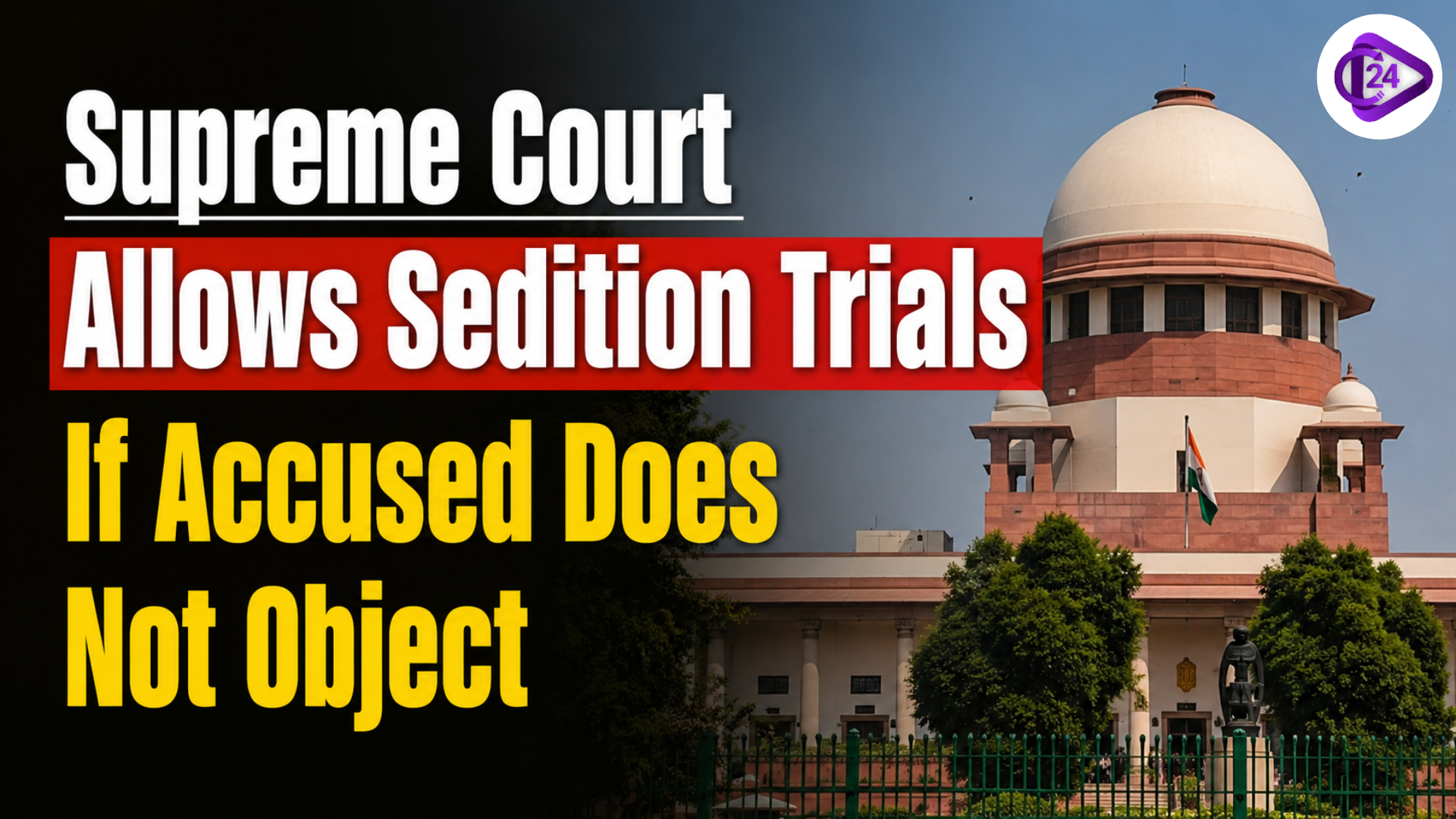
Supreme Court Allows Sedition Trials

Supreme Court Allows Sedition Trials If Accused Does Not Object

The Supreme Court has ruled that if an accused does not seek a review, he can continue to be charged and can also appeal in courts with regard to sedition charges under the British-era Indian Penal Code (IPC) Section 124A. This clarification was given in response to an accused person who has been arrested for almost 17 years and whose appeal was pending before the Madhya Pradesh High Court. The Supreme Court had in 2022 struck down the sedition law’s constitutionality and suspended the trial of the Sedition lawsuit. This clarification seeks to avoid any further sustenance given to the delay in justice and uphold the “right” to speedy trial under Article 21 of the Constitution.

Key Highlights of the Supreme Court on Sedition Cases

  • The Supreme Court said sedition trials and appeals will be allowed without any objections raised by the accused.
  • The clarification is about the definition of sedition under Section 124A of the IPC.
  • In May 2022, the Supreme Court had instructed that all pending sedition trials and cases should be pulled and impeded.
  • It is a clarification by a Bench of Chief Justice Surya Kant, Justices Joymalya Bagchi and Vipul M. Pancholi.
  • The decision came after a hearing by a Petitioner who had been in jail for 17 years.
  • The petitioner had an appeal with the Madhya Pradesh High Court.
  • The Court made it a point to highlight that the constitutional right to a speedy trial under Article 21 has to be respected.
  • Section 124A of the IPC has been a matter of discussion and controversy as to its threat to freedom of speech and misuse of the term sedition.
  • The Supreme Court is also taking up a petition challenging Section 152 of Bharatiya Nyaya Sanhita (BNS), which critics refer to the old sedition law.
  • The Court explained that the previous stay order should not prevent the accused persons from being provided with relief on disposal of the pending Appeals.
  • This judgment could ease the pendency of old cases of sedition in criminal courts in India.
  • The judgment will emphasise the importance of striking a balance between national security interests and individual constitutional rights.

Important PYQs for Exams

Exam Name Year Question Options Answer
UPSC Prelims 2021 Article 21 of the Indian Constitution is related to? A. Freedom of Religion B. Right to Equality C. Right to Life and Personal Liberty D. Constitutional Remedies C. Right to Life and Personal Liberty
SSC CGL 2022 Sedition under the old IPC was defined under which section? A. Section 302 B. Section 124A C. Section 420 D. Section 498A B. Section 124A
CDS Exam 2020 Which court in India has the power of judicial review? A. District Court B. High Court Only C. Supreme Court and High Courts D. Parliament C. Supreme Court and High Courts
State PCS 2023 The right to speedy trial is considered part of which Article? A. Article 14 B. Article 19 C. Article 21 D. Article 32 C. Article 21
NDA Exam 2021 Which fundamental right is most closely associated with freedom of speech and expression? A. Article 14 B. Article 19(1)(a) C. Article 21 D. Article 25 B. Article 19(1)(a)

India, Italy Upgrade Ties with Special Strategic Partnership

Conclusion: Supreme Court Balances Speedy Justice and Legal Safeguards

The Supreme Court’s clarification in a sedition trial comes with a motive to maintain balance between the constitutional freedoms and efficiency in the courtrooms. The Court allowed the courts to start acting on the cases even when the accused is not opposed to that, thus preventing the cases from being perpetually left hanging. It also gives a boost to the concept of ‘swift justice’ as enshrined in Article 21 of the Constitution of India. Meanwhile, the constitutionality of the sedition provisions is still being challenged. The move is crucial for the Indian criminal justice system, where, one way or the other, it was finding it difficult to curb unnecessary stays in custody while trying to keep the legal proceedings intact in sensitive national security-related cases.

Ebola Virus

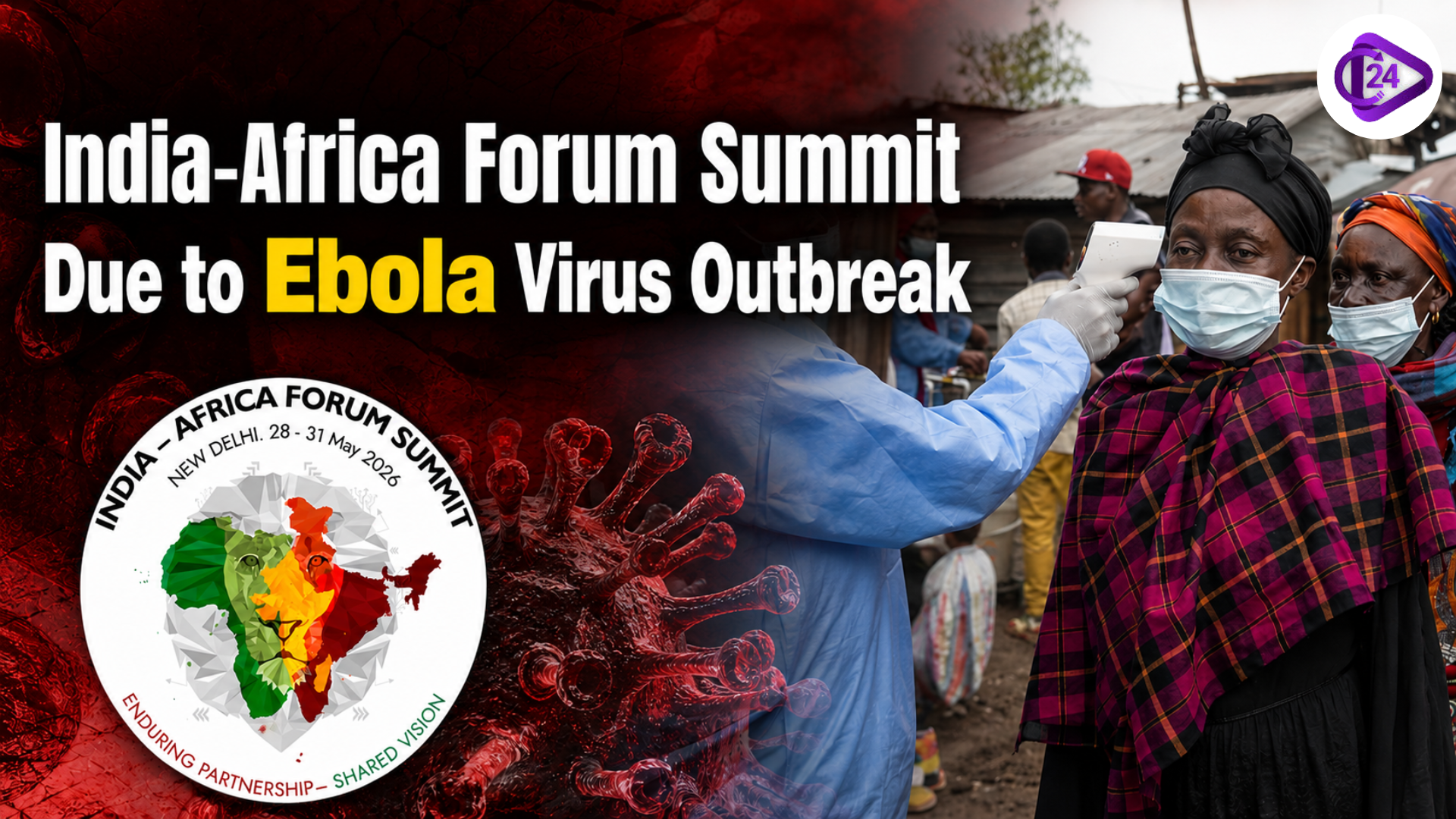
India-Africa Forum Summit Postponed Due to Ebola Virus Outbreak

The Fourth India-Africa Forum Summit (IAFS-IV), to be held in New Delhi from 28-31 May 2026, has been postponed as the Ebola virus outbreak continues to evolve in parts of Africa. This was taken following a discussion between the Government of India, the African Union Commission and health authorities. Largely confined to the Democratic Republic of Congo (DRC) and Uganda, the outbreak raised alarm around the world with the declaration of a Public Health Emergency of International Concern (PHEIC) by the World Health Organisation (WHO). The summit was supposed to be a catalyst for enhanced cooperation between India and Africa in the fields of trade and connectivity, defence, technology and healthcare.

Reasons: India-Africa Forum Summit Postponed Amid Ebola Health Emergency

  • The Fourth India-Africa Forum Summit (IAFS-IV) was held in New Delhi, May 28-31, 2026.
  • The summit between India and the African Union was postponed due to the Ebola outbreak in Africa.
  • The decision is based on the “emerging public health situation”, the Ministry of External Affairs (MEA) said, indicating that it had acted on the “advice” of the Government of India’s advisory committee on vaccinations, immunisation and related public health issues.
  • The Ebola outbreak in the Democratic Republic of the Congo (DRC) and Uganda was declared a Public Health Emergency of International Concern by the WHO.
  • Ebola now has no vaccine available to protect people living in infected areas, and the Bundibugyo strain is proliferating in those areas.
  • The summit focused on strengthening cooperation in various areas, such as trade, defence, health, education and digital technology, between India and Africa.
  • The theme of the summit, its logo and website were earlier launched by the External Affairs Ministry’s covered message-bearer S. Jaishankar in April 2026.
  • The theme for the summit was “IA SPIRIT: India Africa Strategic Partnership for Innovation, Resilience, and Inclusive Transformation.”
  • The India-Africa Forum Summit was an important diplomatic forum launched in 2008 to enhance the relations between India and the African countries.
  • In 2015, over 50 African countries attended a nationwide New Delhi event as India hosted the last India-Africa Forum Summit.
  • Concerns about Ebola also impacted earlier versions of the summit in 2014-15.
  • On the international front, India has taken the potential step to put off the event due to its cautiousness on international public health and the diplomatic agenda.

Important Previous Year Questions

Exam Name Year Question Options Answer
UPSC Prelims 2020 Ebola virus disease mainly spreads through? A. Airborne particles B. Mosquito bites C. Contact with infected bodily fluids D. Contaminated water C. Contact with infected bodily fluids
SSC CGL 2021 Which organization declares a Public Health Emergency of International Concern (PHEIC)? A. UNESCO B. WHO C. UNICEF D. WTO B. WHO
CDS Exam 2019 The India-Africa Forum Summit is related to cooperation between India and? A. ASEAN Nations B. European Union C. African Nations D. SAARC Countries C. African Nations
State PCS 2022 Ebola virus outbreak was recently reported in which African region? A. South Africa B. Egypt C. Congo-Uganda region D. Morocco C. Congo-Uganda region
NDA Exam 2023 The Ministry responsible for organizing India-Africa Forum Summit is? A. Ministry of Commerce B. Ministry of Defence C. Ministry of External Affairs D. Ministry of Health C. Ministry of External Affairs

Sweden Joins India’s Shukrayaan Venus Mission

Conclusion: India-Africa Relations Remain Strong Despite Summit Delay

The Ebola outbreak, postponing the India-Africa Forum Summit, is a clear reminder of the importance of global health security in international diplomacy. Indian and African countries still have a robust strategic and development partnership, though there are temporary interruptions. The move comes after a principled and cautionary move to protect delegates and public health. The Indian Government has always been supporting African countries in terms of capacity building, healthcare, digital connectivity, and trade cooperation. In the improved health scenario, India is seeking to resume and expand bilateral cooperation in various areas like technology, defence, education, etc. and economic development at the summit is likely.

Frequently Asked Questions (FAQs)

The current affairs cover recent national and international events related to UPSC, SSC, Banking, Railways, and State PCS.

You need to read about the current affairs daily, and revise them every week and every month to keep them longer in your memory.

Yes, Class24 provides free downloadable Daily Current Affairs PDFs for easy revision.

Yes, you can practice MCQs and quizzes to boost your exam preparation.

Absolutely. The content is written in simple, easy-to-understand bilingual language suitable for beginners.

Go to class24.com and click on the current affairs section directly, where you find everything that you need.

ssc-toppers

Start Learning Today with Class24

Related current affairs

Class24 offers free video lectures for smart preparation, covering CGL, CPO, CHSL, MTS, and GD exams. Learn from expert faculty, revise concepts easily, practice with PYQs, and improve speed and accuracy through high-quality, exam-focused video lessons anytime, anywhere.

Get success in your hand. Start study anytime anywhere.

The journey becomes simple and enjoyable when you start taking interest in it. And through our app “Class24”, we will be your trusted partners in developing that interest.

Daily Quizzes
Mock Tests
Ongoing

No ongoing tests right now.