


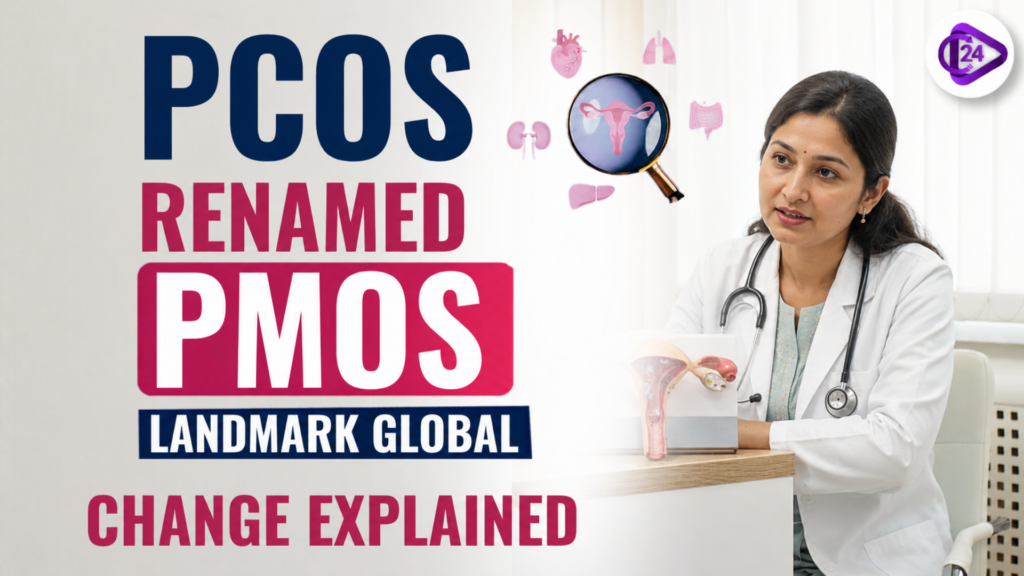
A global consensus in The Lancet has officially renamed one of the most prevalent hormonal disorders in women, the Polycystic Ovary Syndrome (PCOS) to the Polyendocrine Metabolic Ovarian Syndrome (PMOS). It is a change for more than 14 years of international research and over a decade of patient feedback and collaboration amongst medical experts from around the world. Many people were misled by the previous title “PCOS” as they did not necessarily have to have an ovarian cyst and the condition had a wide impact on metabolism, hormones, mental health, skin quality and cardiovascular health too. The new name is intended to enhance the diagnosis, awareness and treatment of millions of women around the world.
Why Was PCOS Renamed PMOS?
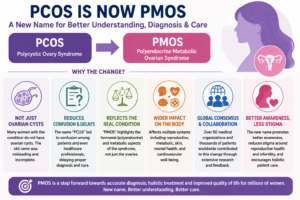
- The prior designation, “PCOS”, only included points to the ovary and ovary cysts, but many patients don’t have any cysts.
- Doctors, medical professionals and patients were confused with the old name, delaying the diagnosis and treatment, said medical experts.
- PMOS is the term “Polyendocrine Metabolic Ovarian Syndrome,” which reflects the hormonal and metabolic nature of the condition.
- It can impact on various body functions and systems such as reproductive, metabolic, dermatological and psychological.
- The new name acknowledges insulin resistance, disrupted hormone levels and metabolic dysfunction associated with wthe disease, researchers said.
- More than 50 medical organizations and thousands of patients participated in the global consensus process.
- It led by Helena Teede, professor of medicine, and was backed by international bodies in the field of endocrinology and women’s health.
- The new buzzwords are thought to decrease the stigma linked to reproductive well-being and infertility.
- Research was limited and the old terms were not well known to the public; they were revealed in studies.
- PMOS should enhance awareness and promote comprehensive care practices among healthcare providers.
- The new terminology will slowly be accepted by international medical guidelines and disease classification systems by 2028.
- It affects over 170 million women worldwide, and is currently underdiagnosed in many countries.
- The name change is meant to facilitate earlier intervention in patients who have diabetes, heart disease, obesity and mental health issues.
- The online patient blogs were generally pleased with the choice as the prior name excluded lots of symptoms other than those of women’s ovaries.
- However, some advocacy groups noted that it is mere name-calling that will not resolve problems with accessing treatment or healthcare access.
Reasons the New PMOS Name Matters Globally
PCOS to PMOS is being represented as a significant shift in understanding PCOS for women’s healthcare, which entails a shift in medical and social prospection of the disorder. The older term was a poorly-defined condition of the ovary mainly; the newer term, PMOS, treats the disorder as a complex endocrine and metabolic disease of the whole body, experts say. This may result in earlier diagnosis, better multidisciplinary treatment and an increase of research funds. Numerous women have reported a lack of understanding for years, with many of the signs such as insulin resistance, weight gain, anxiety, acne, and cardiovascular signs coming as a shock. The new labels should help to eliminate the stigma associated with biopolymers, and motivate all health-care delivery systems around the world to broaden their scope and patient-centered view of treatment and awareness.
Centre Notifies 1% Construction Welfare Cess
Conclusion on PCOS Now is PMOS
This renaming of PCOS to PMOS represents a watershed moment in the course of women’s health research and awareness the world over. That the condition is considered as a disorder of the multiple hormones and metabolisms rather than a mere problem of the ovary may be a better diagnosis, better treatment, better patients’ outcomes all over the world. The decision is based on years of scientific investigation and activism to dispel misconceptions about the disease. Although there are issues of access and treatment, the new term in PMOS is likely to help to provide greater understanding at the doctor, policy and public levels. This shift is a significant one for millions of women who live with the disorder, towards place and people that offer more accurate care and recognition.