
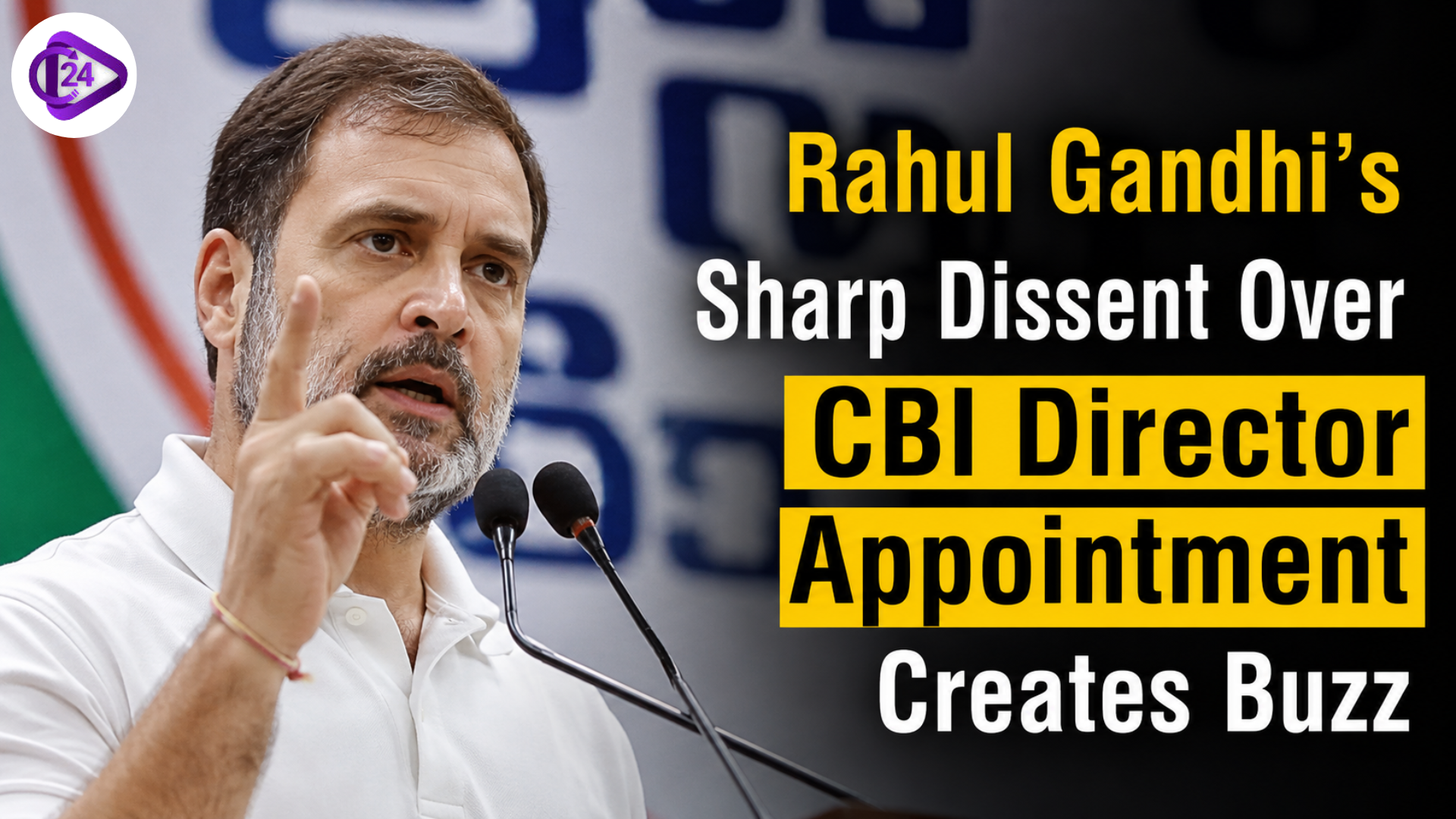
Rahul Gandhi’s Sharp Dissent Over CBI Director Appointment Creates Buzz
Congress leader Rahul Gandhi made headlines following his strong dissent during the selection of the new Director of the Central Bureau of Investigation (CBI), by creating political buzz. Congress leader Rahul Gandhi is in the high-profile committee, which includes the Prime Minister and the Chief Justice of India’s nominee, that selects the CBI Director, as Leader of Opposition in Lok Sabha. Gandhian attempts at suggestions of transparency and the selection of candidates sparked intense political wrangling between government and opposition. The issue has once again raised the question of the autonomy of investigation bodies, and the importance of political consensus in appointing India’s top agency and police officials.
Rahul Gandhi’s Dissent Over the CBI Director Appointment
- The Government’s choice apparently was opposed by Rahul Gandhi during the meeting to appoint the CBI Director.
- The appointment committee consists of the Prime Minister, Leader of Opposition and the nominee of the Chief Justice of India.
- Gandhi questioned that the appointment procedure was not transparent, and was unfair.
- The opposition demanded that an independent investigation be conducted and politically neutral agencies maintain their impartiality.
- The feud generated a lot of parliamentary and media debates.
- CBI serves as the top investigative body in India for dealing with corruption and major criminal cases.
- According to experts, dissents are rare in such appointments and are great political statements.
- The government confirmed the procedure of the appointments saying it was regular and institutional.
- Opposition parties alleged that the decision was made to address doubts about the independence of the institutions.
- The incident brought to light the controversy of alleged misuse of central agencies in politics.
- The differences of opinion among the hearing panels are a common phenomenon of democracy, said several constitutional experts.
- Political analysts think the objections might help opposition tales leading up to planned elections in the future.
- The controversy also created buzz around the issue of appointment of senior investigative officers in India.
- The opinions of the media were directed towards the need for reform in the procedures of the appointment of investigative agencies.
- Transparency in selection processes increases confidence in institutions, some experts said.
- Those who backed the government argued that the end result was in line with all legal provisions.
- The issue was shared on the national political level by discussions in Parliament and political responses.
- It is a discussion on accountability, institutional autonomy and checks on democracy.
- The recruitment of personnel works by the Delhi Special Police Establishment Act.
- In no time at all, the feud escalated to a trending political national news on social media and news outlets.
PYQs on CBI and Constitutional Bodies
| Exam Name | Year | Question | Options | Answer |
| UPSC Prelims | 2019 | The CBI derives its powers from which Act? | A. IPC B. DSPE Act C. CrPC D. Prevention of Corruption Act | B. DSPE Act |
| SSC CGL | 2021 | Who is part of the committee appointing the CBI Director? | A. PM only B. PM and President C. PM, LoP, and CJI nominee D. Parliament Committee | C. PM, LoP, and CJI nominee |
| UPSC Prelims | 2018 | Which body is known as India’s premier investigative agency? | A. NIA B. ED C. CBI D. IB | C. CBI |
| Banking Exam | 2022 | The full form of CBI is: | A. Central Bureau of Intelligence B. Central Bureau of Investigation C. Crime Bureau of India D. Central Board of Inquiry | B. Central Bureau of Investigation |
| SSC CHSL | 2020 | The headquarters of the CBI is located in: | A. Mumbai B. Chennai C. Kolkata D. New Delhi | D. New Delhi |
| UPSC Prelims | 2017 | Which principle is essential for investigative agencies in a democracy? | A. Political control B. Neutrality and independence C. Corporate regulation D. Judicial activism | B. Neutrality and independence |
Conclusion
Rahul Gandhi’s dissent over the appointment of the new CBI Director has triggered significant political and institutional debate across the country. The controversy has brought renewed focus on transparency, neutrality, and the functioning of investigative agencies in India. While the government maintains that the appointment followed legal procedures, opposition leaders argue that institutional independence must remain protected. The discussion also highlights the importance of bipartisan participation in key constitutional and administrative appointments.