
Day: May 12, 2026
Welfare Cess

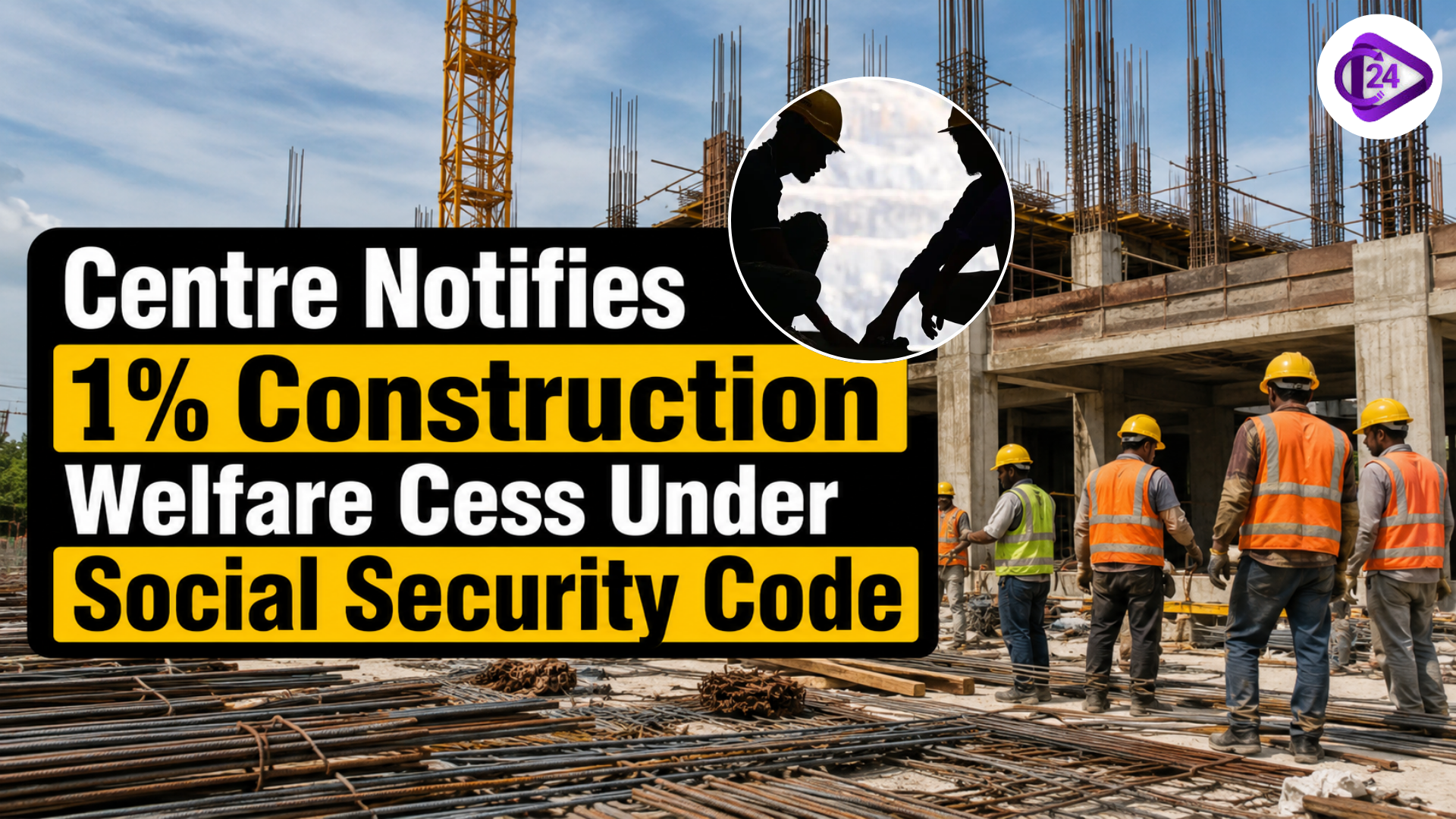
Centre Notifies 1% Construction Welfare Cess Under Social Security Code

The Centre has officially informed the Construction Welfare Cess at 1 per cent as per provisions provided by the Social Security Code and Building and Other Construction Workers welfare scheme. The levy targets to boost financial assistance to the welfare schemes related to construction workers in all parts of the country in India. The government stipulations specify that the cess will be levied on the total amount of expenses incurred by the employers and the project developers on construction. The amounts raised by the cess will be dedicated to healthcare, insurance, pensions, assistance for those in the education system and other welfare needs for those employed in the unorganised construction sector. This is being done as part of labour reforms being rolled out in India through the new labour codes.

Key Highlights of the 1% Construction Welfare Cess

  • The Centre has imposed a 1% welfare cess on construction of buildings and other construction activities all over the country.
  • The employers have to pay a cess on entire cost of construction.
  • The welfare cess framework is associated with the Building and Other Construction Workers’ Welfare Cess Act and the reforms of the Social Security Code.
  • Money raised from the cess will be used to help construction workers’ welfare schemes.
  • This can be as high as health insurance, pension coverage, bounty insurances and education reimbursement for employees’ families.
  • A list of self-assessment provisions in relation to the cess liability has been introduced by the government to cut down procedure delays.
  • The cess is applicable to the majority of construction projects such as roads, bridges, buildings, dams, railways and infrastructure projects.
  • Cess shall be deducted in respect of payments for construction activities by government departments and Governmental Public Sector Undertakings if applicable.
  • Under certain circumstances, contractors and sub-contractors can also be liable to pay Cess.
  • The moneys collected are disclaimed to state welfare boards for spending for the labour welfare programmes.
  • The labour reforms are designed to help make employers easier to operate and more protect workers and social security coverage.
  • The Centre has constantly stressed issues of transparency and effective use of welfare resources for registered workers.
  • The authorities are confident that the cess will enhance the financial stability as well as social protection of millions of construction workers across the country.
  • This levy is an important source of financing for welfare boards from different States.
  • The notification is a fact of the four labour codes being implemented to overhaul India’s labour laws.

N S Raja Subramani Appointed as India’s New CDS

Conclusion – Welfare Cess

The announcement of the Construction Welfare Cess (CWC) at 1% reminds the government’s ongoing efforts to enhance social security for India’s building and construction industry. To give better financial security and welfare benefits to workers of infrastructure and construction projects, the Centre has planned to have the welfare fund specifically for them. The implementation properly, fund utilization transparency, timely delivery of benefits will be of vital importance to make the initiative successful. Given the focus of India on infrastructure development and urbanization, the welfare cess is likely to have had a significant impact on the welfare of labour, the strengthening of worker rights, and the expansion of social security coverage in the country.


MGNREGA

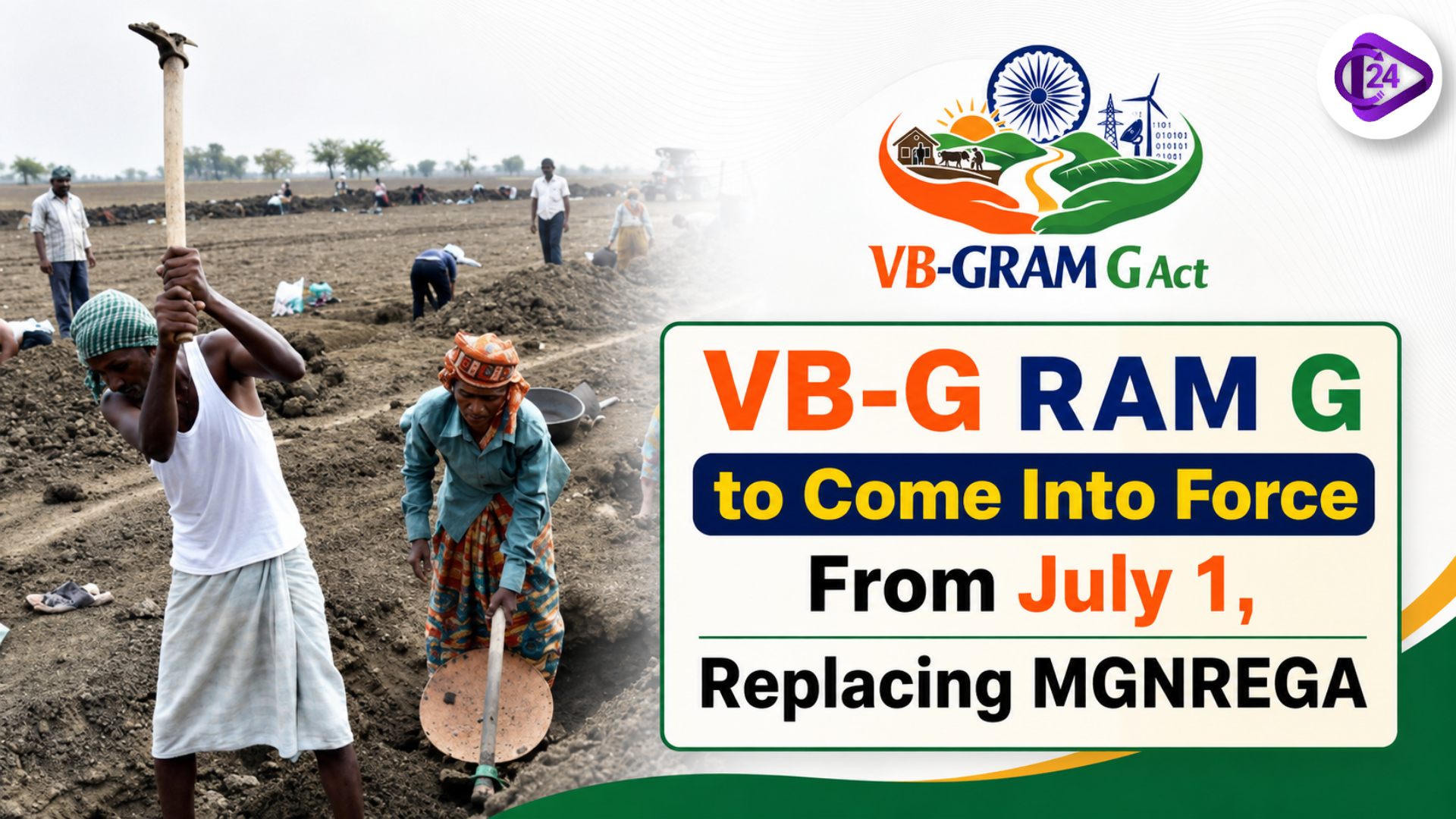
VB-G RAM G to Come Into Force From July 1, Replacing MGNREGA

The Government of India has published its official notification, stating that the VB-G RAM G Act will replace the MGNREGA from August 1, 2026. The new scheme provides a minimum of 125 days of wage employment to the rural households as against 100 days under MGNREGA, the Ministry of Rural Development said. In FY 2022-23, the Centre allocated ₹95,692 crore for implementation, which is among the highest allocations to rural employment in India’s history. The job cards already in use will continue to be valid till it becomes operational under the new Act of 2024 and smooth transition will be ensured to continue the ongoing works under MGNREGA.

Key Highlights of VB-G RAM G Act

  • The new urban employment model will come into effect from 1st July 2026 in all States and Union Territories of India.
  • The Act discontinues the existing MGNREGA from 2005, that has been in effect.
  • The rural households will now have a statutory right to 125 days of wage employment annually.
  • Main thrust of the scheme is creation of employment, rural infrastructure and enhancement of livelihood.
  • Wages will be paid to bank/post office accounts via Direct Benefit Transfer (DBT) payments.
  • If wages are missed after the required waiting period, workers will be paid for the wages missed.
  • All the e-KYC job cards for MGNREGA will continue to be valid till the issuance of fresh Gramin Rozgar Guarantee Cards.
  • All on-going activities in the MGNREGA will be continued and transferred to the new framework.
  • The government has announced the biggest budget for the programme for FY 2026-27 of ₹95,692 crore.
  • The Act shall be aimed at empowering the Gram Panchayats and building self-reliancy in the rural areas in the vision of Viksit Bharat 2047.

India Post Launches DIGIPIN Digital Address

Conclusion – VB-G RAM G

The VB-G RAM G Act, which comes into effect from July 1, is a major change in the employment policy in India’s rural areas. The government is looking to boost the economic security of millions of households by boosting the number of guaranteed workdays and expanding rural development activities. Existing projects are likely to be continued and MGNREGA are expected to be implemented seamlessly to ensure minimal disruptions to beneficiaries. The new framework is designed with a new unimpeachment budget allocation and with a strong DPB transparency (payments initiated by DBT), in order to bring efficiency and accountability. The Act also supports the overall objective of empowerment of the villages in India, its infrastructure development and sustainable living.

Frequently Asked Questions (FAQs)

The current affairs cover recent national and international events related to UPSC, SSC, Banking, Railways, and State PCS.

You need to read about the current affairs daily, and revise them every week and every month to keep them longer in your memory.

Yes, Class24 provides free downloadable Daily Current Affairs PDFs for easy revision.

Yes, you can practice MCQs and quizzes to boost your exam preparation.

Absolutely. The content is written in simple, easy-to-understand bilingual language suitable for beginners.

Go to class24.com and click on the current affairs section directly, where you find everything that you need.

ssc-toppers

Start Learning Today with Class24

Related current affairs

Class24 offers free video lectures for smart preparation, covering CGL, CPO, CHSL, MTS, and GD exams. Learn from expert faculty, revise concepts easily, practice with PYQs, and improve speed and accuracy through high-quality, exam-focused video lessons anytime, anywhere.

Get success in your hand. Start study anytime anywhere.

The journey becomes simple and enjoyable when you start taking interest in it. And through our app “Class24”, we will be your trusted partners in developing that interest.

Daily Quizzes
Mock Tests
Ongoing

No ongoing tests right now.