

Daily Quizzes
Mock Tests
No tests attempted yet.
Select Category
Government Schemes in India: Objectives, Impacts, and Benefits for Citizens

Enquire Now
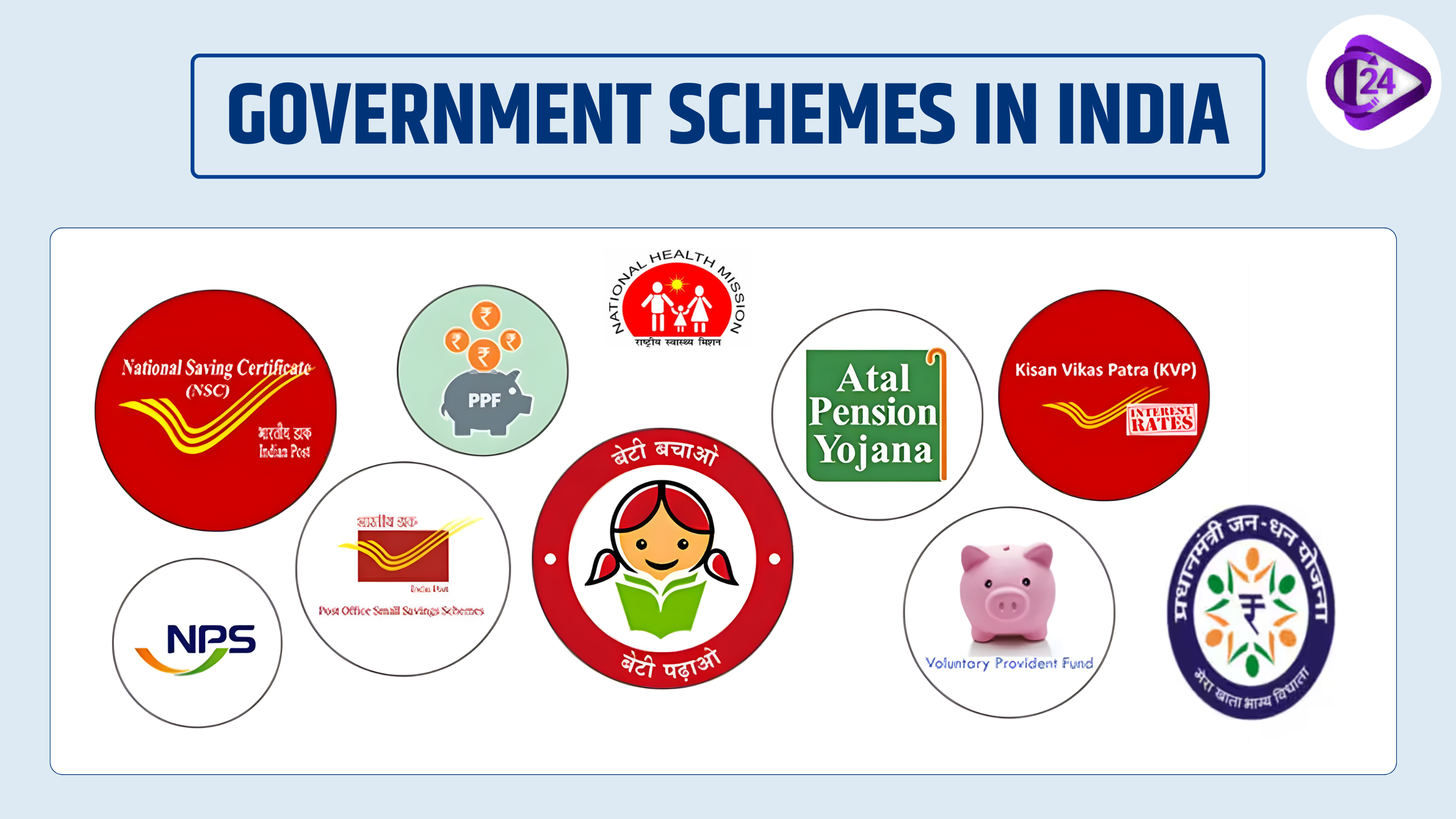
Government schemes play a vital role in shaping the socio-economic development of a country. In India, various welfare and development programs have been launched by the government to improve the lives of citizens, especially those belonging to economically weaker sections. These initiatives focus on poverty reduction, financial inclusion, healthcare access, education, rural development, and women's empowerment.
Over the years, government schemes in India have helped millions of people gain access to basic services, employment opportunities, and financial security. From housing programs for the poor to health insurance for low-income families, these schemes aim to ensure inclusive growth and sustainable development.
Government Schemes in India: Meaning and Importance
Government schemes in India are welfare initiatives launched by the central or state governments to address social, economic, and developmental challenges faced by citizens. These schemes are designed to uplift marginalised communities and provide financial assistance, subsidies, or services.
The importance of government schemes includes:
- Reducing poverty and inequality
- Promoting financial inclusion
- Supporting farmers and rural communities
- Improving healthcare and education access
- Encouraging entrepreneurship and employment
Many schemes are implemented through direct benefit transfers (DBT), ensuring transparency and reducing corruption.
Government Schemes in India for Financial Inclusion
Financial inclusion has been one of the key priorities of the Indian government. Several schemes aim to ensure that every citizen has access to banking services, credit facilities, and insurance.
1. Pradhan Mantri Jan Dhan Yojana (PMJDY)
The Pradhan Mantri Jan Dhan Yojana was launched in 2014 to provide universal access to banking facilities.
Objectives
- Provide bank accounts to every household
- Promote savings habits among citizens
- Enable direct transfer of government benefits
Impact
- Over 50 crore bank accounts opened
- Increased financial literacy and banking access
- Strengthened the Direct Benefit Transfer system
2. Pradhan Mantri Mudra Yojana (PMMY)
The Pradhan Mantri Mudra Yojana supports small businesses and entrepreneurs by providing loans without collateral.
Objectives
- Encourage small business growth
- Promote self-employment
- Support micro and small enterprises
Impact
- Millions of small entrepreneurs received loans
- Boosted employment generation in the informal sector
Government Schemes in India for Healthcare
Healthcare is another major sector where government schemes have created a significant impact.
1. Ayushman Bharat Yojana
The Ayushman Bharat Yojana, also known as Pradhan Mantri Jan Arogya Yojana, is one of the largest health insurance schemes in the world.
Objectives
- Provide health insurance coverage up to ₹5 lakh per family annually
- Reduce out-of-pocket medical expenses
- Improve access to quality healthcare for poor families
Impact
- Millions of patients treated under the scheme
- Increased healthcare accessibility in rural areas
- Strengthened public health infrastructure
2. National Health Mission
The National Health Mission focuses on improving healthcare delivery in rural and urban areas.
Objectives
- Strengthen public health systems
- Reduce maternal and infant mortality
- Improve the availability of healthcare services
Impact
- Improved immunisation coverage
- Better maternal and child health services
Government Schemes in India for Farmers
Agriculture remains the backbone of the Indian economy. The government has launched several schemes to support farmers and increase agricultural productivity.
1. PM Kisan Samman Nidhi
The Pradhan Mantri Kisan Samman Nidhi provides financial support to farmers.
Objectives
- Provide income support to small and marginal farmers
- Ensure financial stability in agriculture
Impact
- ₹6000 annual income support to eligible farmers
- Improved financial security in rural areas
RRB Railways Exam Combo Test Series Pass 2026
2. Pradhan Mantri Fasal Bima Yojana
The Pradhan Mantri Fasal Bima Yojana offers crop insurance to farmers.
Objectives
- Protect farmers from crop losses due to natural disasters
- Encourage farmers to adopt modern farming practices
Impact
- Reduced financial risk for farmers
- Increased resilience in the agriculture sector
Government Schemes in India for Housing and Infrastructure
Housing schemes aim to provide affordable homes to low-income families and improve urban and rural infrastructure.
1. Pradhan Mantri Awas Yojana
The Pradhan Mantri Awas Yojana aims to provide housing for all.
Objectives
- Provide affordable housing to economically weaker sections
- Improve urban and rural living conditions
Impact
- Millions of houses constructed across India
- Improved quality of life for poor families
2. Smart Cities Mission
The Smart Cities Mission focuses on urban development.
Objectives
- Improve urban infrastructure
- Use technology for better city management
Impact
- Better transportation systems
- Improved urban services and digital infrastructure
RRB Group D Exam Test Series 2026
Government Schemes in India for Women's Empowerment
Women's empowerment is a key focus of many government initiatives.
1. Beti Bachao Beti Padhao
The Beti Bachao Beti Padhao campaign aims to protect and educate the girl child.
Objectives
- Improve child sex ratio
- Promote girls’ education
Impact
- Increased awareness about gender equality
- Improved enrollment of girls in schools
2. Sukanya Samriddhi Yojana
The Sukanya Samriddhi Yojana encourages savings for the future of girl children.
Objectives
- Promote financial security for girls
- Support education and marriage expenses
Impact
- Millions of accounts opened for girl children
- Encouraged long-term savings among families
Impact of Government Schemes in India on Society
The implementation of government schemes in India has significantly improved the living standards of citizens.
1. Poverty Reduction
Welfare programs have helped reduce poverty by providing financial assistance and employment opportunities.
2. Improved Access to Basic Services
Healthcare, education, and housing schemes ensure that basic services reach even remote areas.
3. Economic Growth
Entrepreneurship and small business schemes boost economic activity and job creation.
4. Social Inclusion
Government initiatives help marginalised communities participate in the country’s development process.
Challenges in Implementing Government Schemes in India
Despite the success of many programs, some challenges remain:
- Lack of awareness among beneficiaries
- Administrative delays
- Corruption and leakages
- Digital divide in rural areas
To overcome these issues, the government has adopted digital platforms and direct benefit transfers to ensure transparency.
RRB ALP Psycho Test Series 2026
Future of Government Schemes in India
The future of government schemes in India lies in technology-driven governance. With initiatives like Digital India, Aadhaar integration, and online service delivery, welfare schemes are becoming more efficient and transparent.
In the coming years, the government is expected to focus on:
- Sustainable development
- Climate-resilient agriculture
- Digital financial inclusion
- Skill development and employment
Conclusion
Government schemes have played a crucial role in improving the socio-economic conditions of millions of people in India. From financial inclusion to healthcare and housing, these initiatives aim to create a more equitable and prosperous society.
The success of government schemes in India depends not only on government policies but also on effective implementation and public awareness. By ensuring transparency, improving accessibility, and leveraging technology, these schemes can continue to drive inclusive growth and development across the country.
Frequently Asked Questions