

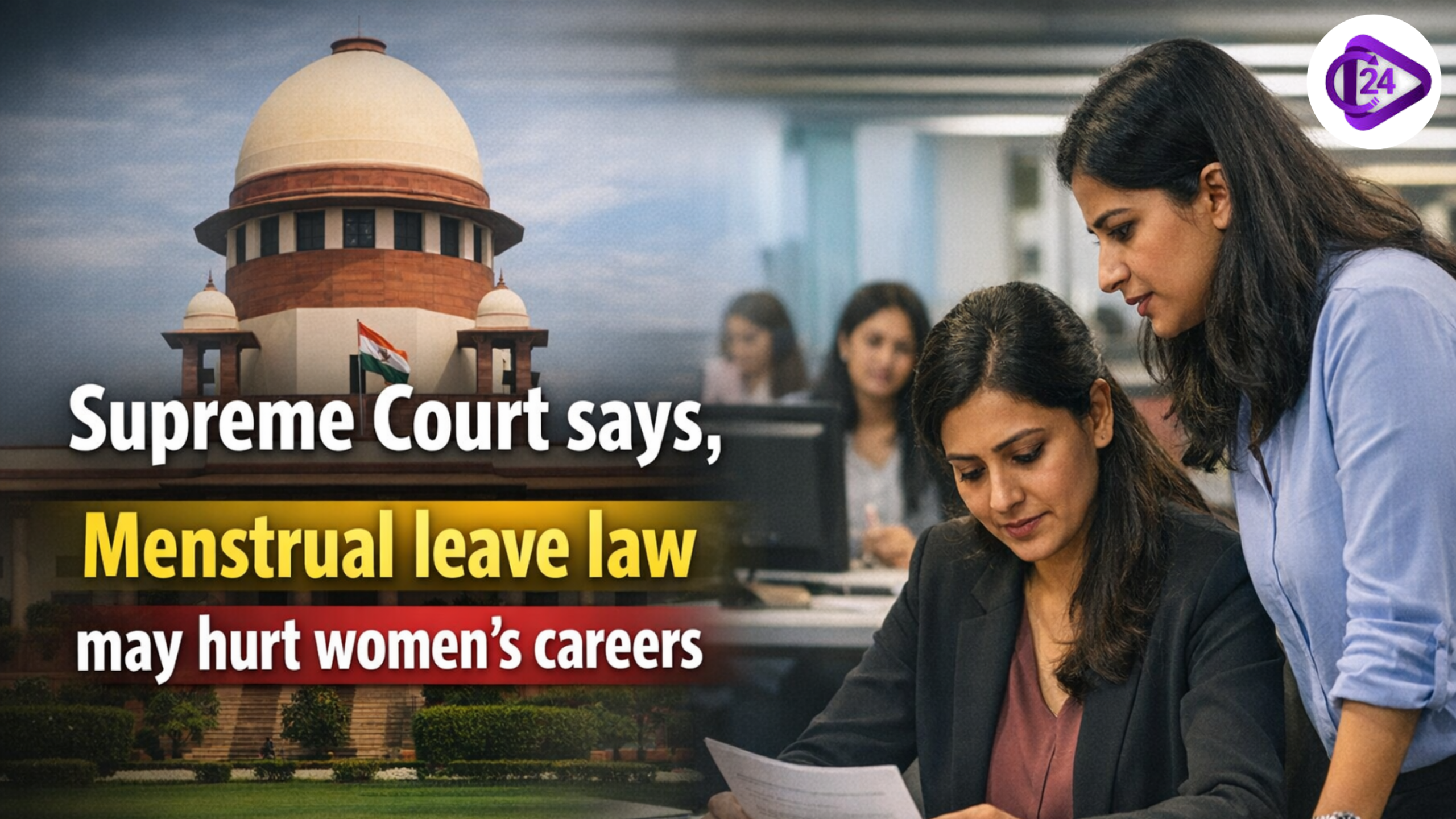
Menstrual leave has been a topic of intense debate in India and across the world. Recently, the Supreme Court observed that making menstrual leave a legal mandate could unintentionally harm women’s career opportunities. The concern is that employers might develop a bias against hiring women if additional leave requirements become compulsory. While the idea behind menstrual leave is to support women’s health and well-being, the court suggested that such policies must be designed carefully to avoid reinforcing workplace discrimination. The discussion has sparked conversations about balancing women’s health rights with equal employment opportunities and ensuring that workplace policies promote inclusion rather than creating unintended disadvantages.
Key Observations Behind the Supreme Court’s View on Menstrual Leave
- The court highlighted that a mandatory menstrual leave policy could unintentionally create barriers for women in hiring and promotions. Employers might view women as less available for work compared to men.
- There is a risk that companies, especially in competitive sectors, could become hesitant to recruit women if they believe additional leave policies will affect productivity.
- The court suggested that well-intentioned policies sometimes lead to unintended consequences, particularly when employers prioritise efficiency and operational continuity.
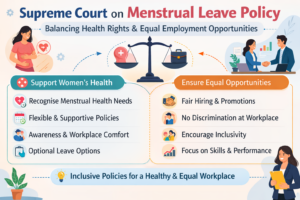
- Instead of a strict legal mandate, the court indicated that workplace flexibility and supportive policies might be a more balanced approach to address menstrual health concerns.
- The discussion emphasised the need to focus on gender equality in workplaces. Policies should empower women without reinforcing stereotypes that women are less capable or less consistent employees.
- The court also noted that menstrual health is a genuine issue affecting many women, and workplaces should acknowledge it through awareness, supportive environments, and optional leave policies where appropriate.
- Policymakers were encouraged to consult employers, health experts, and women’s groups to design practical solutions that protect women’s health without affecting their professional growth.
- The debate reflects a broader challenge: ensuring workplace policies support women’s well-being while maintaining equal opportunities in hiring, promotion, and career advancement.
PYQs – Human Reproduction
| Exam | Year | Question | Options | Answer |
| RRB NTPC | 2020 | Where does fertilisation occur in humans? | (A) Ovary (B) Uterus (C) Fallopian Tube (D) Cervix | Fallopian Tube |
| SSC GD | 2021 | The female reproductive cell is known as: | (A) Sperm (B) Ovum (C) Embryo (D) Zygote | Ovum |
| SSC CHSL | 2020 | Which organ produces sperm in human males? | (A) Prostate gland (B) Testis (C) Vas deferens (D) Seminal vesicle | Testis |
| RRB Group D | 2019 | The fertilized egg formed after fusion of sperm and ovum is called: | (A) Embryo (B) Zygote (C) Foetus (D) Placenta | Zygote |
| SSC CGL | 2019 | Which hormone is responsible for male secondary sexual characteristics? | (A) Estrogen (B) Testosterone (C) Progesterone (D) Oxytocin | Testosterone |
| RRB NTPC | 2018 | The process of formation of male gametes is called: | (A) Oogenesis (B) Spermatogenesis (C) Fertilization (D) Implantation | Spermatogenesis |
| SSC CHSL | 2018 | The organ where sperm mature and are stored is: | (A) Testis (B) Epididymis (C) Urethra (D) Vas deferens | Epididymis |
| RRB Group D | 2018 | The attachment of the embryo to the uterine wall is called: | (A) Fertilization (B) Implantation (C) Ovulation (D) Gestation | Implantation |
| SSC GD | 2017 | How many chromosomes are present in a human gamete? | (A) 23 (B) 44 (C) 46 (D) 22 | 23 |
| RRB ALP | 2019 | Which hormone triggers ovulation in females? | (A) FSH (B) LH (C) Estrogen (D) Progesterone | LH |
| SSC CGL | 2017 | The tube connecting the ovary to the uterus is called: | (A) Cervix (B) Vagina (C) Fallopian tube (D) Endometrium | Fallopian tube |
| RRB NTPC | 2017 | What is the average gestation period of humans? | (A) 200 days (B) 240 days (C) 280 days (D) 300 days | 280 days |
| SSC MTS | 2019 | The beginning of menstruation at puberty is called: | (A) Menopause (B) Menarche (C) Ovulation (D) Fertilization | Menarche |
| RRB Group D | 2018 | The surgical method of birth control in males is: | (A) Tubectomy (B) Vasectomy (C) Amniocentesis (D) IVF | Vasectomy |
| SSC GD | 2022 | Which hormone is detected in pregnancy test kits? | (A) LH (B) Estrogen (C) hCG (D) Progesterone | hCG |
Cabinet Approves Extension of Jal Jeevan Mission December 2028
Conclusion – Menstrual Leave Law
The debate around menstrual leave highlights the challenge of balancing women’s health needs with workplace equality. While supportive policies are important, they must be designed carefully to avoid unintended discrimination in hiring or career growth. A flexible and inclusive approach, driven by awareness and organisational support, may help ensure women’s well-being without creating barriers to their professional opportunities.