
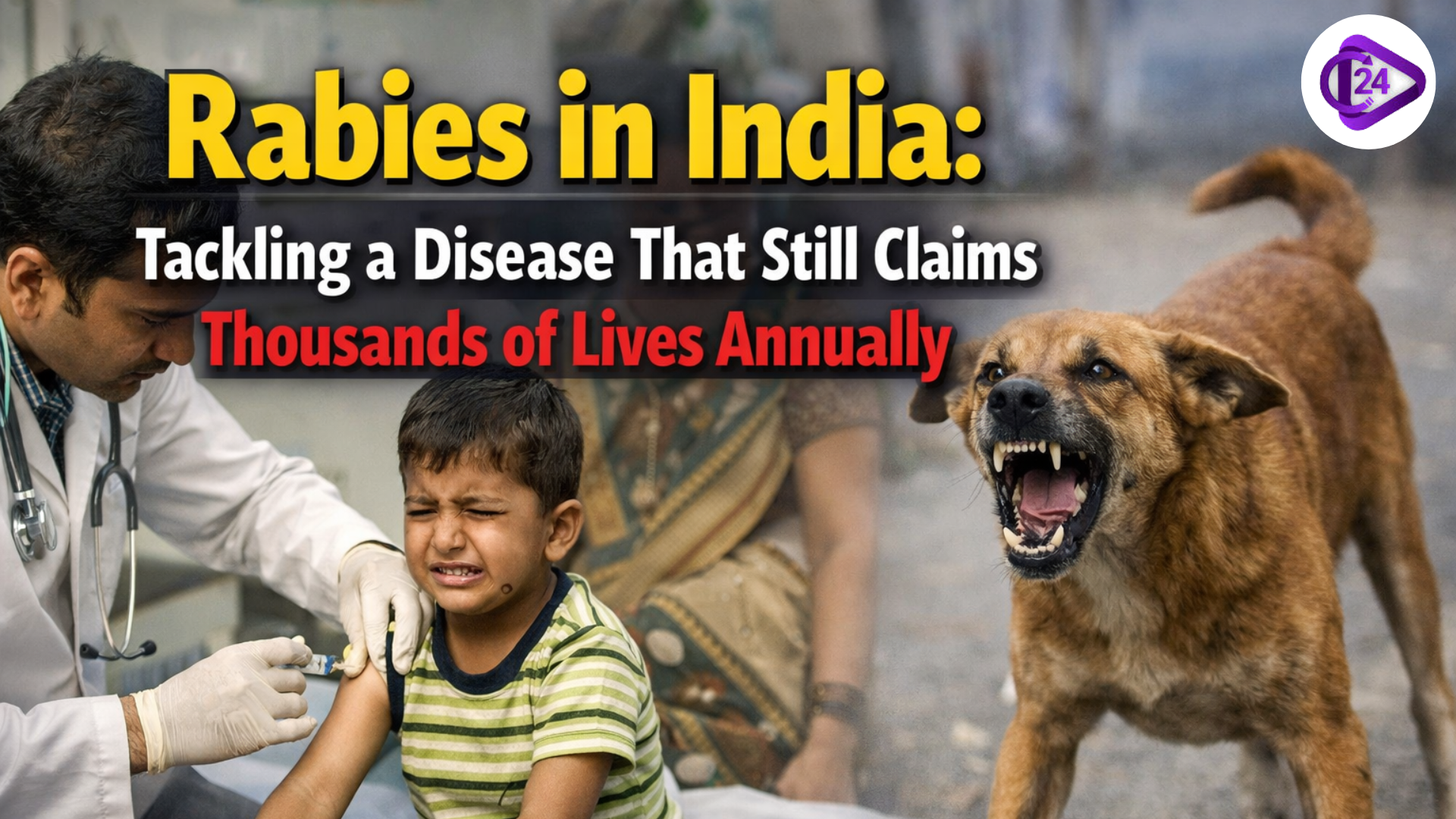
Rabies is a significant health issue in India, which is a vaccine-preventable viral infection and is mostly caused by bites from dogs. With nearly no progress in eliminating rabies, India is an endemic country that has a proportion of approximately 36 percent of deaths caused by rabies in the world, with estimates available showing that this is 18,000 to 20,000 deaths in the country each year. The children have the highest burden since they form a great percentage of cases. Although this can be prevented by timely vaccination after exposure and vaccination of dogs, due to the lack of awareness, timely access to medical care, and overall dog vaccination, the level of mortality remains high. The prevention, mass dog vaccination, and surveillance efforts should be strengthened to enable the elimination of human deaths caused by rabies.
What are the Key Facts About Rabies?
-
Rabies is a contagious virus that causes infections in the central nervous system and is lethal upon symptom development, which is preventable by vaccination. Up to 99 percent of human rabies incidences are a result of dog attacks and scratches. Children below 15 are the worst hit.
-
Rabies is also endemic in India and has a large share of the global rabies deaths, in India with tens of thousands dying every year.
-
The rabies fatalities can be brought down to zero by acting in time. Washing of the wound immediately, post exposure prophylaxis (PEP) with anti-rabies vaccine and, if needed, rabies immunoglobulin (RIG) may prevent the development of the virus in the nervous system.
-
These modes of control are the One Health approach, including mass vaccination of dogs, awareness of bite prevention, better access to PEP, health worker training, surveillance, and control of dog populations.
-
The National Action Plan of rabies elimination, as part of the Indian state vision, is the NAPRE; the national priority lies in the coordination of actions such as mass immunization of dogs and the reinforcement of veterinary and human systems, with the ultimate vision of eradicating human rabies by 2030, which is carried out by dogs by 2030.
PYQs Based on Rabies
| Exam Name | Year | Question | Answer |
|---|---|---|---|
| UP Police SI | 2021 | Which of the following diseases spreads through the saliva of infected animals? (a) Rabies (b) West Nile Virus (c) Malaria (d) Lyme disease | Rabies |
| OSSC CGL | 2022 | In 1885, Louis Pasteur discovered the vaccine for __________. (a) Chikungunya (b) Smallpox (c) Cancer (d) Rabies | Rabies |
| State RAS Prelims | — | Which of the following is not a zoonotic disease? (a) Mucormycosis (b) Rabies (c) Plague (d) SARS | Mucormycosis |
Conclusion of Rabies in India
Rabies is a significant but preventable health hazard to the Indian population, as it kills thousands of citizens each year. Proper prevention by means of vaccination of dogs immediately after exposure, mass dog vaccination, and enlightenment of people is important. The national action plans can be used to coordinate the eradication of human rabies using an integrated strategy to protect the vulnerable populations, particularly children, and decrease deaths at the national level.