


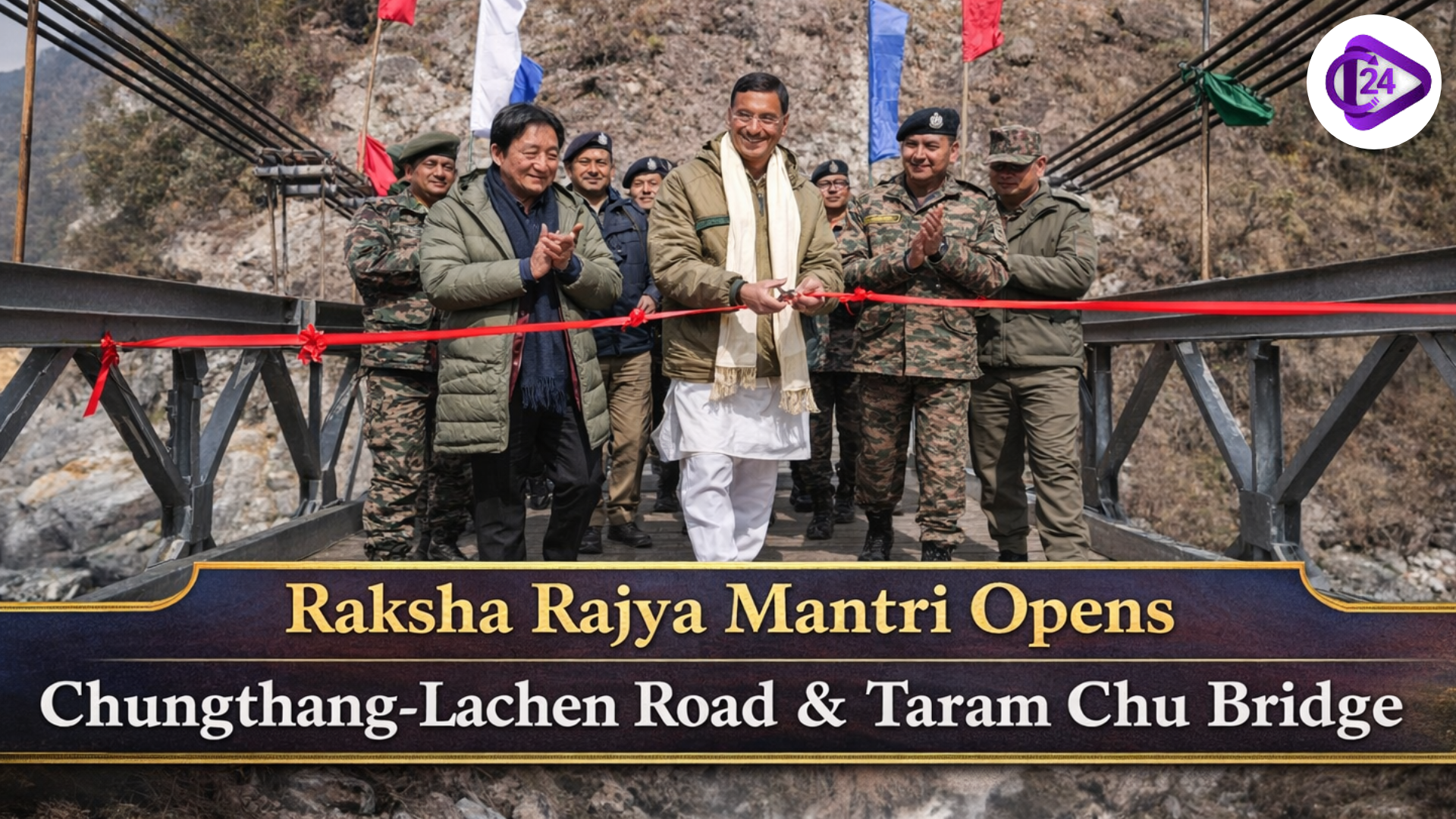
The Raksha Rajya Mantri recently inaugurated the Chungthang-Lachen Road and Taram Chu Bridge in North Sikkim, a significant step toward improving connectivity in the region. These infrastructure projects were undertaken by the Border Roads Organisation (BRO) under Project Swastik, following extensive damage caused by natural disasters, including cloudbursts and a glacial lake outburst flood. The Chungthang-Lachen Road, spanning 28 km, and the Taram Chu Bridge, a 400-foot Bailey suspension bridge, are vital for residents and security forces, ensuring safer and more reliable access to this remote Himalayan region. These improvements also support regional development and provide a boost to economic activities and tourism. The BRO’s efforts included clearing 96 landslides and constructing several bridges to restore essential routes. This project demonstrates India’s commitment to resilient infrastructure development in difficult terrains, ensuring the well-being of its citizens and enhancing national security.
Highlights of the Chungthang-Lachen Road & Taram Chu Bridge Inauguration
- The Chungthang-Lachen Road extends 28 km, reconnecting critical areas in North Sikkim.
- The Taram Chu Bridge, a 400-foot Bailey suspension bridge, has been rebuilt to endure high-altitude conditions.
- The reconstruction project, led by the Border Roads Organisation (BRO), aimed to recover from past disasters and restore vital connections.
- The project involved clearing 96 landslides, repairing bridges, and constructing new ones as part of Project Swastik.
- The efforts also included reopening the 7.5 km Naga-Toong stretch, which was completed in October 2025.
- These improvements benefit local communities, security personnel, and emergency services, improving travel safety.
- The development of these infrastructures also promotes regional economic growth, tourism, and enhanced emergency responses in this strategically significant area.
- These projects reflect India’s dedication to building disaster-resilient infrastructure in challenging terrains.
Recently Asked Previous Year Questions
| Question | Options | Answer |
| Which high‑altitude lake in Sikkim is sacred and a major attraction? | a) Tsomgo Lake b) Pangong Lake c) Dal Lake d) Nainital Lake | a) Tsomgo Lake |
| Which pass connects Sikkim to the Chumbi Valley of Tibet? | a) Nathu La b) Jelep La c) Shipki La d) Chang La | a) Nathu La |
| Which river forms part of the boundary between Sikkim and West Bengal? | a) Teesta b) Rangit c) Mahananda d) Brahmaputra | b) Rangit |
| Which is the state animal of Sikkim? | a) Snow Leopard b) Himalayan Tahr c) Red Panda d) Yak | c) Red Panda |
| Which is the state bird of Sikkim? | a) Himalayan Monal b) Blood Pheasant c) Common Myna d) Peacock | b) Blood Pheasant |
| Where is the first capital of Sikkim, and who was crowned there? | a) Gangtok – Phuntsog Namgyal b) Yuksom – Phuntsog Namgyal c) Namchi – Chador Namgyal d) Pelling – Tenzing Norbu | b) Yuksom – Phuntsog Namgyal |
| What is the de facto state song of Sikkim? | a) Jahan Bagcha Teesta Rangeet (b) Sikkim Himalaya c) Mero Sikkim (d) Himalaya Ki Godi | a) Jahan Bagcha Teesta Rangeet |
| Who was Sikkim’s first Chogyal, consecrated in 1642? | a) Tenzing Norbu b) Phuntsog Namgyal c) Chador Namgyal d) Thutob Namgyal | b) Phuntsog Namgyal |
Supreme Court Suo Motu on NCERT Row
Conclusion
The inauguration of the Chungthang-Lachen Road and Taram Chu Bridge by the Raksha Rajya Mantri marks a significant step in enhancing connectivity in North Sikkim. These infrastructure projects, rebuilt by the Border Roads Organisation (BRO), are vital for local communities, security operations, and economic growth. The improved transport links will facilitate better access to essential services, stimulate regional development, and strengthen India’s strategic presence in the Himalayan region, reaffirming the commitment to resilient and sustainable infrastructure developmen