


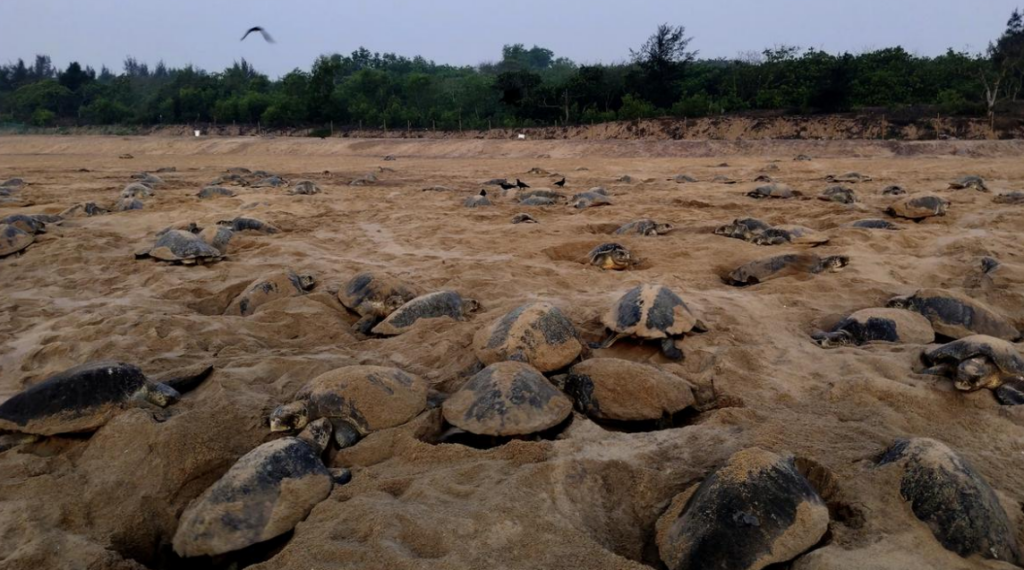
The Dakshin Foundation together with the Indian Institute of Science (IISc) from Bengaluru conducted 16 years of research that showed either stable or growing Olive Ridley turtle populations on the Indian coastline. Research results suggest long-term survival concerns for the species since increasing sand temperatures cause changes in the sex ratio towards female offspring. Gender balance between males and females faces risks for species sustainability because of the unbalanced sexual proportion. The research observes many turtles in offshore areas but does not understand why mass nesting does not take place regularly each year.
Key Findings of the Report
-
The research took place across India’s mainland and island coasts from 2008 to 2024 to document turtle population changes along with conservation progress and danger assessments.
-
The research assessed the Olive Ridley along with leatherback turtles from Andaman and Nicobar Islands and green turtles in Lakshadweep.
-
The study documented a massive mass nests event at Rushikulya rookery in Odisha as 400,000 to 500,000 Olive Ridley turtles laid their eggs over a few days.
-
Scientific observations show that large offshore turtle concentrations fail to produce mass nesting events in certain years without explanation regarding their breeding behavior.
-
The number of leatherback turtles who nest on Little Andaman has significantly increased after the 2004 Indian Ocean tsunami.
-
The increasing population of green turtles in Lakshadweep leads to disturbances of ecological equilibrium due to overgrazing of seagrass meadows.
Major Threats to Sea Turtles
Olive Ridley turtles along with other marine species within growing populations endure various ecological dangers together with human-made threats including:
-
✅ Climate Change: The increase in sand temperatures causes an imbalance in population dynamics because they result in female hatchlings instead of male ones.
-
✅ Coastal Development: The development of real estate without regulations together with uncontrolled urban sprawl around coastline areas disrupts the places where turtles lay their eggs.
-
✅ Marine Pollution: Plastic waste along with oil spills and industrial pollution endanger turtle settlement areas and their prey.
-
✅ Fisheries-Related Threats: Commercial fishing activities intersect with prime territorial areas of sea turtles and fishing nets unintentionally capture the animals (bycatch) before resulting in deaths.
-
✅ Illegal Poaching: Turtle meat and eggs continue to be obtained against the law for human consumption in certain areas.
Community Involvement in Conservation
The document stresses the fundamental position of local communities in ensuring sea turtle conservation. The coordination between fishermen and researchers and policymakers produces beneficial results when they unite their efforts.
-
Reducing human-turtle conflicts,
-
Sustaining local livelihoods, and
-
Ensuring marine biodiversity conservation.
Government Conservation Efforts in India
Indian government protection programs regarding marine turtle populations consist of several conservation initiatives:
-
Operation Olivia – The Indian Coast Guard started this program to guard nesting areas against illegal hunting activities while breeding turtles are present.
-
Gahirmatha Marine Sanctuary – A protected environment in Odisha exists to preserve the Olive Ridley turtle population.
-
Seasonal Fishing Ban – The program functions across Odisha along with other coastal states in order to safeguard turtles during their breeding period.
-
Marine Protected Areas (MPAs) – The Indian coastline features multiple MPAs which serve as protective measures for significant marine species together with their habitats.
Why Is This Important for Competitive Exams?
The information holds significant importance for UPSC and SSC exam candidates and other government exam aspirants because it belongs to essential test subjects including:
✅ Environment & Ecology – Marine conservation, climate change impact on species
✅ Geography – Coastal ecosystems, sea turtle migration routes
✅ Government Schemes & Policies – Wildlife protection laws and sustainable fishing practices
✅ Current Affairs – Indian and global conservation efforts
Conclusion
The Olive Ridley turtle population stays at a stable level but their future survival becomes endangered by escalating human influence alongside worsening climate change. The preservation of India’s rich marine biodiversity demands sustainable conservation methods which combine scientific monitoring, community engagement and stricter establishment of regulations for future protection.