

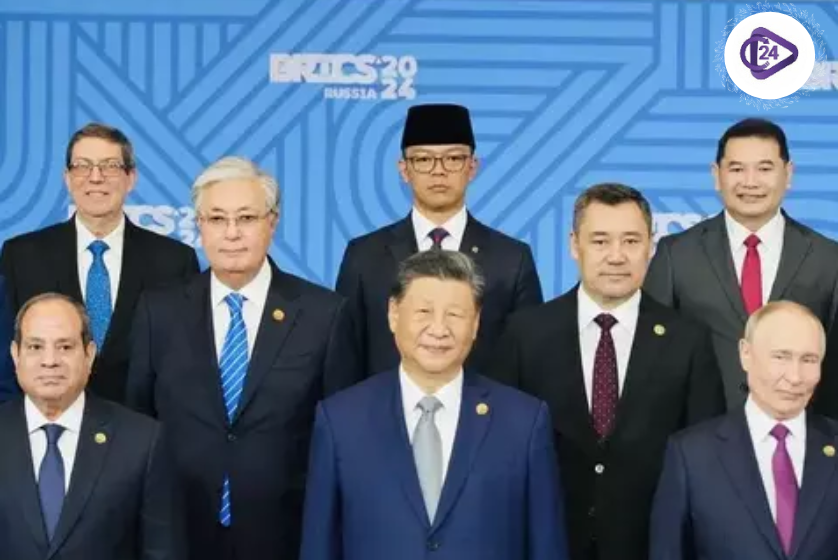
Indonesia officially became the 11th full member of BRICS on 6 January 2025, marking an important development in the expansion of this international grouping. Brazil, which held the BRICS presidency in 2025, announced Indonesia’s admission as a full member. This decision strengthened the representation of Southeast Asia within the group and expanded cooperation among major emerging economies.
The inclusion of Indonesia is an important step towards strengthening the voice of developing countries in international affairs. BRICS provides a platform for its member countries to discuss economic development, international trade, financial cooperation, sustainable development and reforms in global institutions.
With Indonesia joining the grouping, BRICS expanded its geographical and economic reach. The country brings a large population, a growing economy, significant natural resources and an important strategic position in Southeast Asia.
For competitive examination aspirants, the Indonesia 11th Member of BRICS development is an important current affairs topic. It is particularly relevant for SSC, Banking, UPSC, RRB and State Government examinations.
Key Highlights of Indonesia Joining BRICS
The following table contains the most important details about Indonesia’s entry into BRICS.
| Particulars | Details |
| New Member | Indonesia |
| Membership Status | Full Member |
| Date of Announcement | 6 January 2025 |
| BRICS Presidency (2025) | Brazil |
| Position | 11th Full Member |
| Indonesian President | Prabowo Subianto |
| Region | Southeast Asia |
| Original Group | BRIC |
| Present Name | BRICS |
| Main Objective | Economic and political cooperation |
| Important Focus | Global South cooperation |
| Previous Expansion | 2024 |
| Current Membership | 11 Countries |
What is BRICS?
BRICS is a grouping of major emerging economies that provides a platform for political, diplomatic and economic cooperation.
The name BRICS comes from the initials of its original members: Brazil, Russia, India, China and South Africa.
The grouping aims to strengthen cooperation among developing economies and increase their participation in international decision-making.
Unlike a traditional international organisation, BRICS does not have a constitutive treaty, a permanent secretariat or its own independent budget. It operates as a coordination and cooperation forum among its member countries. Its decisions are generally based on consensus.
Major objectives of BRICS include:
- Strengthening economic cooperation among member countries.
- Promoting international trade and investment.
- Supporting reforms in global financial institutions.
- Increasing the representation of developing countries in international governance.
- Encouraging cooperation in science and technology.
- Promoting sustainable development.
- Supporting cooperation in healthcare, agriculture and education.
- Strengthening the voice of the Global South.
How Did Indonesia Become the 11th Member of BRICS?
Indonesia had expressed its interest in joining BRICS to strengthen its international partnerships and increase cooperation with developing economies.
The country participated in BRICS-related diplomatic engagements and expressed its interest in becoming a full member.
During the 2024 BRICS expansion process, Indonesia’s membership was approved in principle. However, its formal entry was announced later.
On 6 January 2025, Brazil, as the BRICS Chair for 2025, officially announced that Indonesia had become a full member of the grouping.
The Indonesian government welcomed the decision and described membership as an important opportunity to increase its participation in international cooperation.
Important developments related to Indonesia’s membership:
- Indonesia showed interest in joining BRICS to expand its international economic and diplomatic cooperation.
- The country participated in BRICS-related engagements during the expansion process.
- Its membership was approved through the BRICS consensus-based process.
- Brazil officially announced Indonesia’s full membership on 6 January 2025.
- Indonesia became the 11th full member of BRICS.
Indonesia’s entry also strengthened the representation of Southeast Asia in the grouping.
List of BRICS Member Countries
BRICS has expanded considerably since its formation. Initially, the grouping consisted of four major emerging economies. South Africa joined later, and a further expansion took place in 2024 and 2025.
As per the official BRICS membership information reflected in India’s 2026 government update, the grouping consists of 11 full members.
| S. No. | Member Country | Membership Year |
| 1 | Brazil | 2009 |
| 2 | Russia | 2009 |
| 3 | India | 2009 |
| 4 | China | 2009 |
| 5 | South Africa | 2011 |
| 6 | Egypt | 2024 |
| 7 | Ethiopia | 2024 |
| 8 | Iran | 2024 |
| 9 | United Arab Emirates (UAE) | 2024 |
| 10 | Saudi Arabia | 2024 expansion process |
| 11 | Indonesia | 2025 |
Note: Saudi Arabia’s formal accession status has been reported differently by some official sources. The current Indian government BRICS overview includes Saudi Arabia among the 11 members. For examination purposes, follow the latest official membership list specified in the relevant examination’s current affairs reference.
History and Formation of BRICS
The history of BRICS began with the term BRIC, which was introduced by economist Jim O’Neill of Goldman Sachs in 2001.
The term was used to describe four emerging economies with significant growth potential: Brazil, Russia, India and China.
Later, the countries developed cooperation through political and economic meetings. The first BRIC Summit was held in 2009 in Yekaterinburg, Russia.
South Africa subsequently joined the grouping, and the name changed from BRIC to BRICS.
Important milestones in BRICS history:
| Year | Important Development |
| 2001 | The term BRIC was introduced by Jim O’Neill |
| 2006 | BRIC cooperation began at the diplomatic level |
| 2009 | First BRIC Summit held in Russia |
| 2010 | South Africa’s admission was agreed upon |
| 2011 | South Africa participated as a full BRICS member |
| 2023 | Expansion was announced at the Johannesburg Summit |
| 2024 | Egypt, Ethiopia, Iran and UAE joined as full members |
| 2025 | Indonesia officially joined as the 11th full member |
What is the Importance of Indonesia Joining BRICS?
Indonesia’s membership has increased the geographical and economic reach of BRICS. It also provides new opportunities for cooperation between Southeast Asia and other emerging economies.
The country’s large domestic market, natural resources and strategic location make it an important participant in international economic discussions.
- Strengthening Southeast Asian Representation
Indonesia is one of the most important countries in Southeast Asia.
Its inclusion gives the region greater representation in BRICS discussions and strengthens cooperation between Asian, African and Latin American economies.
- Expanding International Trade
Indonesia can use the BRICS platform to strengthen trade relations with other member countries.
Potential areas of cooperation include:
- Agricultural products.
- Energy resources.
- Mineral resources.
- Manufacturing.
- Infrastructure development.
- Technology and digital services.
- Strengthening the Global South
The Global South refers broadly to developing and emerging countries that seek greater representation in international decision-making.
Indonesia’s membership strengthens cooperation among these countries and provides an additional platform for discussing shared development challenges.
- Greater Financial Cooperation
BRICS encourages cooperation in international finance and development.
Indonesia’s participation can create opportunities for discussions on investment, development financing, payment systems and financial cooperation.
The New Development Bank (NDB) is also an important institution associated with BRICS cooperation.
- Strengthening Regional and Global Partnerships
Indonesia has an important position in the Indo-Pacific region.
Its BRICS membership provides another platform for international engagement and cooperation with emerging economies.
BRICS and the Global South
The Global South is an important concept associated with BRICS.
It broadly refers to developing and emerging countries across regions such as Asia, Africa and Latin America.
These countries often seek greater participation in international institutions and more balanced representation in global decision-making.
BRICS provides a platform through which its members can discuss common concerns, including:
- Economic inequality.
- Development financing.
- Food and energy security.
- Climate change.
- International trade.
- Technological development.
- Reforms in global institutions.
Indonesia’s inclusion has strengthened the participation of Southeast Asia in these discussions.
Economic Importance and Global Influence of BRICS
BRICS has become an important platform for cooperation among emerging economies.
Its members collectively represent a significant share of the world’s population, economic output, trade and natural resources.
According to India’s 2026 government overview, BRICS members account for approximately:
| Economic Indicator | Share |
| Global Population | 49.5% |
| Global GDP | 40% |
| Global Trade | 26% |
These figures reflect the importance of BRICS in international economic discussions. The exact shares may vary depending on the year, data source and calculation method.
Major areas of economic cooperation include:
- International trade and investment.
- Infrastructure financing.
- Energy security.
- Agricultural cooperation.
- Technology development.
- Financial inclusion.
- Sustainable economic growth.
New Development Bank (NDB) and BRICS
The New Development Bank is an important financial institution associated with BRICS.
It was established to mobilise resources for infrastructure and sustainable development projects in emerging economies and developing countries.
The bank was established in 2014 during the sixth BRICS Summit in Fortaleza, Brazil, and began operations in 2015.
Important facts about the New Development Bank:
| Particulars | Details |
| Name | New Development Bank |
| Abbreviation | NDB |
| Established | 2014 |
| First President | K. V. Kamath |
| Headquarters | Shanghai, China |
| Main Purpose | Infrastructure and sustainable development financing |
| Founding Countries | Brazil, Russia, India, China and South Africa |
The NDB provides financial support for projects related to infrastructure, clean energy, transportation, water and sustainable development.
It is important to understand that BRICS and the New Development Bank are not the same institution. BRICS is a cooperation forum, whereas NDB is a multilateral development bank.
BRICS Partner Countries: Understanding the Difference
Apart from full members, BRICS has also introduced a separate category called Partner Countries.
This category was created during the 2024 Kazan Summit under the Russian presidency.
Partner Countries are invited to participate in selected BRICS meetings and activities, subject to the group’s agreed procedures and consensus.
Some countries that became BRICS partners during 2025 include:
| S. No. | BRICS Partner Country |
| 1 | Belarus |
| 2 | Bolivia |
| 3 | Cuba |
| 4 | Kazakhstan |
| 5 | Malaysia |
| 6 | Nigeria |
| 7 | Thailand |
| 8 | Uganda |
| 9 | Uzbekistan |
| 10 | Vietnam |
Difference Between Full Members and Partner Countries
| Full Members | Partner Countries |
| Have full membership status | Have a separate participation status |
| Participate in member-level decision-making | Participate in selected meetings |
| Take part in consensus-based decisions | Do not have the same full-member decision-making status |
| Form the core BRICS grouping | Cooperate through the partner framework |
This distinction is important for competitive examinations because partner countries should not be counted as full members.
Challenges Faced by BRICS
Although BRICS has expanded its membership, the grouping also faces several challenges.
Its member countries have different political systems, economic structures, foreign policy priorities and development requirements.
- Differences in Economic Interests
BRICS members have different economic priorities.
Some countries are major energy exporters, while others are large manufacturing economies or developing consumer markets.
These differences can make it difficult to reach common decisions on trade, investment and financial policies.
- Political and Diplomatic Differences
The member countries do not always share the same geopolitical interests.
For example, India and China have unresolved border-related differences. Such issues can influence cooperation on certain international matters.
- Different National Priorities
Every member country has its own development objectives, economic challenges and domestic priorities.
Therefore, achieving a common position on every international issue can be difficult.
- Global Financial System Challenges
BRICS has discussed greater use of local currencies and improvements in international payment arrangements.
However, developing alternatives to existing global financial systems requires strong financial infrastructure, coordination and long-term cooperation.
- Consensus-Based Decision-Making
BRICS generally follows a consensus-based approach.
While this allows countries to participate in decisions, differences in national interests can make negotiations more complicated as membership expands.
Important Facts About Indonesia and BRICS for Competitive Exams
The following facts are particularly useful for SSC, UPSC, Banking, RRB and State Government examinations.
| Question | Answer |
| Which country became the 11th full member of BRICS? | Indonesia |
| When did Indonesia join BRICS? | 6 January 2025 |
| Which country announced Indonesia’s membership? | Brazil |
| Who was the President of Indonesia at the time? | Prabowo Subianto |
| Which country held the BRICS presidency in 2025? | Brazil |
| What was the original name of BRICS? | BRIC |
| When was the term BRIC introduced? | 2001 |
| Who introduced the term BRIC? | Jim O’Neill |
| When was the first BRIC Summit held? | 2009 |
| Where was the first BRIC Summit held? | Yekaterinburg, Russia |
| Which country joined BRICS in 2011? | South Africa |
| When did the major BRICS expansion take place? | 2024 |
| Which countries joined during the 2024 expansion? | Egypt, Ethiopia, Iran and UAE, with Saudi Arabia included in the expansion process |
| What is the New Development Bank? | A multilateral development bank associated with BRICS |
| Where is the NDB headquarters located? | Shanghai, China |
| When was the NDB established? | 2014 |
| What is the main objective of BRICS? | Cooperation among emerging economies |
| What is the BRICS Partner Country category? | A separate participation framework introduced in 2024 |
Conclusion
Indonesia becoming the 11th full member of BRICS on 6 January 2025 represents an important development in international cooperation. Its inclusion has expanded the group’s geographical presence and strengthened the participation of Southeast Asian economies.
BRICS provides an important platform for discussions on economic development, international trade, financial cooperation and reforms in global governance. Indonesia’s membership also creates opportunities for stronger partnerships among developing and emerging economies.
However, the grouping must address differences in economic priorities, geopolitical interests and national policies to strengthen its cooperation further.
For competitive examination aspirants, the most important facts to remember are Indonesia’s membership date, Brazil’s role in announcing the decision, the history of BRICS, its member countries and the difference between full members and partner countries.