

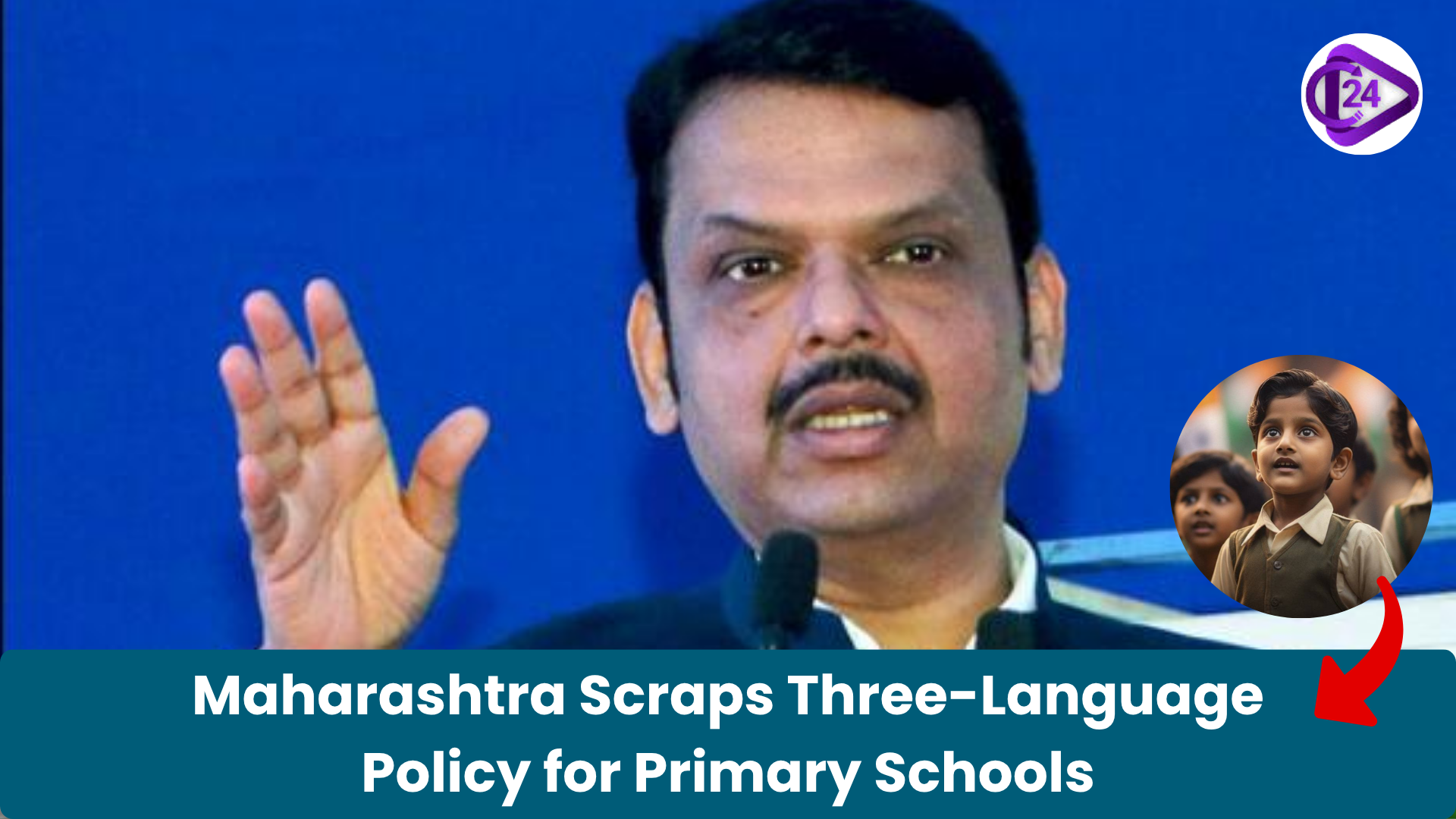
After massive outcry by various political parties, activists and academicians, Maharashtra has decided to do away with the controversial three-language policy applicable in Classes 1 to 5. The policy was very unpopular and was scrapped amid huge resistance because the country had planned to implement three languages in primary schools. The policy has now resulted in forming a committee by the government to look into the future of the policy and recommend the grade where the policy should be implemented. The opposition parties including the Thackeray cousins have celebrated this to be a successful protest on consensus among the Marathi people. But the position occupied by the newly-created expert panel is questioned.
Context
-
Maharashtra finally repeals the three languages policy in administrative schools following a long campaign against this three languages policy but establishes a committee to determine whether such policy is to be pursued in future.
-
Experts and opposition leaders are cautious on the role of the panel.
Key Highlights
What is the Three language policy?
-
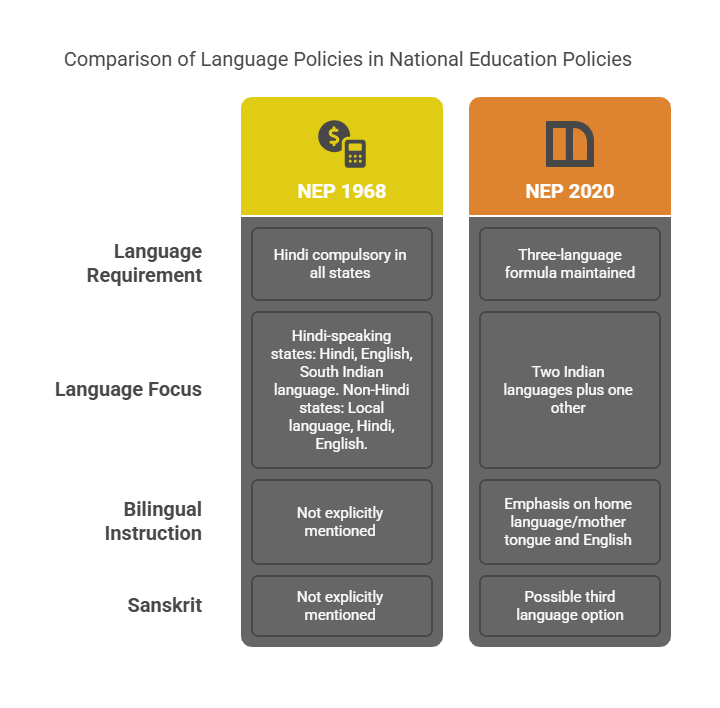
NEP 1968: It required Hindi to be taught in all the states of the country, and some states had language specifications. The Hindi-speaking states were compelled to teach Hindi, English, and a South India language whereas non-Hindi states were to teach the local language, Hindi and English.
-
NEP 2020: Maintains the three-language formula and inspires freedom of choice of languages, two to be used for the students originating in India, and the one may be any regional or Sanskrit.
-
Attention to Bilingual Instruction: There is an emphasis on bilingual instructions with special focus on home language/mother tongue and English.
-
Sanskrit: It pays particular attention to Sanskrit as a possible third language.
Importance of Three-Language Formula
The 3-language Formula has a number of positive features, especially when it comes to such areas as the development of communication skills, integration of a nation, and professional opportunities.
-
Develops Multilingual Abilities: Promotes the tendency to learn not one, but several languages, which also enhances cognitive abilities and allows to communicate more effectively.
-
National Integration and Cultural Exchange: Overcomes the communicative barrier, encouragement of Hindi outside the Hindi speaking or regional language in the non-Hindi speaking states and vice versa, makes people feel united.
-
Greater job security and employment: Being multilingual increases the chances of building a career and mobility and greater education in other states.
-
Empowers Regional Languages: Promotes the active use and preservation of regional languages to keep it out of the sidelines.
Concerns Surrounding the Three-Language Formula
In spite of its benefits, the Three-Language Formula also has various issues especially in the provision of Hindi imposition and its practicality.
-
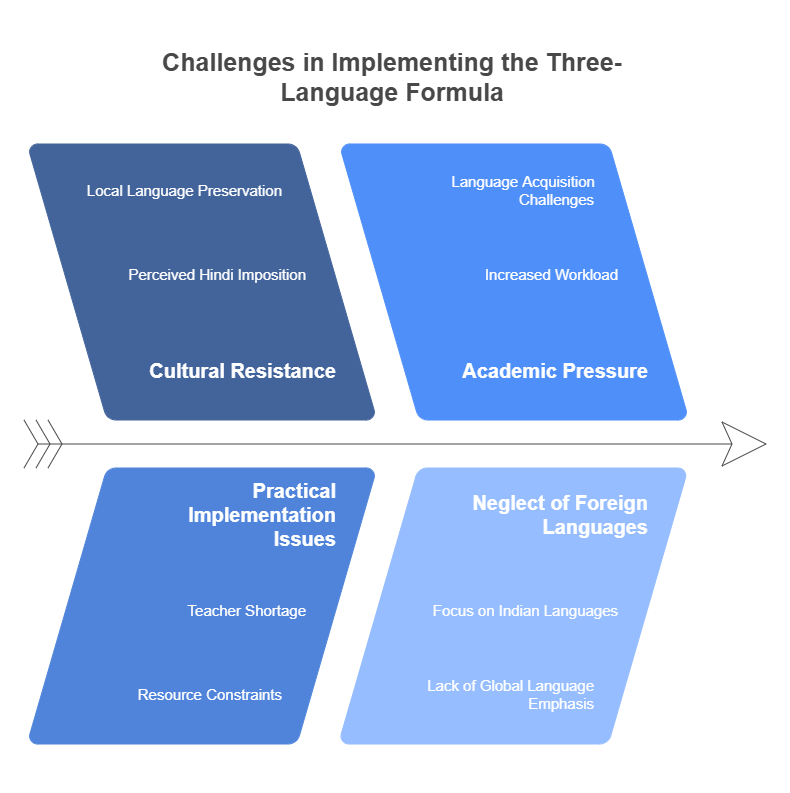
Feel of Forced Hindi: States such as Tamil Nadu, West Bengal and Karnataka reject the formula, as they feel it is an endeavour to push Hindi over the local languages.
-
Issue of Practical Implementation: In many schools, there is the problematic shortage of potential candidates to teach additional languages which is a problem to implement.
-
Overload of Students: The formula increases the academic pressure particularly those who have a problem in language acquisition and it increases the burden on them to handle them.
-
Possible Disregard to Foreign Languages: Critics state that the students are to be promoted in the learning of the global languages (such as French, German, or Mandarin) to succeed in their international careers rather than a third Indian language.
Way Ahead
There has to be a middle ground found in order to clear the differences and make the Three-Language Formula successful.
-
Positive Discussions: The Centre and the States must also discuss constructively and find a workable compromise that takes into account the regional preferences and, at the same time, preserve cohesiveness in the country.
-
Shared responsibility: The responsibility in the implementation of the policy is shared by the Centre and the State as the subject of education is a concurrent subject.
-
Significance of Samagra Shiksha: The debate on the third language should not be used to slow down the release or implementation of Samagra Shiksha as it helps to aid the educational changes and provide quality education.
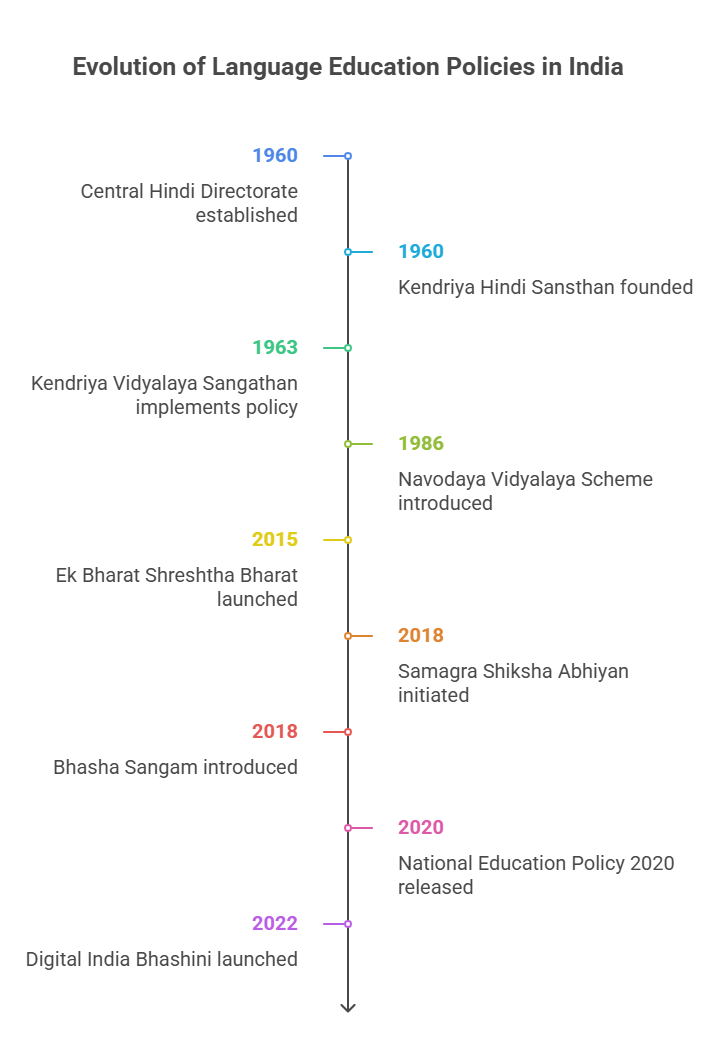
Schemes related to three language policy
|
Scheme/Initiative |
Year (With Effect From) |
Focus |
|
National Education Policy (NEP) 2020 |
2020 |
Emphasizes three-language formula in school education |
|
Samagra Shiksha Abhiyan |
2018 |
Supports multilingual teaching and textbook development |
|
Central Hindi Directorate (CHD) |
1960 |
Promotes learning and teaching of Hindi across India |
|
Kendriya Hindi Sansthan |
1960 |
Trains teachers in Hindi as a second/third language |
|
Navodaya Vidyalaya Scheme (NVS) |
1986 |
Follows three-language formula in school curriculum |
|
Kendriya Vidyalaya Sangathan (KVS) |
1963 |
Implements the three-language policy in KVs |
|
Language Education under EFLU and CIIL |
1969 (CIIL), 1958 (EFLU) |
Supports language education, research, and training |
|
Bhasha Sangam |
2018 |
Promotes familiarity with 22 scheduled Indian languages |
|
Ek Bharat Shreshtha Bharat (EBSB) |
2015 |
Encourages learning of languages of other Indian states |
|
Digital India Bhashini (AI-based language platform) |
2022 |
Enables multilingual access to digital content and services |
Conclusion
The Three-Language Formula belongs nowadays to the Indian educational policy, which is aimed at enhancing multilingualism and integration. But it should be implemented with consideration of the regional sentiments, the issues affecting the availability of teachers and the workload of students. The initiatives of the government including the PM SHRI scheme and Samagra Shiksha Abhiyan will be instrumental in enhancing the larger educational system and in making sure that the formula is effective, inclusive and balanced in all states.