


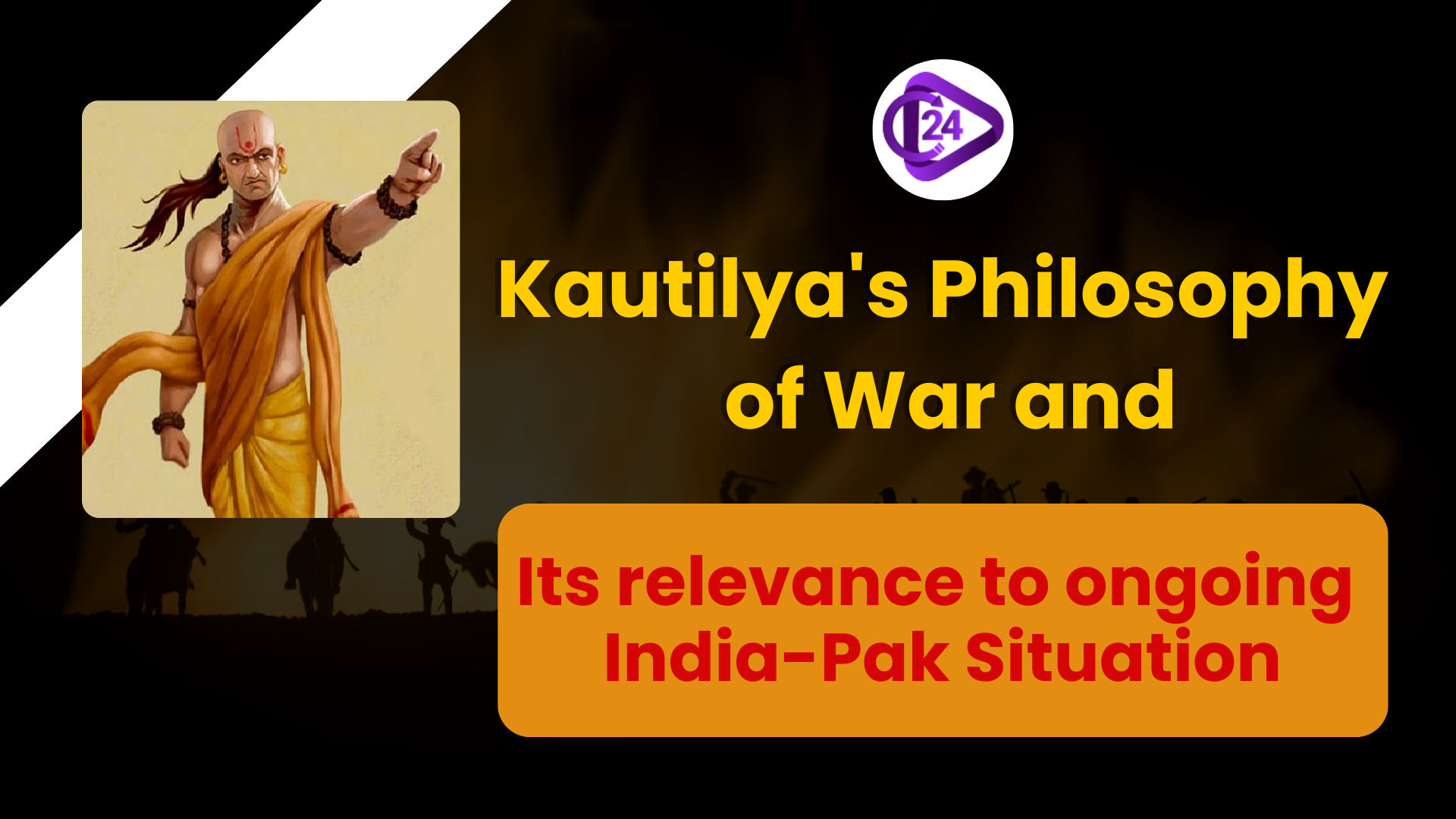
The Arthashastra is an old Indian text composed by the philosopher Kautilya (otherwise known as Chanakya), who was the adviser to the first Mauryan king, Chandragupta Maurya. This book one of the oldest and most significant writings on politics, governance and economics. It provides the practical guidance on how to govern as a king or ruler, how to deal with enemies and how to support the wellbeing of the people. It also mentions about war, diplomacy and the domestic management of the state.
Context
-
The current tensions in India-Pakistan military clashes and territorial disagreements can be analyzed using Kautilya’s Arthashastra which is a detailed plan for statecraft, diplomacy and war.
-
Kautilya’s teachings provide some insight into the nature of war, diplomacy, and war for power, but which are particularly relevant to the India-Pakistan conflict with reference to the Kashmir issue.
Key Points
Kautilya’s Philosophy of War:
-
Realism in War: International relations, as humanity sees them, is simply a power struggle. States, he says, are always at war or preparing to be at war.
-
Offensive Realism: Kautilya practices offensive realism in that a state should expand its power to survive and become dominant. He claims that “offense is the best defence.
-
Role of Territory: Kautilya makes a big deal about territory and resources in conflict. Control of valuable areas is one of the key features of a state’s power.
-
Diplomacy and War: Kautilya’s strategy consists of diplomacy (Sama), inducement (Dama), punishment (Danda), and divide and rules (Bheda) to obtain strategic solutions.
Mandala Siddhant (Theory of Political Relations):

-
Concentric Circles of Power: The state-to-state relationship in the immediate environment as defined by Kautilya’s Mandala Siddhant varies from enemy to ally edging on self-interest.
-
India-Pakistan Context: India and Pakistan’s relations show Mandala theory in action as both countries vie for the control of Kashmir, a region that is, of course both rich in resources and strategic.
-
No Permanent Enemies or Friends: There are no permanent friends or enemies in Kautilya’s eyes, only permanent interests. This is why both countries are changing their allies to international powers (India’s relationship with the U.S. and Pakistan’s relationship with China).
Saptanga Theory (Theory of Seven limbs of the State):

-
Elements of Power: Kautilya lists the seven most important attributes of the strength of a state:
-
Swami (Leader)
-
Amatya (Ministers)
-
Janapada (People)
-
Durg (Fortifications)
-
Kosa (Treasury)
-
Danda (Army)
-
Mitra (Allies)
-
-
Application to India and Pakistan:
-
India and Pakistan are increasing their army and alliances.
-
India’s defense relationships with the U.S. and growth in state of military technology project Kautilya’s counsel of protecting the state.
-
Pakistan’s quest with China for the military support and economic co-operation forms a strategic bed to align to balance the power of India.
-
Importance of war and diplomacy:
-
Sama (Diplomacy): Kautilya raises a note on the need for diplomacy where possible, while war is otherwise inevitable.
-
India and Pakistan: India has tried diplomacy several times (e.g., peace talks), but Pakistan’s actions keep spurring military tensions.
-
-
Dama (Economic Incentives): By either economic incentives or punishment, changing the enemy's behavior.
-
India’s Role: India has applied economic persuasion and trade politics to shape the regional geopolitics, but economics have often been inadequate given the deep-rooted geopolitical conflict.
-
-
Danda (Punishment): Military action as a punishment/deterrent form of punishment.
-
Operation Sindoor: India’s early-day military targeted terror camps in Pakistan along the same lines as Kautilya’s stress on Danda as a weapon of maintenance of national security.
-
-
Bheda (Divide and Conquer): Kautilya advocates making divisions among the enemy camp.
-
Pakistan’s Internal Divisions: India’s effort to develop relations with ethnic and political groups of Pakistan for instance, in Balochistan, represents the idea of Bheda of Kautilya.
-
Strategic Importance of Kashmir:
-
Territorial Gain: Control over territories that are strategically important for the survival and expansion of the state is important to Kautilya.
-
Kashmir’s Role: Kashmir is not only economically important for its resources but it is also militarily but also greatly geopolitically as well. Both India and Pakistan realize that Kashmir’s control will be an advantage strategically, which would give it an epicenter for its conflict.
-
Kautilya’s View on Territory: According to him, any state must protect its borders and resources; that is why Kashmir is sensitive for them all.
The Long-Term Strategy of Statecraft:
-
Kautilya’s Focus on Long-Term Planning: Kautilya stresses that long range strategy is important, alliance formation, militarization strength and economic strength.
-
India and Pakistan: Both countries’ long-term strategies are oriented towards military readiness, alliance with world power and use of economic and diplomatic instruments to reach the strategic objectives.
Conclusion:
The current state of affairs in India with its echoes of the Operation Sindoor, and the war that remains going over Kashmir, both illustrate the teaching of statecraft that Kautilya prescribes on power, maneuver, and the art of war. The latest war between India and Pakistan is the implementation of Kautilya’s War of Offensive Realism, diplomacy, territorial control and alliances, so his Arthashastra remains a tome to understand modern geopolitics in South Asia.