

Jinali Mody Wins UNEP Young Champions of the Earth 2025 Award
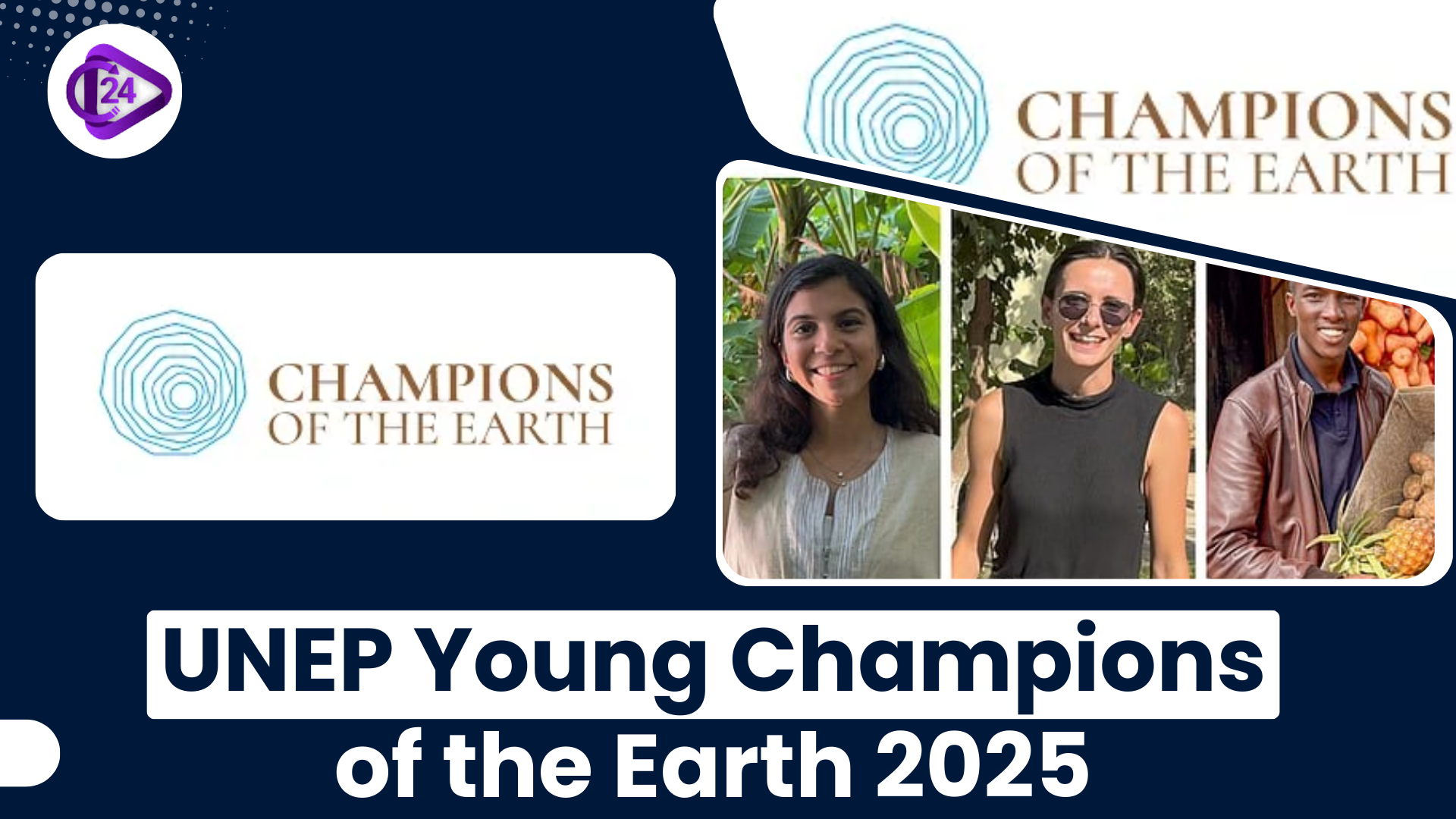
Jinali Pranabh Mody, an Indian entrepreneur and founder of Banofi Leather, was selected as one of the winners of the UNEP Young Champions of the Earth 2025 award. She received this international recognition for developing an innovative plant-based leather alternative using waste from banana crops. Her startup, Banofi Leather, aims to reduce the environmental impact of conventional leather production by converting agricultural waste into a useful and sustainable material.
The winners were announced on 23 September 2025 during Climate Week NYC in New York. The award recognises young innovators who develop practical solutions to environmental challenges.
Jinali’s innovation addresses two important issues: agricultural waste management and the environmental impact of conventional leather manufacturing. By using discarded banana stems, Banofi Leather aims to support sustainable material production and promote a circular economy.
Jinali Mody and UNEP Young Champions of the Earth 2025: Overview
| Particulars | Details |
| Award Name | Young Champions of the Earth |
| Organising Organisation | United Nations Environment Programme (UNEP) |
| Year | 2025 |
| Indian Winner | Jinali Pranabh Mody |
| Country | India |
| Startup | Banofi Leather |
| Position | Founder |
| Innovation | Plant-Based Leather from Banana Crop Waste |
| Announcement Date | 23 September 2025 |
| Announcement Event | Climate Week NYC |
| Award Amount | US$20,000 per winner |
| Other Winners | Joseph Nguthiru and Noemi Florea |
| Main Objective | Supporting Youth-Led Environmental Innovation |
Who Is Jinali Pranabh Mody?
Jinali Pranabh Mody is an Indian entrepreneur and the founder of Banofi Leather, a material-science startup focused on developing sustainable alternatives to conventional leather.
She identified an opportunity to address two environmental challenges: agricultural waste and the pollution associated with traditional leather production.
Her innovation uses banana stem fibres and natural binders to create a plant-based leather alternative.
Educational Background
- Completed her undergraduate studies in Biochemistry at St. Xavier’s College, Mumbai.
- Earned a master’s degree from the Yale School of the Environment.
- Developed an interest in sustainable materials and environmental innovation.
Through Banofi Leather, she aims to demonstrate how agricultural by-products can become valuable raw materials for the fashion and manufacturing industries.
What Is Banofi Leather?
Banofi Leather is an Indian startup that develops plant-based leather using waste generated from banana cultivation.
After a banana plant produces fruit, its stem is generally cut down to allow a new plant to grow. These stems can become agricultural waste if they are not properly utilised.
Banofi uses discarded banana plant material to develop an alternative to conventional animal leather.
How Is Banana Crop Waste Converted into Leather?
The basic manufacturing process involves the following stages:
| Stage | Process |
| 1. Collection | Discarded banana stems are collected. |
| 2. Fibre Extraction | Useful fibres are separated from banana stems. |
| 3. Material Preparation | Fibres are processed for manufacturing. |
| 4. Blending | Banana fibres are combined with suitable binders. |
| 5. Material Formation | The mixture is processed into a leather-like material. |
| 6. Product Development | The material is developed for applications such as bags and accessories. |
This approach follows the principles of a circular economy, where waste materials are converted into useful resources.
Environmental Benefits of Banofi Leather
According to UNEP’s profile of Jinali Mody, Banofi Leather offers environmental advantages compared with conventional animal leather production.
| Environmental Factor | Reported Impact |
| Water Consumption | 95% reduction |
| Carbon Emissions | More than 90% reduction |
| Toxic Waste | Eliminates toxic waste associated with the compared production process |
| Raw Material | Discarded banana crop stems |
| Agricultural Waste | Converts waste into a useful material |
| Industry | Sustainable Fashion and Material Science |
These figures are reported by UNEP for Banofi’s material compared with conventional animal leather production. They should not be interpreted as universal results for every plant-based leather product.
What Is the UNEP Young Champions of the Earth Award?
The Young Champions of the Earth is a flagship youth environmental initiative of the United Nations Environment Programme.
It recognises young entrepreneurs and innovators who develop creative solutions to environmental challenges.
The programme supports people working in areas such as:
- Climate change and climate action.
- Biodiversity conservation.
- Waste management and pollution reduction.
- Sustainable materials and production.
- Clean water and environmental protection.
- Sustainable development.
The programme was launched in 2017 and provides financial assistance, mentorship and international visibility to selected environmental innovators.
Benefits of the Young Champions of the Earth Award
| Benefit | Description |
| Seed Funding | US$20,000 for each 2025 winner |
| Mentorship | Guidance from experts and professionals |
| Global Recognition | International visibility for environmental innovation |
| Communications Support | Help in promoting environmental solutions |
| Networking | Opportunities to connect with global environmental stakeholders |
| Business Development | Support to develop and expand sustainable ideas |
Other Winners of UNEP Young Champions of the Earth 2025
Apart from India’s Jinali Mody, two other environmental innovators were selected for the 2025 award. The three winners represented India, Kenya and the United States.
| Winner | Country | Innovation | Environmental Contribution |
| Jinali Pranabh Mody | India | Banofi Leather | Plant-based leather from banana crop waste |
| Joseph Nguthiru | Kenya | HyaPak | Biodegradable packaging from water hyacinth |
| Noemi Florea | United States | Cycleau | Greywater treatment and water reuse |
Joseph Nguthiru – Kenya
Joseph Nguthiru is associated with HyaPak, a Kenyan initiative that develops biodegradable packaging using water hyacinth.
Water hyacinth is an invasive aquatic plant that creates ecological challenges in several water bodies, including Lake Naivasha in Kenya.
His innovation uses this plant as a raw material for biodegradable packaging.
Noemi Florea – United States
Noemi Florea is the innovator behind Cycleau, a water-treatment system focused on greywater treatment and reuse.
Her innovation aims to reduce water consumption by making wastewater suitable for further use through a treatment process.
United Nations Environment Programme (UNEP): Establishment and Functions
The United Nations Environment Programme is the leading global environmental authority within the United Nations system.
It works with governments, international organisations, businesses and civil society to address environmental challenges.
UNEP was established in 1972 following the United Nations Conference on the Human Environment held in Stockholm, Sweden. Its headquarters are located in Nairobi, Kenya.
Important Facts About UNEP
| Particulars | Details |
| Full Form | United Nations Environment Programme |
| Abbreviation | UNEP |
| Established | 1972 |
| Establishment Background | Stockholm Conference on the Human Environment |
| Headquarters | Nairobi, Kenya |
| Executive Director | Inger Andersen |
| Organisation Type | United Nations Programme |
| Main Focus | Global Environmental Protection |
| Major Areas | Climate Change, Biodiversity and Pollution |
Major Functions of UNEP
- Climate Action: Supports international efforts to address climate change.
- Biodiversity Conservation: Promotes the protection of ecosystems and wildlife.
- Pollution Control: Works to reduce air, water and plastic pollution.
- Environmental Research: Publishes scientific reports and environmental assessments.
- International Cooperation: Helps countries work together on environmental challenges.
- Sustainable Development: Encourages environmentally responsible policies and practices.
UNEP also supports international environmental agreements and provides scientific information to help governments make informed decisions.
Significance of Jinali Mody’s Achievement for India
Jinali Mody’s recognition highlights India’s contribution to environmental entrepreneurship and sustainable material innovation.
Her work demonstrates how agricultural waste can be used to develop alternatives for industries that traditionally depend on resource-intensive materials.
The achievement is significant for several reasons:
- Waste Utilisation: Banana crop waste is converted into a commercially useful material.
- Sustainable Fashion: Plant-based leather offers an alternative to conventional animal leather.
- Water Conservation: Banofi reports a 95% reduction in water use compared with conventional leather production.
- Climate Benefits: The company reports more than 90% lower carbon emissions.
- Rural Livelihoods: The initiative works with banana farmers to utilise discarded stems.
- Women Participation: According to UNEP, women make up 60% of the company’s team.
- Global Recognition: The award provides international visibility to Indian environmental innovation.
Her work demonstrates how entrepreneurship, scientific research and environmental responsibility can contribute to sustainable development.
Conclusion
Jinali Pranabh Mody’s selection for the UNEP Young Champions of the Earth 2025 award is an important achievement for India’s environmental innovation sector. Through Banofi Leather, she has developed a plant-based leather alternative using discarded banana crop stems, addressing agricultural waste and the environmental challenges associated with conventional leather production.
The award, established by UNEP to recognise young environmental innovators, provides funding, mentorship and global visibility to promising solutions. Along with Joseph Nguthiru of Kenya and Noemi Florea of the United States, Jinali Mody was among the three global winners in 2025.
Her innovation highlights the potential of circular economy practices, sustainable materials and youth-led entrepreneurship in building a more environmentally responsible future.