


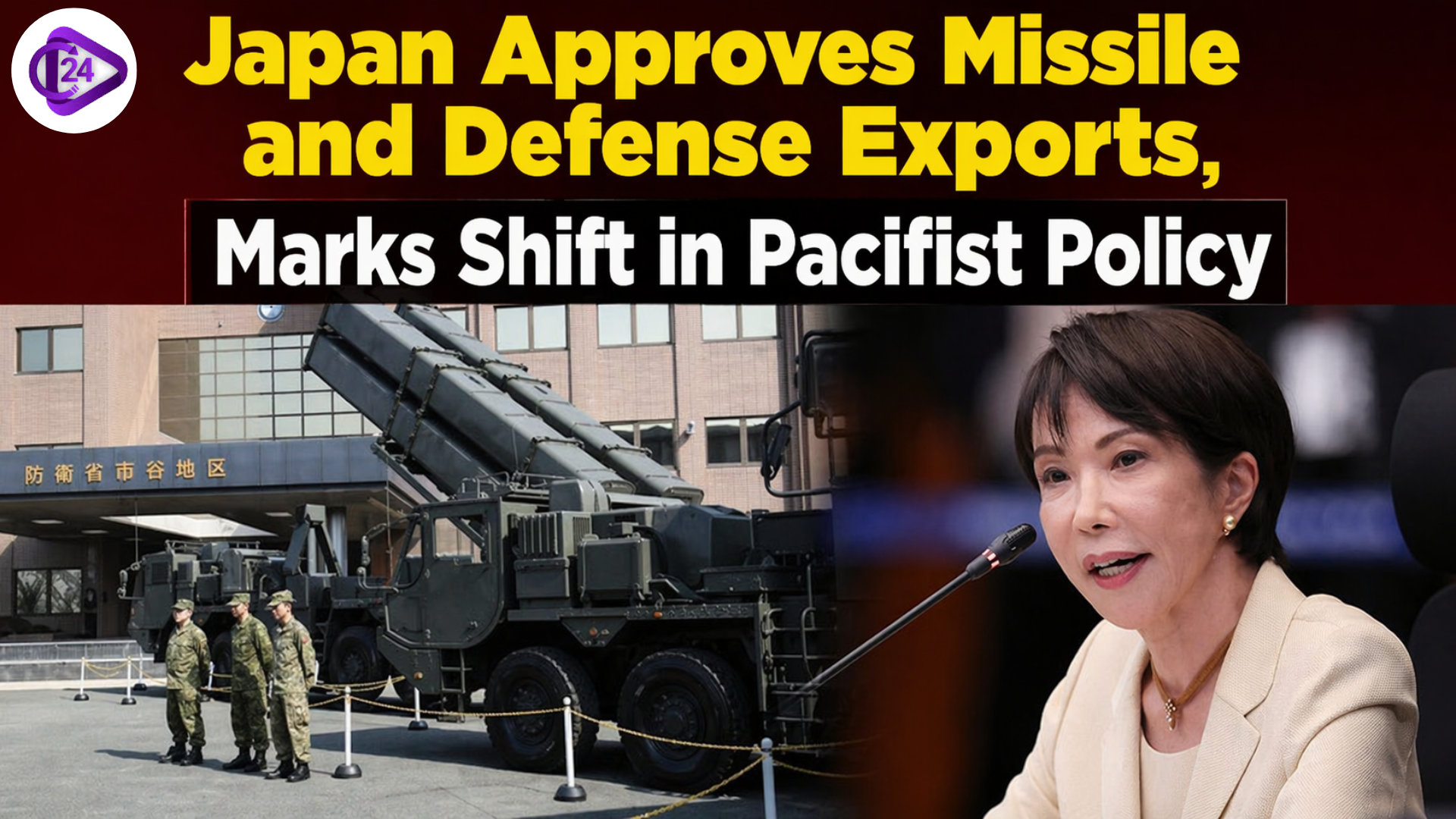
Japan has sanctioned a historic alteration in its defence policy through the export of missiles and other military hardware, and this has led to a significant turnaround in its pacifist policy since World War II. The move, which was made by the cabinet headed by Prime Minister Sanae Takaichi, was the lifting of the decades-long ban on the exportation of deadly weapons. This action is supposed to bolster the Japanese defence and increase cooperation with the allies in response to the growing security threats in the region from China and North Korea. Japan is redefining its conventional security policy by opening up its arms market and establishing itself as an important participant in the worldwide defence partnerships.
Key Highlights of Japan’s Defence Export Policy Shift
-
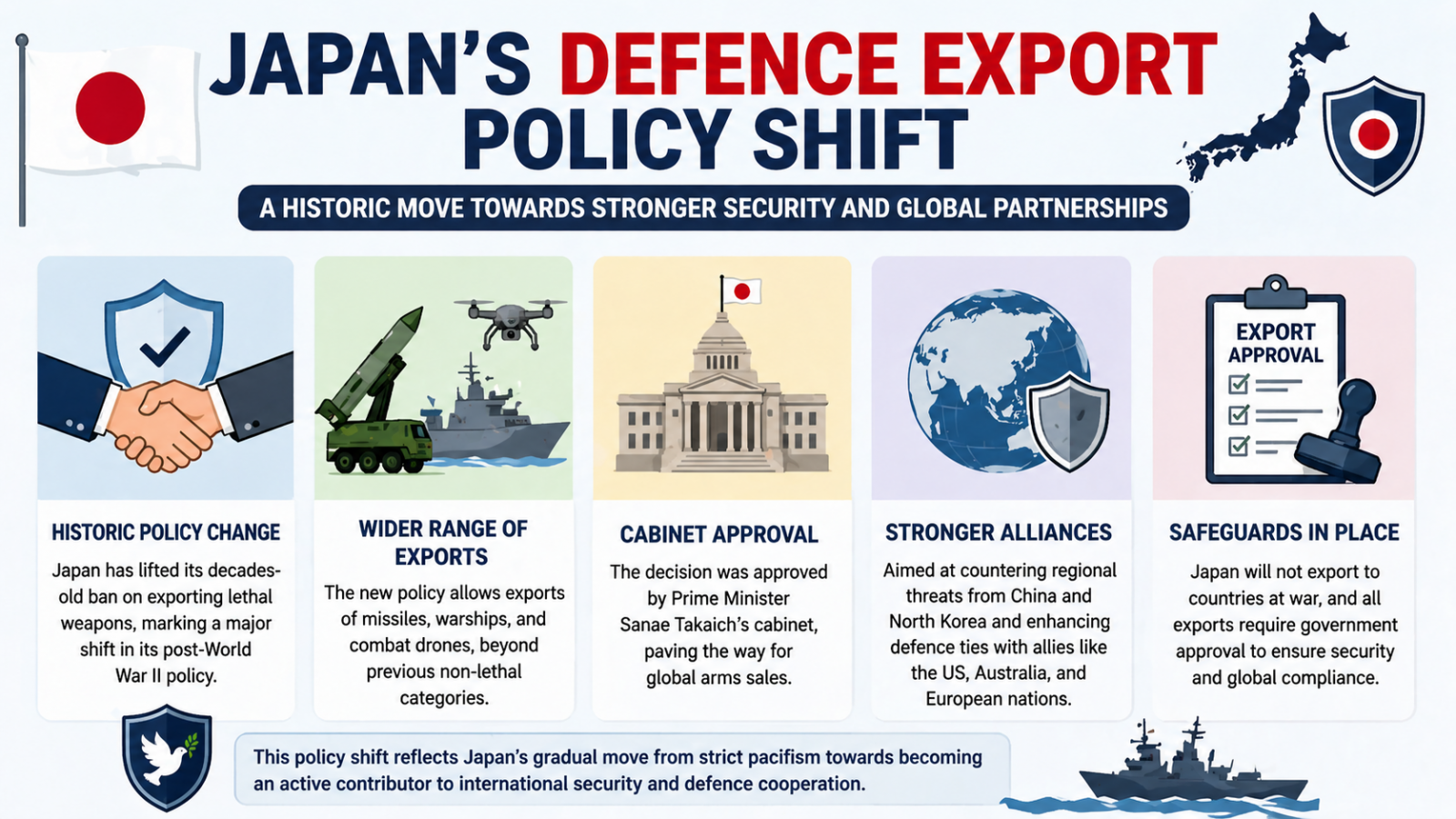
The decades-old ban on exporting lethal weapons in Japan has been officially lifted, and it is one of the largest policy shifts in Japanese defence policy in its history since World War II.
-
The new policy permits exports of missiles, warships and combat drones, among other military equipment, as opposed to the previous non-lethal categories.
-
The cabinet, which was headed by Sanae Takaichi, passed the decision, paving the way to international sales of arms.
-
Previously, there were rules on exports, which restricted the defence equipment of Japan to non-combat purposes like rescue, transport and surveillance; however, these restrictions have now been abandoned.
-
The policy change is spurred by the increasing regional security interests, especially the Chinese and North Korean tensions.
-
This reform will help Japan to build its own defence industry and enhance its competitiveness in the global arms market.
-
The relocation also aims to improve strategic relations with allies like the United States, Australia and European countries.
-
Irrespective of the relaxation, Japan will still not allow its exports to active conflict countries and will still place some protection on them.
-
To guarantee adherence to security and international standards, all defense exports will have to be authorised by national authorities.
-
The move indicates that Japan is slowly shifting away from its traditional policy of being strictly pacifist to being very active in international security as well as cooperation in defense.
Delimitation Impact on South India
Conclusion – Japan Approves Missile and Defence Exports
The move by Japan to permit the sale of missiles and defence will be a very crucial shift in the Japanese security policy after the war. Japan is changing its image from decades of strict pacifism; it is changing with the new security ratios in the region and the entire world. The policy seeks to promote its defence sector, strengthen alliances and strategic capabilities. Although there have been protection mechanisms, this change is an indication of increased Japanese participation in the security cooperation throughout the world and a wider change in its national defence and foreign policy concerns.