

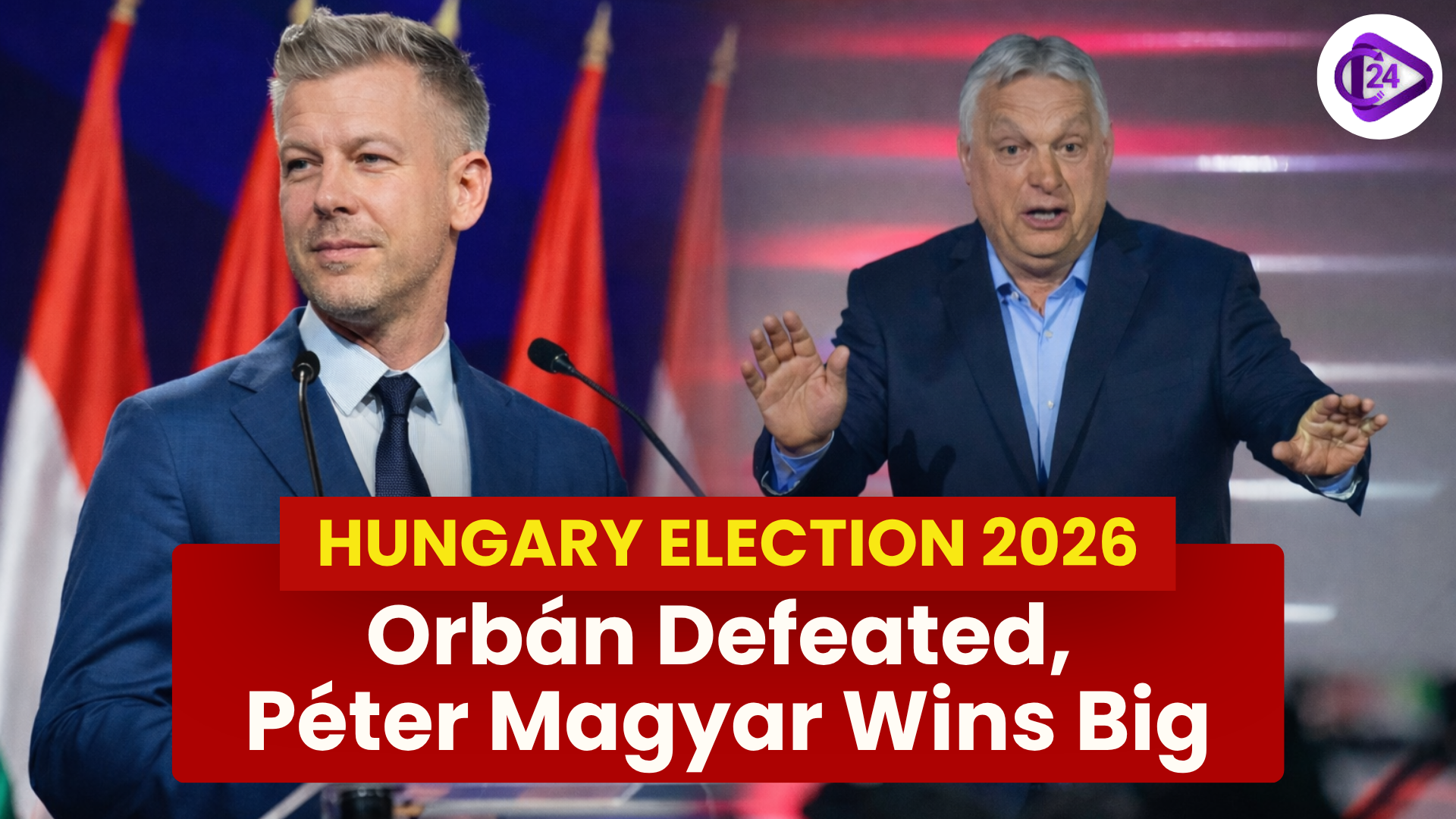
Hungary’s 2026 parliamentary election has marked a historic political shift as Viktor Orbán was defeated after 16 years in power. Opposition leader Péter Magyar led the Tisza Party to a landslide victory, securing a strong mandate for change. The election, held on 12 April 2026, saw record voter turnout and widespread support for democratic reforms. This result signals a major transformation in Hungary’s political direction, with expectations of improved relations with the European Union and renewed focus on governance, transparency, and economic recovery.
Hungary Election 2026 – Key Facts, Results & Impact
-
Péter Magyar won the election with a landslide victory, defeating Viktor Orbán
-
The election was held on 12 April 2026 for 199 parliamentary seats
-
The Tisza Party secured a two-thirds majority, enabling major reforms
-
Viktor Orbán has ruled Hungary for over 16 years (since 2010)
-
Orbán conceded defeat after losing the election
-
Voter turnout reached around 79%, one of the highest in recent years
-
The election is seen as the most important political event in Hungary in decades
-
Péter Magyar promised democratic reforms and the restoration of the rule of law
-
Focus on anti-corruption measures and transparency in governance
-
Plans to restore judicial independence and media freedom
-
Hungary is expected to improve ties with the European Union
-
The new government aims to unlock frozen EU funds
-
The result reflects public dissatisfaction with previous policies
-
Youth voters played a key role in shifting the election outcome
-
The victory marks a shift from populist to pro-European policies
-
Hungary may see economic reforms and investor confidence growth
-
The election result is seen as a setback for far-right politics in Europe
-
Péter Magyar may introduce constitutional reforms
-
The outcome is viewed as a turning point for Hungarian democracy
-
It signals a new political era focused on EU integration and governance reform.

India’s First Quantum Computer to Launch in Andhra Pradesh
Conclusion – Hungary Election 2026
The Hungarian Election 2026 marks a major political turning point as Péter Magyar defeats long-time Prime Minister Viktor Orbán. This historic outcome reflects public demand for democratic reforms, transparency, and stronger governance. The new leadership is expected to reshape Hungary’s domestic and foreign policies, especially its relationship with the European Union. Overall, the election signals the beginning of a new political era, bringing hope for institutional reforms, economic stability, and a more balanced democratic system in Hungary.