

Indus Waters Treaty: A Document Past Its Time

The Indus Waters Treaty (IWT), which is a 65-year-old accord between India and Pakistan signed with the assistance of the World Bank aimed at balancing the sharing of the water by the Indus river and its tributaries. Although the treaty had a legal platform of distributing water and settling disputes,...

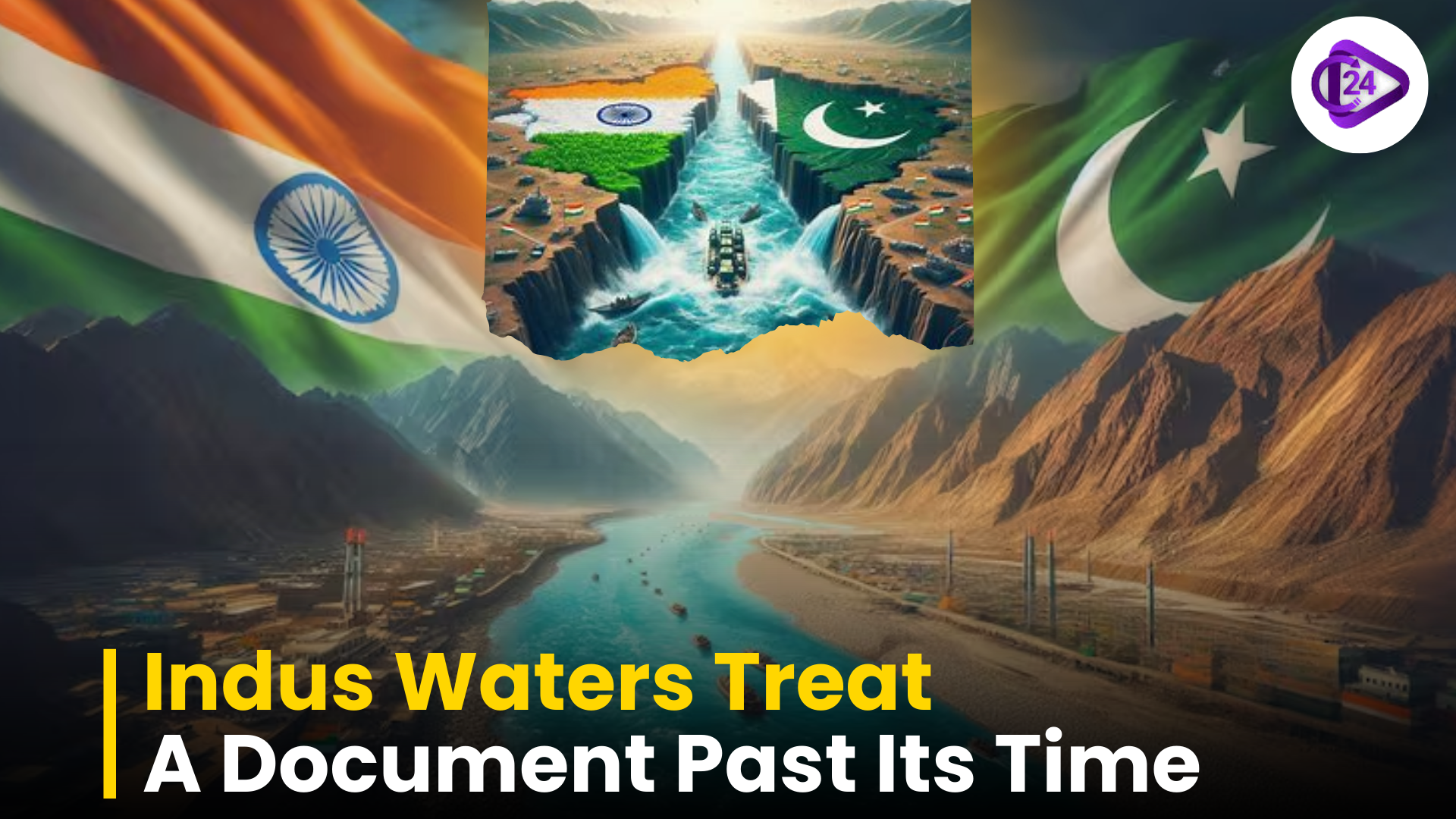
The Indus Waters Treaty (IWT), which is a 65-year-old accord between India and Pakistan signed with the assistance of the World Bank aimed at balancing the sharing of the water by the Indus river and its tributaries. Although the treaty had a legal platform of distributing water and settling disputes, the issues to which the treaty was created have changed and most people think that the treaty is no longer applicable to address the new-arising water related problems in the area.

Key Points in Detail:

Historical Context:

  • The IWT split the Indus River and its tributaries into two, one western (Chenab, Jhelum, and Indus) to Pakistan and the eastern (Sutlej, Beas and Ravi) to India.

  • This was necessary to the irrigation requirements of the respective nations and any large-scale hydraulic plants including the Bhakra and Nangal dams of India and the dependence of the Pakistani state on the western rivers.

The Irrelevance of IWT:

  • Although the treaty was previously used to support the use of water, peace-building, and infrastructure development, it is currently experiencing irrelevancy with changing geopolitical processes and climate changes.

  • Political Enmity and Terror Incidents: The changing political environment, particularly the Pahalgam attack prompted India to freeze its involvement in certain IWT mechanisms which indicated the weakness of the treaty in the wake of the yet-to-be-resolved conflicts.

Current Challenges:

Climate Change Impact:

  • Hindu KushHimalaya glaciers are melting at a rate unprecedented since the early 1970s, and this is causing glacial ice to run off in increased amounts, leading to changes in river flows and shifting in river flows, especially in the Upper Indus Basin.

  • Unpredictable Rainfall and Monsoon: The more erratic monsoon patterns of the Lower Indus Basin are of a direct threat to the stability of agriculture and water management.

  • Floods: The catastrophic Punjab floods, which impacted millions of people and submerged huge areas of agricultural lands, are a good example of severe climatic extremes with which the basin is at risk.

Siltation:

  • The reservoirs are becoming full of silt, reducing storage spaces and enhancing floods. This problem cannot be addressed with reactive actions following the floods but long-term silt management techniques.

Water Beyond Engineering Management:

  • Historically, the IWT was concentrated on irrigation, dams, and hydropower. This time, it will have to be on resilience amidst climatic extremes and sustainability of the ecosystem.

  • New challenges requiring innovative, cross-border cooperation have become siltation and climate variability.

Looking Forward:

  • The initial mechanisms of the IWT, i.e. river allocation, dispute resolution, and project regulation, do not meet the modern requirements of the region. The current requirement today is real-time information exchange particularly on hydrological information and flood forecasts.

  • Information sharing between India and Pakistan such as the agreement made by India with China towards Brahmaputra has been effective in times of floods. This must form the basis of the new collaboration and not an old and inflexible treaty.

  • The cooperation would be facilitated by a flexible structure perhaps in the form of a Memorandum of Understanding (MoU) and this would prevent the historical rancor and time wastage associated with the red tape of the original treaty.

Conclusion

Although the Indus Waters Treaty is an indispensable historical document, it is becoming less and less capable of dealing with the 21st century issues of the Indus Basin. Climate change, geopolitical tensions, and ecological degradation require a new strategy, one related to the information exchange, disaster preparedness, and sustainable water management. Holding on to old structures and ignoring siltation and climatic stress will not help to improve the situation. It is imperative that both India and Pakistan come up with a new, modern structure that would help to guarantee the sustainability of the Indus Basin in the future generation.
Cabinet approves Emergency Credit Line Guarantee Scheme 5.0
Cabinet Approves Increase in Supreme Court Judge Strength to 37
Union Cabinet Approves Mission for Cotton Productivity in India
Vande Mataram Insult to Become Punishable Offence, Cabinet Clears Amendment
UDGAM Portal Update: 30 Banks Integrated to Help Legal Heirs Trace Unclaimed Funds
Malcolm Adiseshiah Award 2026, Raghav Das Gaiha Honoured
07 May 2026
06 May 2026
05 May 2026
04 May 2026
02 May 2026
01 May 2026
30 April 2026
29 April 2026
17 April 2026
16 April 2026

Start Learning Today with Class24

Buy a course

SSC

Railway

Banking

Teaching Exams

Rajasthan Exams

K12 Courses

Class24 Mobile Application

Class24 also has a mobile application so that it becomes easily accessible and convenient. This can be downloaded on an Android device. Users have appreciated this app and the content provided as 4.1 out of 5 is its rating in the App Store. People loved it because Class24 is giving content which is extremely rich in every sense. The app comprises a wide variety of features for smooth learning:

  • User-Friendly Interface: The app is categorized into various sections so that students can navigate and access various resources with ease.
  • Offline Access: The study materials can be downloaded and the student can access them even when not connected to the internet.
  • Inbuilt eBook Reader: There is a lightning-fast reader for eBooks within the app, so reading is seamless.
  • Progress Tracking: The app tracks student’s progress in preparation and keeps them organized and focused.

Courses and Subjects Offered

The total syllabus will be covered, and there are in-depth practice materials so as to give deep preparation in the courses designed to each one of them. All the subjects come under the aegis of courses offered by Class24 to meet different needs of various aspirants such as:

Preparation Tips for All Exams

Preparation tips for all exams mentioned below:

  • Previous Year Papers: Try to attempt at least 5-10 years of question papers to know the pattern of questions, how much difficulty one would face while answering, and how many frequently asked topics were in the examination.
  • Take Mock Tests: Attempt Mock Tests regularly in order to time and accuracy. You may analyze the performance and make an improvement for weak areas.
  • Focus on Time Management: Solve questions in the given time to make a habit of having speed and efficiency. Allocate time sensibly between Paper 1 and Paper 2, while appearing in the examination.
  • Current Affairs: For Current Affairs and TET exams, be updated about current affairs, teaching aptitude, and general awareness.
  • Regular Revision: Spend your daily and weekly time for revisions to not forget concepts and formulas. Use flashcards or do self-summary notes for quick revisions.
  • Understand the Exam Pattern and Syllabus: Understand the pattern of your exam paper and syllabus very well. Both Current Affairs and CSIR NET examinations are two-tier ones and involve both Paper 1, which consists of general aptitude and Paper 2 that involves specific aptitude subjects.
  • Make a Study Plan: Divide the preparation time into three phases of concept building, revision, and mock tests. Allocate more time to weaker areas while maintaining equilibrium with stronger sections.
  • Online Coaching or Study Groups: Enroll in online coaching programs like Class24 to get proper guidance and a structured approach to the study. Study groups will be useful to discuss doubts and share resources.
  • Stay Consistent and Motivated: Maintain a steady study schedule. Stay motivated by making small achievable goals.
  • Use Quality Study Materials: Suggested study material refers to a textbook, a set of previously published question papers, and web sources such as Class24.

Conclusion

Class24 is a one stop solution for aspirants preparing for Current Affairs, CSIR NET, SET, UP PGT English, UP TGT PGT, UPHESC Assistant Professor, TET, IGNOU B.Ed and other competitive exams. There are structured courses, live classes, mock tests along with the guidance of experts to assist candidates in achieving success in their respective fields.

Get success in your hand. Start study anytime anywhere.

The journey becomes simple and enjoyable when you start taking interest in it. And through our app “Class24”, we will be your trusted partners in developing that interest.

Daily Quizzes
Mock Tests
Ongoing

No ongoing tests right now.