

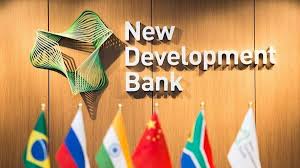
Indonesia has decided to become a member institution of the New Development Bank (NDB) which was established by the BRICS countries. President Prabowo Subianto expressed this statement when he met NDB President Dilma Rousseff who previously served as Brazilian President. Through its membership of the New Development Bank Indonesia will experience increased economic development which uses financial partnerships to empower key sector investments.
Introduction
-
The NDB membership choice of Indonesia matches the country's goal to expand economic growth rapidly along with enhancing worldwide financial consortiums.
-
During his statement President Prabowo explained that NDB membership offers Indonesia financial opportunities to fund infrastructure development and renewable energy projects and technological advancements.

What is New Development Bank (NDB)?
-
Referred to as the New Development Bank preexisting BRICS nations (Brazil, Russia, India, China, and South Africa) launched the institution to provide financial resources for sustainable development alongside infrastructure projects in emerging economies.
-
The membership of the bank has expanded as Egypt alongside Ethiopia and Iran and United Arab Emirates have joined since its founding period.
-
The fundamental elements of Indonesia’s membership within the NDB framework
About New Development Bank (NDB)
-
Overview: The NDB began as the BRICS Development Bank until countries Brazil, Russia, India, China and South Africa founded it as a multilateral development bank.
-
Objective: The institution has set its mission to provide funding for infrastructure development alongside sustainable projects within the BRICS bloc along with other emerging nations and developing countries worldwide.
-
Foundation: The move to create a New Development Bank emerged through the 2012 BRICS Summit which took place in New Delhi India. The Bank received legal status as an independent entity during 2015.
-
Headquarters: Shanghai, China.
-
Regional Offices: The first regional office of the bank began operations in Johannesburg which serves as the initial location in South Africa. The second regional office emerged in 2019 in São Paulo Brazil and the third one launched in Moscow Russia during 2019.
-
Capital Investment: The Bank established an initial capital of 100 billion dollars and its initial share capital amounts to 50 billion dollars.
-
Membership: Open to any member of the United Nations.

Governance Structure
-
The leadership of the Bank consists of a Board of Governors which comprises finance ministers from each of the five BRICS countries together with a Board of Directors.
-
Each country obtains its voting authority from the bank through its shareholding percentage.
-
New member countries can join the NDB although the five BRICS nations will always control at least 55% of the total shares.
-
NDB's management functions through a rotating presidency between BRICS nations and employs four vice presidents who belong to each of the other BRICS nations.
What is a Multilateral Development Bank?
-
The international financial organization known as Multilateral Development Bank originates from multiple sovereign countries to promote development in poorly developed areas.
-
MDBs unite members that include both developed nations together with those in the developing stage.
-
The organization lends funds and issues financial aid packages to its member states to finance social and economic development initiatives including projects involving road construction and water infrastructure delivery to populations.

Investment in Key Sectors
NDB shows keen interest to work with Indonesia in key strategic sectors which encompass:
-
power and hydroelectric : The bank will invest in solar power together with wind power and hydroelectric facilities.
-
Biodiesel Production – Enhancing Indonesia’s position as a key player in biofuel production.
-
Technological Development – Supporting digital infrastructure and innovation-driven projects.
These investment areas support Indonesia’s future vision of becoming an economy based on sustainable technologies.
Potential Projects Under NDB Partnership
The Indonesian government presents to NDB a set of projects which they plan to execute with their backing. Through this collaboration Indonesia will secure funds to develop its infrastructure as well as energy infrastructure and technology programs which decrease the country's dependency on conventional financing methods.
The Growing Influence of NDB
The growth in NDB’s membership base makes this institution a key global financial institution. The institution known as NDB completes many financing operations that support infrastructure developments within BRICS nations and other emerging economic areas. NDB extends its presence throughout Southeast Asia by adding Indonesia as a new member thus expanding its geographical reach across both Asia and the world.
Strategic Economic Benefits for Indonesia
Numerous economic advantages will come to Indonesia because it became part of NDB which will yield:
-
Through its cooperation with NDB members receive affordable funding for development initiatives that frees up their domestic economic capabilities.
-
The nation develops better commercial and investment ties with its membership in the BRICS-led banking institution.
-
Through sustainable project development NDB implements renewable energy goals that support Indonesia's green energy initiatives.
-
The financial backing received from NDB enables Indonesia to speed up its advancement toward digital economy and industrial transformation.
Future Implications and Next Steps
-
The economic territory of Indonesia shows great potential for transformation upon its accession to NDB. The country remains on track to finalize its entry into NDB through completing agreed arrangements. The nation will participate actively with NDB members to identify and establish collaboration on the most advantageous investment projects.
-
The incorporation of Indonesia into the NDB brings a transformative phase in worldwide financial collaboration which enables the country to pursue its economic and developmental goals.
Conclusion
The NDB membership of Indonesia represents a strategic course that aims to build sustainable economic expansion together with financial security. Through this partnership Indonesia will obtain capital resources to develop its infrastructure while expanding its renewable energy operations and technology improvements that result in significant financial gains. The increasing number of NDB members enhances its position in global finance management allowing developing nations to seek financial help from alternatives to established institutions.