
Day: March 26, 2025

Indonesia to Join New Development Bank: A Strategic Move Towards Economic Growth

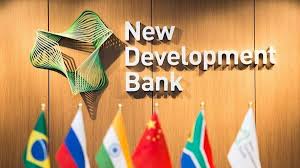
Indonesia has decided to become a member institution of the New Development Bank (NDB) which was established by the BRICS countries. President Prabowo Subianto expressed this statement when he met NDB President Dilma Rousseff who previously served as Brazilian President. Through its membership of the New Development Bank Indonesia will experience increased economic development which uses financial partnerships to empower key sector investments.

Introduction

  • The NDB membership choice of Indonesia matches the country's goal to expand economic growth rapidly along with enhancing worldwide financial consortiums. 

  • During his statement President Prabowo explained that NDB membership offers Indonesia financial opportunities to fund infrastructure development and renewable energy projects and technological advancements.

What is New Development Bank (NDB)?

  • Referred to as the New Development Bank preexisting BRICS nations (Brazil, Russia, India, China, and South Africa) launched the institution to provide financial resources for sustainable development alongside infrastructure projects in emerging economies. 

  • The membership of the bank has expanded as Egypt alongside Ethiopia and Iran and United Arab Emirates have joined since its founding period.

  • The fundamental elements of Indonesia’s membership within the NDB framework

About New Development Bank (NDB)

  • Overview: The NDB began as the BRICS Development Bank until countries Brazil, Russia, India, China and South Africa founded it as a multilateral development bank.

  • Objective: The institution has set its mission to provide funding for infrastructure development alongside sustainable projects within the BRICS bloc along with other emerging nations and developing countries worldwide.

  • Foundation: The move to create a New Development Bank emerged through the 2012 BRICS Summit which took place in New Delhi India. The Bank received legal status as an independent entity during 2015.

  • Headquarters: Shanghai, China.

  • Regional Offices: The first regional office of the bank began operations in Johannesburg which serves as the initial location in South Africa. The second regional office emerged in 2019 in São Paulo Brazil and the third one launched in Moscow Russia during 2019.

  • Capital Investment: The Bank established an initial capital of 100 billion dollars and its initial share capital amounts to 50 billion dollars.

  • Membership: Open to any member of the United Nations.

Governance Structure

  • The leadership of the Bank consists of a Board of Governors which comprises finance ministers from each of the five BRICS countries together with a Board of Directors.

  • Each country obtains its voting authority from the bank through its shareholding percentage.

  • New member countries can join the NDB although the five BRICS nations will always control at least 55% of the total shares.

  • NDB's management functions through a rotating presidency between BRICS nations and employs four vice presidents who belong to each of the other BRICS nations.

What is a Multilateral Development Bank?

  • The international financial organization known as Multilateral Development Bank originates from multiple sovereign countries to promote development in poorly developed areas. 

  • MDBs unite members that include both developed nations together with those in the developing stage. 

  • The organization lends funds and issues financial aid packages to its member states to finance social and economic development initiatives including projects involving road construction and water infrastructure delivery to populations.

Investment in Key Sectors

NDB shows keen interest to work with Indonesia in key strategic sectors which encompass:

  • power and hydroelectric : The bank will invest in solar power together with wind power and hydroelectric facilities.

  • Biodiesel Production – Enhancing Indonesia’s position as a key player in biofuel production.

  • Technological Development – Supporting digital infrastructure and innovation-driven projects.

These investment areas support Indonesia’s future vision of becoming an economy based on sustainable technologies.

Potential Projects Under NDB Partnership

The Indonesian government presents to NDB a set of projects which they plan to execute with their backing. Through this collaboration Indonesia will secure funds to develop its infrastructure as well as energy infrastructure and technology programs which decrease the country's dependency on conventional financing methods.

The Growing Influence of NDB

The growth in NDB’s membership base makes this institution a key global financial institution. The institution known as NDB completes many financing operations that support infrastructure developments within BRICS nations and other emerging economic areas. NDB extends its presence throughout Southeast Asia by adding Indonesia as a new member thus expanding its geographical reach across both Asia and the world.

Strategic Economic Benefits for Indonesia

Numerous economic advantages will come to Indonesia because it became part of NDB which will yield:

  • Through its cooperation with NDB members receive affordable funding for development initiatives that frees up their domestic economic capabilities.

  • The nation develops better commercial and investment ties with its membership in the BRICS-led banking institution.

  • Through sustainable project development NDB implements renewable energy goals that support Indonesia's green energy initiatives.

  • The financial backing received from NDB enables Indonesia to speed up its advancement toward digital economy and industrial transformation.

Future Implications and Next Steps

  • The economic territory of Indonesia shows great potential for transformation upon its accession to NDB. The country remains on track to finalize its entry into NDB through completing agreed arrangements. The nation will participate actively with NDB members to identify and establish collaboration on the most advantageous investment projects.

  • The incorporation of Indonesia into the NDB brings a transformative phase in worldwide financial collaboration which enables the country to pursue its economic and developmental goals.

Conclusion

The NDB membership of Indonesia represents a strategic course that aims to build sustainable economic expansion together with financial security. Through this partnership Indonesia will obtain capital resources to develop its infrastructure while expanding its renewable energy operations and technology improvements that result in significant financial gains. The increasing number of NDB members enhances its position in global finance management allowing developing nations to seek financial help from alternatives to established institutions.

Sunil Kumar Wins Bronze at Asian Wrestling Championships 2025

Sunil Kumar achieved a bronze medal during the 87kg Greco-Roman competition at the Asian Wrestling Championships 2025 that took place in Amman, Jordan. He recovered from his semifinal defeat against Yasin Yazdi from Iran to win the bronze medal battle against Jiaxin Huang from China. Sunil Kumar maintains his path towards reaching his previous Olympic potential after finishing as silver medallist in 2019.

Sunil Kumar’s Performance

  • Event: Asian Wrestling Championships 2025

  • Category: 87kg Greco-Roman

  • Medal: Bronze

  • Bronze Medal Match: Defeated China’s Jiaxin Huang

  • Quarterfinals: Won 10-1 against Tajikistan’s Sukhrob Abdulkhaev

  • Semifinal: Lost 1-3 to Iran’s Yasin Yazdi

Throughout the tournament Sunil Kumar displayed his technical mastery and his older wrestler expertise in the Greco-Roman style. His successful quarterfinal match resulted in victory which led to a strong comeback win in the bronze medal match to demonstrate his international wrestling potential.

Performance of Other Indian Wrestlers

  • Sagar Thakran (77kg): Won his qualification bout but lost 0-10 in the quarterfinals to Jordan’s Amro Sadeh. His successful progress toward the medal competitions relied on Sadeh's outcome in the semifinal matches.

  • Umesh (63kg): Eliminated in the qualification round.

  • The wrestlers Nitin (55kg) and Prem (130kg) dropped out from the tournament during its opening rounds.

Significance of the Achievement

Sunil Kumar's bronze medal makes India stronger in the field of Greco-Roman wrestling. His performance illustrated India's strength in these sporting events while providing motivation to the upcoming wrestlers. The hard competition from Iran and China did not faze Sunil whose determination alongside resilience has been outstanding.

Conclusion

Sunil Kumar demonstrated his outstanding skills and determination along with his dedication to achieve excellence when he won the bronze medal at the Asian Wrestling Championships 2025. Winning the bronze medal match demonstrates the ongoing Indian commitment toward strengthening its Greco-Roman wrestling standards. Sunil Kumar maintains his status as one of the strongest competitors in upcoming international wrestling matches.

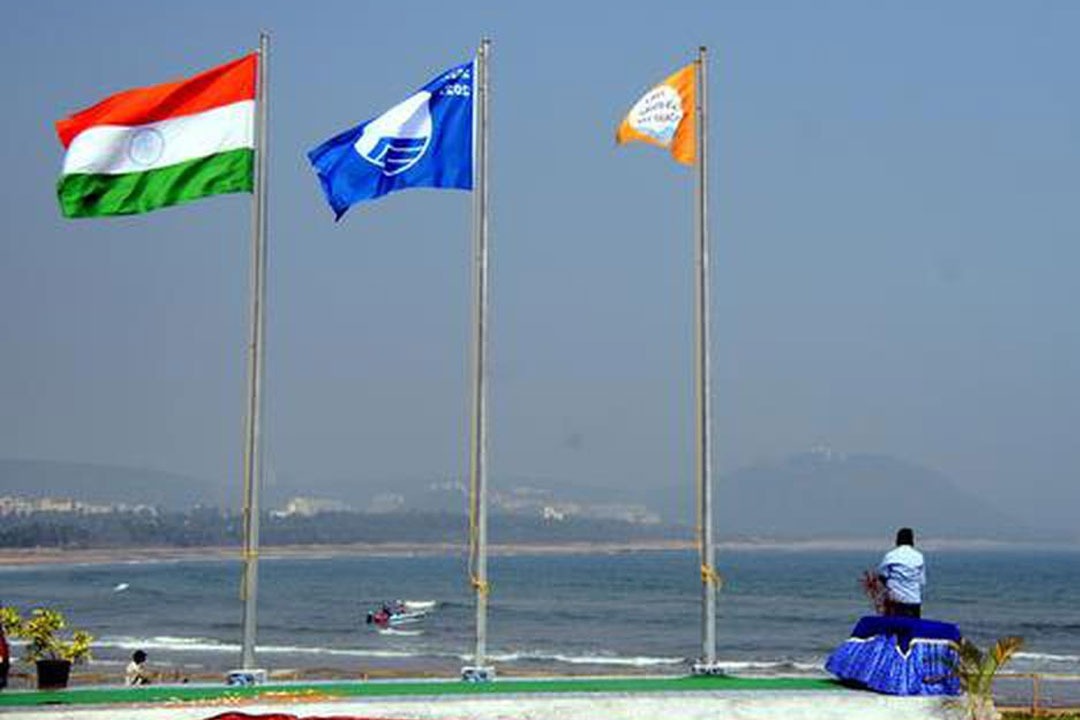
Rushikonda Beach Regained Blue Flag Certification

Rushikonda Beach at Visakhapatnam recovered its Blue Flag certification when the beach lost its prestige following compliance problems. The Foundation for Environmental Education (FEE) Denmark awards the certification to beaches that comply with both strict environment and safety requirements. The beach obtained its certification back since proper measures were applied to resolve compliance-related issues.

About Removal of Blue Flag:

Organisation Responsible:

  • The global administration of Blue Flag certification belongs to Foundation for Environmental Education which operates out of Denmark.

Procedure for Removal of Blue Flag:

  • The FEE-designated National Operator from each country conducts routine and unannounced control inspections of all Blue Flag beaches.

  • In India, Blue Flag India under the Society of Integrated Coastal Management (SICOM) acts as the National Operator.

  • National Operators implement control visits for evaluating the compliance of beaches with 33 environmental and safety criteria.

  • The observations together with recommendations are delivered to local authorities.

  • The local authorities will execute temporary withdrawal procedures when issues remain unresolved during a ten-day timeframe.

  • To confirm compliance new audits must be conducted before the restoration of the flag.

Conditions for Removal:

  • A minor breach of requirements involves one single problem unrelated to safety and health that requires repair within ten days.

  • The facility faces a temporary withdrawal when it has two or three minor issues that need resolution.

  • The presence of severe issues affecting visitor protection along with environmental preservation requires immediate removal plus a year-long certification loss.

  • Climatic or unforeseen emergencies along with unforeseen circumstances cause temporary suspension of the certification.

About Rushikonda Beach

Location: Visakhapatnam, Andhra Pradesh.

Features:

  • One of the only coastal frontages in Andhra Pradesh to gain Blue Flag status beginning in 2020.

  • Rushikonda Beach attracts many visitors due to its golden shoreline that meets pristine blue ocean waters.

About Blue Flag Certification:

  • The international eco-label originates from the Foundation for Environmental Education (FEE) in Denmark.

  • The Blue Flag programme launched in France during 1985 then expanded its operations to worldwide regions in 2001.

  • This award represents the most widely recognized voluntary standard that certifies beaches and marinas and sustainable tourism boats worldwide.

  • Through four main criteria the certification system supports long-term environmental development in freshwater and marine environments.

    • Water Quality

    • Environmental Management

    • Environmental Education

    • Safety

  • The Blue Flag organization works to advance sustainability across the tourism industry by implementing environmental teaching and protecting the environment alongside sustainable development methods.

Other Blue Flag Beaches in India:

  1. Shivrajpur Beach (Gujarat)

  2. Ghoghla Beach (Diu)

  3. Kasarkod Beach (Karnataka)

  4. Padubidri Beach (Karnataka)

  5. Kappad Beach (Kerala)

  6. Rushikonda Beach (Andhra Pradesh)

  7. Golden Beach (Odisha)

  8. Radhanagar Beach (Andaman and Nicobar Islands)

  9. Kovalam Beach (Tamil Nadu)

  10. Eden Beach (Puducherry)

  11. Minicoy Thundi Beach (Lakshadweep)

  12. Kadmat Beach (Lakshadweep)

Conclusion

Blue Flag certification at Rushikonda Beach demonstrates India's dedication to environmentally oriented development alongside sustainable travel activities. The Blue Flag certification both advances Indian beaches toward international recognition and stimulates tourism that respects the environment. The Blue Flag status requires permanent adherence to environmental and safety standards to retain this exemplary recognition.

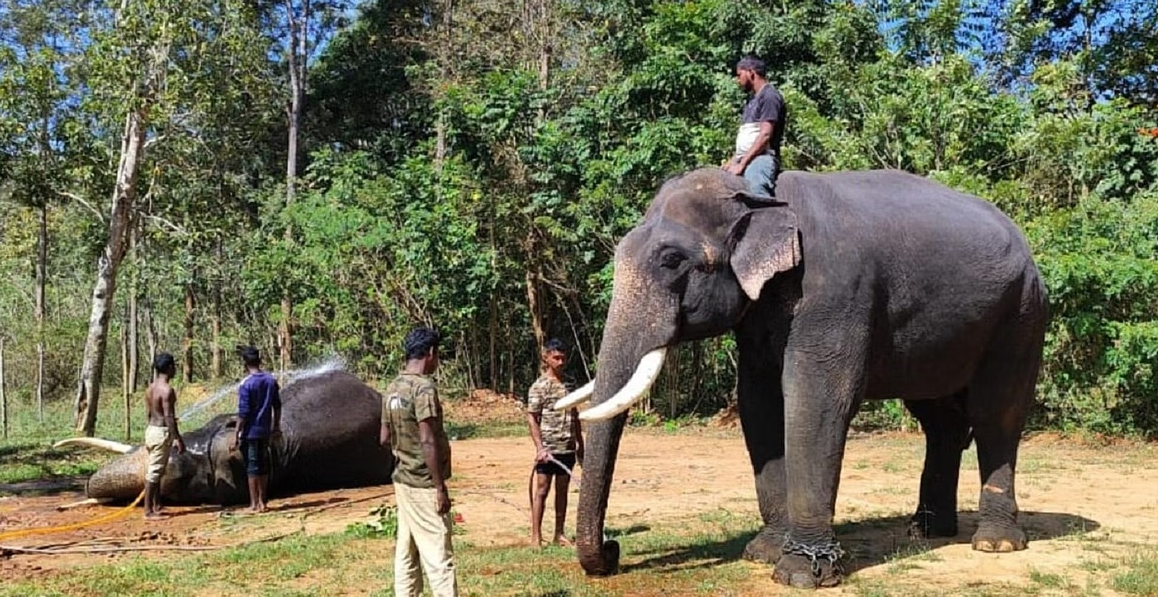
Karnataka Forest Dept to Soft-Release Captured Elephants in Bhadra Sanctuary

A wild elephant capture and rehabilitation operation started under the Karnataka Forest Department targets areas where elephants disturb the districts of Hassan, Chikkamagaluru, and Kodagu. A soft-release procedure for the rehabilitation comprises managing elephants within 20 square kilometers of enclosed Bhadra Wildlife Sanctuary area before their rewilding operation. The program seeks to protect human safety from elephants through safe rehabilitation preparations for elephants to rejoin their home habitats.

Key Points:

Reason for the Initiative:

  • The three areas of Hassan, Chikkamagaluru, and Kodagu districts have seen an increasing number of conflicts between humans and elephants.

  • A strategic process needs development to support the rehabilitation and successful reestablishment of problem elephants in their wilderness habitat.

Soft-Release Strategy:

  • Evacuated elephants will be housed at a 20 sq. km confined area within Bhadra Wildlife Sanctuary.

  • The sanctuary staff will monitor them while also introducing appropriate care procedures preceding their gradual sanctuary reintroduction.

  • Before integrating wildlife into the new environment the strategy provides adaptive measures to allow adaptation.

About Bhadra Wildlife Sanctuary 

Overview:

  • The area sits within the Western Ghats zone of Karnataka state.

  • The sanctuary exists within hills  of Mullaianagiri, Hebbegiri, Gangegiri, and Babaudangiri hill ranges.

  • The Tigers monitored administration designated this area as the 25th Project Tiger reserve of India when they established it in 1998.

  • The sanctuary stands out as the pioneer among all tiger preserves to conduct a successful village relocation initiative.

Geographical and Ecological Significance:

  • The sanctuary finds its location close to the Bhadra River while its tributaries include Somavahini, Thadabehalla, and Odirayanahalla.

  • Lakkavalli's ecological state receives support from the Bhadra River dam located near the area.

Vegetation and Biodiversity:

The sanctuary maintains several types of vegetation that include:

  • Southern Tropical Dry Deciduous Dry Teak.

  • Northern Tropical Dry Deciduous Mixed Forest.

  • Dry Deciduous Scrub Forest and Dry Bamboo Brakes.

  • Rich flora such as Teak, Rosewood, Mathi, Honne, Nandi, and medicinal plants.

The extensive animal population of Bhadra contains tigers and leopards and leopard cats besides dholes and Indian civet and Gaur alongside Sambar and barking deer.

Conclusion:

The Karnataka Forest Department established a vital program named soft-release of wild elephants to both stop conflicts between people and elephants and protect ecological stability. The initiative relies on Bhadra Wildlife Sanctuary to implement phased elephant rehabilitation programs that establish a secure habitat for these animals. The conservation drive at the sanctuary strengthens its status as an example of effective wildlife management across India through its additional support for wildlife preservation goals.

Bellatrix Aerospace Partners with Astroscale Japan for Space Debris Removal

The space mobility company Bellatrix Aerospace based in Bengaluru formed a formal agreement with Astroscale Japan to improve space sustainability. Through their established cooperation both organizations will work together for improving active debris clearance technologies and satellite care platforms and orbit protection strategies in the long term.

Bellatrix Aerospace signed a Memorandum of Understanding (MoU) with Astroscale Japan to conduct projects related to active debris removal and satellite servicing as well as sustainable in-orbit mobility. The collaboration between the two parties has space sustainability as its main objective while working to create a better orbital environment.

Key Highlights:

  • Under the terms of this partnership the organizations work together to achieve essential goals that include active debris removal as well as satellite servicing and sustainable in-orbit mobility solutions.

  • The innovative propulsion technologies or space mobility solutions delivered by Bellatrix Aerospace serve as the key strength of this emerging Indian space company.

  • Astroscale Japan leads the field of space debris mitigation while offering its customers measurable services such as satellite life extension support and in-orbit situational monitoring alongside end-of-mission services for disposal.

  • Astroscale proves its technological abilities by operating the ELSA-d and ADRAS-J missions in partnership with JAXA, ESA, U.S. Space Force, UK Space Agency and Eutelsat OneWeb.

  • Bellatrix Aerospace accomplished three successful space flights within one year which resulted in Green Propulsion and Hall-Effect Thruster technology accomplishment

  • Collaboration provides Bellatrix Aerospace with the opportunity to extend into the Japanese space industry market.

What is Space Debris?

Space debris consists of all discarded human-made space items which remain without functionality or serviceability such as broken satellites along with discarded rocket components and remnants from previous collisions alongside detached paint particles. Human space exploration missions have created a priority crisis regarding the accumulation of space debris.

These objects remain in various orbits around Earth and pose potential threats to operational satellites and space missions.

  • Rocket-launching material along with decommissioned satellites represent the main components of space debris.

  • Space debris accumulates primarily in the Low Earth Orbit (LEO) section which ranges between Earth surface and 2,000 km elevation but also remains present in Geostationary Orbit (35,786 km above the Equator).

Current Status of Space Debris

  • A total of 30,000 tracked space debris items exist in satellite orbit around Earth.

  • More than 200,000 space objects measure between 1 to 10 cm and numerous millions consist of smaller materials that are smaller than 1 cm.

  • The total number of debris objects exceeds 34,000 pieces that exceed 10 cm dimensions.

  • The space satellite population now totals 6,718 units and has experienced an additional 2,000 spacecraft since the beginning of 2022.

Causes of Space Debris

  • rising satellite launch: The space debris problem worsened because of rising satellite launch frequency.

    • Many of the orbiting satellites within the half-million spacecraft population belong to SpaceX's Starlink internet service.

  • decommissioned satellites: Thousands of decommissioned satellites continue to orbit space because they have been abandoned.

  • anti-satellite tests:The deliberate production of debris through anti-satellite tests has occurred in various countries including China, India and the United States.

  • The 2007 Chinese FengYun-1C test resulted in 25% additional space debris that became trackable.

  • Expanding space industry: The rise of public and private sector investments in space.

  • Fragmentation of space debris: Caused by collision, explosion, and degradation of defunct satellites.

Threats and Challenges Posed by Space Debris

  • Satellite Endangerment: Operational satellites become damaged when they collide with space debris that is floating in orbit.

    • The Russian Cosmos-1275 satellite became destroyed after suffering an impact with space debris during 1981.

  • Kessler Syndrome: The unpredictable sequence of destructive orbital collisions could make all orbital traffic completely unusable through Kessler Syndrome.

  • Limiting Future Space Activities: Orbital slots for new missions will probably decrease because growing space debris continues to accumulate.

  • Threat to Space Stations: Space debris has caused ISS operators to adjust their trajectory path 32 times since 1999.

  • Space Pollution: results in difficulty with space operations while causing serious environmental problems.

  • Geopolitical Tensions: Disagreements over liability and responsibility for space debris.

    • The U.S. government reported Russia to the ISS operations team because of the satellite testing event.

Space Debris Removal Efforts

International Initiatives: 

  • Inter-Agency Space Debris Coordination Committee (IADC): Established in 1993, with ISRO as a member.

  • COPUOS stands for the Committee on Peaceful Uses of Outer Space which exists as a United Nations body that manages space exploration activities.

  • Clean Space Initiative: A European Space Agency (ESA) program for space sustainability.

  • The European Space Agency has scheduled Clearspace-1 as its inaugural aircraft (2026) that will actively extract space debris from orbital space.

  • The RemoveDEBRIS project was formed to advance debris removal hardware demonstrations.

Indian Initiatives:

  • ISRO System for Safe & Sustainable Operations Management (IS4OM) started operations in 2022 as a system to detect space collision threats.

  • Project Netra functions as an advanced system to detect space debris.

  • During 2022 ISRO executed 21 flight maneuvers to prevent collisions between space objects.

  • ISRO SSA Control Centre: Established in 2020 for monitoring space situational awareness.

Measures Needed to Tackle Space Debris

  • The effort to enhance awareness requires improved tracking models and observation technologies.

  • The establishment of automated systems together with space-navigation protocols will improve inter-agency coordination.

  • New debris production should be addressed by switching to reusable launch vehicles rather than single-use rockets.

  • Research-based development of debris removal technologies should focus on implementing harpoons and magnets along with lasers and slingshots for debris capture.

  • On April 15th 2023 ISRO conducted a successful deorbit procedure for Megha Tropiques-1 following completion of its mission.

  • The organization follows all worldwide protocols for space debris mitigation.

Conclusion

The sustainable operations of space depend heavily on the management of space debris. The alliance between Bellatrix Aerospace and Astroscale Japan creates a fundamental solution for active debris removal and sustainable space mobility to address the space debris issue. Future safe and sustainable space conditions will only be possible through global partnership combined with advancing technologies under rigorous regulations.

Government Waives Import Duty on EV Battery and Mobile Phone Components

The Indian government granted tax-free status to several components needed for EV battery and mobile phone production. The upcoming financial year’s budget introduces these measures to support domestic production while improving export capabilities along with protection against US trade restrictions. This change will support Indian manufacturers and strengthen the country's trade talks with the US authorities.

Key Points:

  • The Finance Minister Nirmala Sitharaman included in the Finance Bill 2025 a policy which eliminates import tariffs on specific raw components needed for EV battery and mobile phone production.

  • As part of the exemption policy a complete list containing 35 items for EV battery manufacturing as well as 28 items for mobile phone production received duty-free import status.

Economic Impact:

  • This policy boosts domestic production alongside the ‘Make in India’ programs.

  • Indian export products gain enhanced competitiveness because of this measure.

  • The initiative will create offsetting actions against the US-imposed reciprocal trade measures.

Strategic Trade Talks:

  • The Indian government carries on talks with the US to resolve issues related to tariffs.

  • The Indian government plans to lower taxes on about $23 billion worth of US imports during trade discussions.

Parliamentary Recommendations:

  • A parliamentary committee in India recommended lowering tariffs on raw materials because it would assist Indian manufacturers.

Additional Amendments in Finance Bill 2025:

  • Abolishment of the 6% Digital Advertising Tax.

  • A new Income Tax Bill will replace the 1961 Act when it enters the Monsoon Session.

  • The government plans to allow Income Tax officers to inspect digital records for conducting evaluations.

Customs Strategy:

  • The customs strategy aims to simplify tariff rates in order to avoid product tax inversion when inputs cost more than finished goods.

  • Indian government should develop strategies to enhance value-based production within the country which promotes national industries.

  • The government works to enhance the 'Make in India' program as a way to increase domestic manufacturing activities.

About Electric Vehicles:

  • Electric Vehicles operate with electric motors and storage batteries provide power to these motors. EVs differ from ICE vehicles through their emission-free operation and elimination of fuel modules such as pumps and fuel lines and tanks.

  • The use of EVs supports Goal 7 of Sustainable Development with its mission to deliver affordable energy to all together with dependable sustainable power. The promotion of renewable energy eliminates India's fossil fuel dependency while following the 'Panchamrit' targets established at COP26.

Current Status of E-Mobility in India:

  • The Bureau of Energy Efficiency (BEE) reports EV sales in India represent smaller than one percent of total vehicle market activity.

  • Indian roadways consist mainly of traditional automotive transportation while electric two-wheelers represent 0.4 million units and electric cars stand at a few thousand.

  • The Government task force known as NITI Aayog has specified that India seeks the following targets regarding EV adoption:

    • 40% for buses

    • 30% for private cars

    • 70% for commercial vehicles

    • 80% for two-wheelers by 2030

Why are EVs Crucial?

  • Environmental Benefits:

    • Because electric vehicles produce zero exhaust emissions they help decrease both airborne pollutants and the formation of smokey air and worldwide climate changes.

    • The decrease in environmental pollutants such as CO2, NOx, PM and VOCs creates better conditions for public wellness.

  • Energy Security:

    • Reduces dependence on oil imports.

    • The system supports operating with renewable power resources including solar and wind.

  • Technological Advancements & Job Creation:

    • The transportation industry improves through innovations in electric drivetrains and battery technology together with progress in charging system construction.

    • The manufacturing sector of batteries alongside renewable power production and charging technology network development creates new employment opportunities.

  • Cost Savings:

    • Operating costs decrease because electric power costs less than diesel and gasoline fuel.

    • Electric vehicles reduce maintenance expenses since they avoid additional equipment that requires movement.

  • Urban Mobility Solutions:

    • Since shared mobility becomes more accessible the problem of congestion and parking spots decreases.

    • The small size of EV vehicles enables optimal efficiency in urban travel.

Challenges Associated with E-Mobility in India:

  • Limited Environmental Benefit:

    • The adoption of fossil fuel-based electricity in India diminishes the environmental benefits that electric vehicles were meant to offer.

    • ECO-Union forecasts EVs will provide minimal carbon emission benefits since the current power generation mix lacks clean energy sources.

  • Range Anxiety & Infrastructure Bottlenecks:

    • Drivers experience anxiety because there are insufficient places to charge their vehicle batteries.

    • The current count of charging stations in India reaches only 1,800 while most of those stations operate in metropolitan regions.

    • Charging infrastructure costs large sums of money while stressing out national power systems.

  • Higher Tyre Emissions:

    • Ev vehicles with high mass generate additional particulates due to tire wear.

  • Battery Supply Chain Issues:

    • Most Indian battery manufacturing occurs in China where they provide 77 percent of total supply.

    • High raw material costs and a lack of recycling infrastructure.

  • Regulatory Hurdles:

    • The European Union will affect Indian export markets through its new Carbon Border Adjustment Mechanism (CBAM).

Government Initiatives to Promote EV Adoption:

New Electric Vehicle Policy 2024

  • Faster Adoption and Manufacturing of Electric Vehicles (FAME) Scheme II

  • National Electric Mobility Mission Plan (NEMMP)

  • National Mission on Transformative Mobility and Battery Storage

  • Production Linked Incentive (PLI) Scheme

  • Go Electric Campaign

  • The EV30@30 campaign receives Indian endorsement because the nation wants to reach a minimum of 30% EV sales by 2030.

Possible Ways to Boost E-Mobility in India:

  • Boosting Renewable Energy:

    • The support for clean energy comes from two national programs: National Green Hydrogen Mission and Global Biofuel Alliance (GBA).

    • Through PM-KUSUM the government strives to expand solar energy production facilities which can support EV charging infrastructure.

  • Expanding Charging Infrastructure:

    • The installation of additional charging stations must include rural locations.

    • The implementation of battery swapping stations will help users reduce their charging time.

    • PLI scheme addresses the problems related to charging station installation.

  • Encouraging Domestic Battery Manufacturing:

    • The nation aims to decrease foreign dependence through homegrown manufacturing.

    • The FAME II scheme provides support for battery production throughout India.

  • Addressing Battery Disposal Challenges:

    • A responsible system must be established for battery recycling operations.

    • The new Electric Vehicle Policy 2024 together with the Vehicle Scrappage Policy has been introduced to handle battery waste disposal across the nation.

Conclusion:

The waiver of import taxes on manufacturing materials for key components enables India to pursue its economic plan for domestic sector growth and international market position. This change in regulations will lower production expenses for manufacturers and improve foreign investment while boosting India’s trade position in international discussions. The country maintains its path towards economic self-reliance and export dominance by minimizing reliance on foreign import costs.

Frequently Asked Questions (FAQs)

The current affairs cover recent national and international events related to UPSC, SSC, Banking, Railways, and State PCS.

You need to read about the current affairs daily, and revise them every week and every month to keep them longer in your memory.

Yes, Class24 provides free downloadable Daily Current Affairs PDFs for easy revision.

Yes, you can practice MCQs and quizzes to boost your exam preparation.

Absolutely. The content is written in simple, easy-to-understand bilingual language suitable for beginners.

Go to class24.com and click on the current affairs section directly, where you find everything that you need.

ssc-toppers

Start Learning Today with Class24

Related current affairs

Class24 offers free video lectures for smart preparation, covering CGL, CPO, CHSL, MTS, and GD exams. Learn from expert faculty, revise concepts easily, practice with PYQs, and improve speed and accuracy through high-quality, exam-focused video lessons anytime, anywhere.

Get success in your hand. Start study anytime anywhere.

The journey becomes simple and enjoyable when you start taking interest in it. And through our app “Class24”, we will be your trusted partners in developing that interest.

Daily Quizzes
Mock Tests
Ongoing

No ongoing tests right now.