


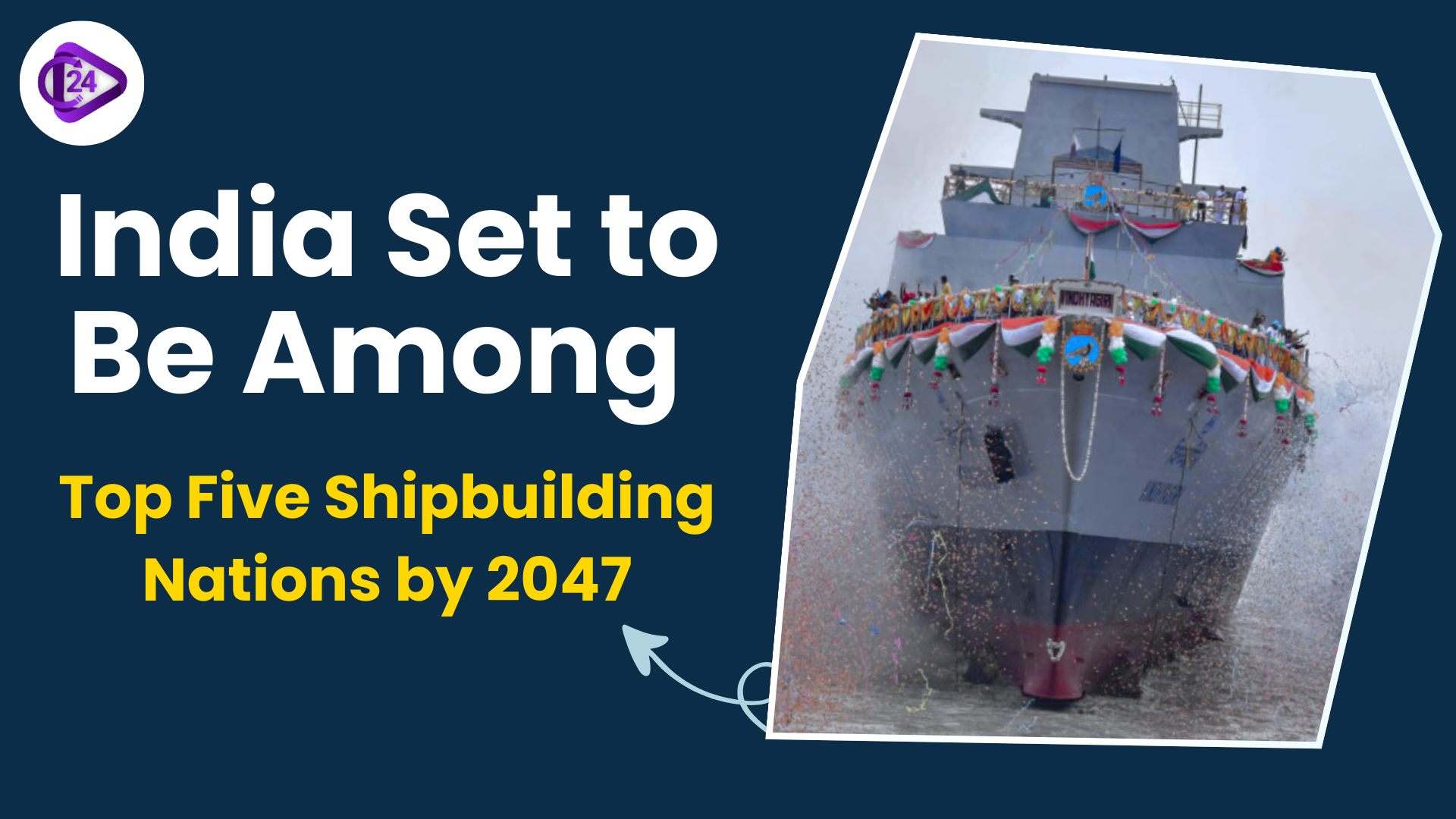
India has set an ambitious target to become one of the world’s top five shipbuilding nations by 2047. Under the Maritime Amrit Kaal Vision 2047, the country aims to strengthen domestic shipbuilding capacity, improve the competitiveness of Indian shipyards, attract investment and create employment. The government has also set an intermediate goal of entering the top 10 shipbuilding nations by 2030.
Shipbuilding is strategically important because ships support international trade, energy transportation, coastal connectivity, naval defence and maritime security. A stronger domestic shipbuilding industry can reduce dependence on foreign-built vessels, support Indian manufacturers and strengthen the country’s maritime capabilities.
To support this ambition, the Government of India has announced a major package of ₹69,725 crore for the maritime and shipbuilding sector. Its components include financial assistance for shipyards, long-term financing, shipyard development and measures to strengthen the broader maritime ecosystem.
Key Highlights of India’s Shipbuilding Vision
| Key Point | Details |
| Long-term target | Become a top-five shipbuilding nation by 2047 |
| Intermediate target | Reach the top 10 by 2030 |
| Long-term policy framework | Maritime Amrit Kaal Vision 2047 |
| Complementary vision | Maritime India Vision 2030 |
| Major package | ₹69,725 crore |
| Shipbuilding Financial Assistance Scheme | ₹24,736 crore |
| Maritime Development Fund | ₹25,000 crore |
| Shipbuilding Development Scheme | ₹19,989 crore |
| National-level coordination | National Shipbuilding Mission |
| Responsible ministry | Ministry of Ports, Shipping and Waterways |
Source: Government of India and Ministry of Ports, Shipping and Waterways announcements. Scheme allocations and targets should be read in the context of their official guidelines.
What Is the Maritime Amrit Kaal Vision 2047?
The Maritime Amrit Kaal Vision 2047 is India’s long-term roadmap for developing its maritime sector. It focuses on improving ports, shipping, shipbuilding, ship repair, maritime logistics, coastal transport and related infrastructure as part of the country’s broader development ambitions.
For shipbuilding, the vision includes expanding production capacity, making Indian shipyards more competitive and encouraging investment in modern facilities and technology.
The government has set two important milestones:
- By 2030: India aims to become one of the top 10 shipbuilding nations.
- By 2047: India aims to enter the top five.
These are policy targets, not statements that India has already achieved those rankings. Reaching them will depend on production growth, costs, technology, access to finance, skilled workers and the ability to win domestic and international orders.
Maritime India Vision 2030 and Maritime Amrit Kaal Vision 2047
The two policy frameworks are related but focus on different time horizons.
| Feature | Maritime India Vision 2030 | Maritime Amrit Kaal Vision 2047 |
| Time horizon | 2030 | 2047 |
| Shipbuilding ambition | Top 10 globally | Top 5 globally |
| Broad purpose | Accelerate maritime-sector development | Build long-term global competitiveness |
| Key areas | Capacity, infrastructure, investment and jobs | Scale, technology, investment, sustainability and employment |
The 2030 target serves as an intermediate milestone towards the longer-term 2047 ambition. Progress requires coordination among the central government, state governments, shipyards, financial institutions, equipment manufacturers and private investors.
Government’s ₹69,725 Crore Shipbuilding Package
The government has developed a four-pillar package to address major barriers to shipbuilding in India. The components focus on financial assistance, long-term finance, shipyard infrastructure and industrial development.
1. Shipbuilding Financial Assistance Scheme (SBFAS)
The Shipbuilding Financial Assistance Scheme is designed to help Indian shipyards compete with international shipbuilders. Domestic shipyards can face cost disadvantages due to differences in scale, financing, supply chains and established overseas manufacturing ecosystems.
The scheme provides financial assistance under its applicable rules and eligibility conditions. It is intended to make qualifying Indian-built vessels more competitive and encourage domestic shipbuilding activity.
The government has provided an allocation of ₹24,736 crore for the scheme. Its guidelines were issued on 26 December 2025, with the scheme framework extending to 31 March 2036.
2. Maritime Development Fund (MDF)
The Maritime Development Fund has a corpus of ₹25,000 crore and is intended to improve long-term financing for shipbuilding and the wider maritime sector.
Its two main components are:
- Maritime Investment Fund (MIF): ₹20,000 crore
- Interest Incentivisation Fund (IIF): ₹5,000 crore
The investment component is intended to support maritime-sector investment, while interest incentives are designed to help reduce financing costs for eligible projects.
Access to suitable long-term finance is important because shipbuilding projects require substantial upfront investment and can take considerable time to complete. The fund is intended to help improve financing conditions for eligible shipyards and maritime businesses.
3. Shipbuilding Development Scheme (SbDS)
The Shipbuilding Development Scheme has an allocation of ₹19,989 crore. It focuses on strengthening India’s shipbuilding capacity and developing the infrastructure required for larger-scale production.
The scheme supports development of shipbuilding clusters, expansion of existing facilities and related infrastructure and risk coverage, subject to its official guidelines.
A stronger industrial base can help shipyards improve production efficiency, develop supply-chain partnerships and take on more complex vessel orders.
4. National Shipbuilding Mission
The National Shipbuilding Mission is intended to coordinate efforts to develop India’s shipbuilding industry. Effective implementation requires cooperation between ministries, shipyards, financial institutions, industry participants and other stakeholders.
Coordination is important because shipbuilding involves a wide network of suppliers, including steel producers, engine manufacturers, electrical-equipment makers, electronics companies and specialist engineering firms.
The overall package aims to strengthen domestic capacity, improve competitiveness and support India’s long-term shipbuilding goals.
Why Is Shipbuilding Important for India?
1. Economic Growth and Employment
Shipbuilding creates direct employment in shipyards and indirect employment across engineering, steel, electronics, equipment manufacturing, transport and logistics. Developing domestic shipyards can create opportunities for skilled workers, technicians, engineers and small and medium-sized enterprises.
The wider maritime ecosystem also supports port services, ship repair, marine equipment manufacturing and training.
2. Strategic and Defence Capabilities
Ships are essential to maritime security, naval operations and the protection of sea routes. Strong domestic shipbuilding capabilities can support indigenous defence production and reduce reliance on overseas suppliers for certain vessel types and components.
Commercial and defence shipbuilding have different technical and regulatory requirements, but both depend on industrial capability, skilled labour and reliable supply chains.
3. Lower Dependence on Foreign-Built Ships
Indian businesses rely on vessels to transport goods, fuel and other essential commodities. Building more vessels domestically could expand the range of ships available from Indian shipyards and create opportunities for domestic manufacturers.
However, the effect on import dependence will depend on the types of ships built, their costs, delivery timelines and whether they meet buyers’ technical requirements.
4. Support for International Trade
Most global merchandise trade by volume is transported by sea. A competitive shipbuilding and ship-repair industry can help a country participate more fully in the maritime economy.
India’s location along major Indian Ocean shipping routes gives it opportunities to develop ship repair, maritime services and vessel manufacturing. Converting this geographical advantage into industrial growth requires competitive pricing, reliable delivery and modern facilities.
5. Green Shipping and New Technologies
The maritime industry is gradually adopting cleaner fuels, energy-efficient vessel designs, digital systems and new propulsion technologies. Indian shipyards that develop expertise in these areas may be better placed to serve changing market requirements.
Investment in research, technology, testing and workforce skills will be important for building vessels that meet evolving environmental and safety standards.
Major Challenges Facing India’s Shipbuilding Industry
India’s target is ambitious because established shipbuilding countries benefit from large industrial ecosystems, specialised suppliers, extensive production experience and significant order volumes.
Important challenges include:
- Global competition: Indian shipyards compete with established shipbuilding industries that benefit from scale and mature supply chains.
- High capital requirements: Shipyard construction, modern equipment and vessel production require substantial investment.
- Financing costs: Long project timelines can make the cost and availability of finance especially important.
- Supply-chain development: Domestic availability of engines, marine electronics and specialised components can affect costs and delivery schedules.
- Technology and skills: Complex vessels require specialised engineering, design, testing and skilled workers.
- Order-book stability: Shipyards need a dependable pipeline of domestic and export orders to use facilities efficiently.
- Infrastructure and logistics: Access to suitable waterfronts, transport links, utilities and supporting services influences shipyard competitiveness.
The government package seeks to address some financial and infrastructure barriers. Its ultimate impact will depend on implementation, private investment, technological progress and the ability of Indian shipyards to deliver vessels at competitive costs and quality standards.
Important Facts for Competitive Examinations
- Top-five target: By 2047.
- Top-10 target: By 2030.
- Long-term framework: Maritime Amrit Kaal Vision 2047.
- Related policy framework: Maritime India Vision 2030.
- Total shipbuilding and maritime package: ₹69,725 crore.
- SBFAS allocation: ₹24,736 crore.
- Maritime Development Fund: ₹25,000 crore.
- Shipbuilding Development Scheme: ₹19,989 crore.
- Responsible ministry: Ministry of Ports, Shipping and Waterways.
- National coordination initiative: National Shipbuilding Mission.
Conclusion
India’s ambition to become one of the top five shipbuilding nations by 2047 is part of its broader plan to strengthen maritime infrastructure, industrial capacity and economic self-reliance. The intermediate target of entering the top 10 by 2030 provides a milestone on the way to the long-term goal.
The ₹69,725 crore package combines financial assistance, long-term financing and shipyard development measures to address barriers faced by the domestic industry. However, achieving the target will require competitive costs, reliable orders, modern technology, skilled workers and stronger supply chains.
For competitive examinations, remember the two rankings and their deadlines: top 10 by 2030 and top 5 by 2047. Also revise the Maritime Amrit Kaal Vision 2047 and the major components of the shipbuilding package.