

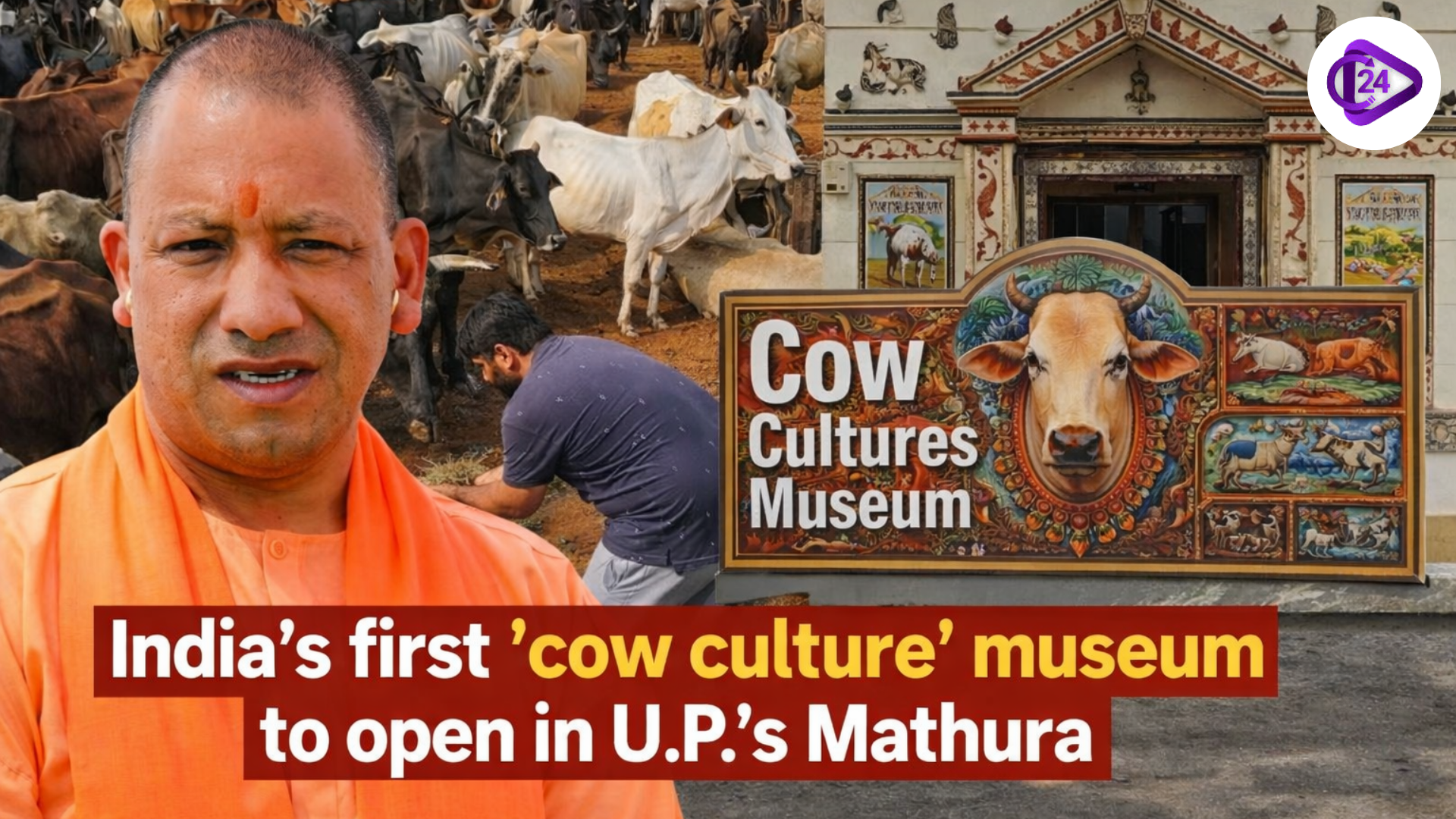
In Mathura, Uttar Pradesh, in the Pandit Deendayal Upadhyaya Veterinary Science University, India, a campus is proposing to establish in a campus the first National Cow Culture Museum in India. The project started by the Uttar Pradesh Braj Teerth Vikas Parishad is meant to demonstrate the religious, cultural and spiritual significance of cows and their scientific, nutritional and agricultural worth. The museum will have up to 100 physical and digital displays of native cattle breeds and extinct ones, and displays of dairy products such as milk, curd, cheese and ghee. According to the officials, it is a combination of tradition and science to enhance the knowledge of people on cow conservation and heritage.
Significance of India’s First ‘Cow Culture’ Museum
-
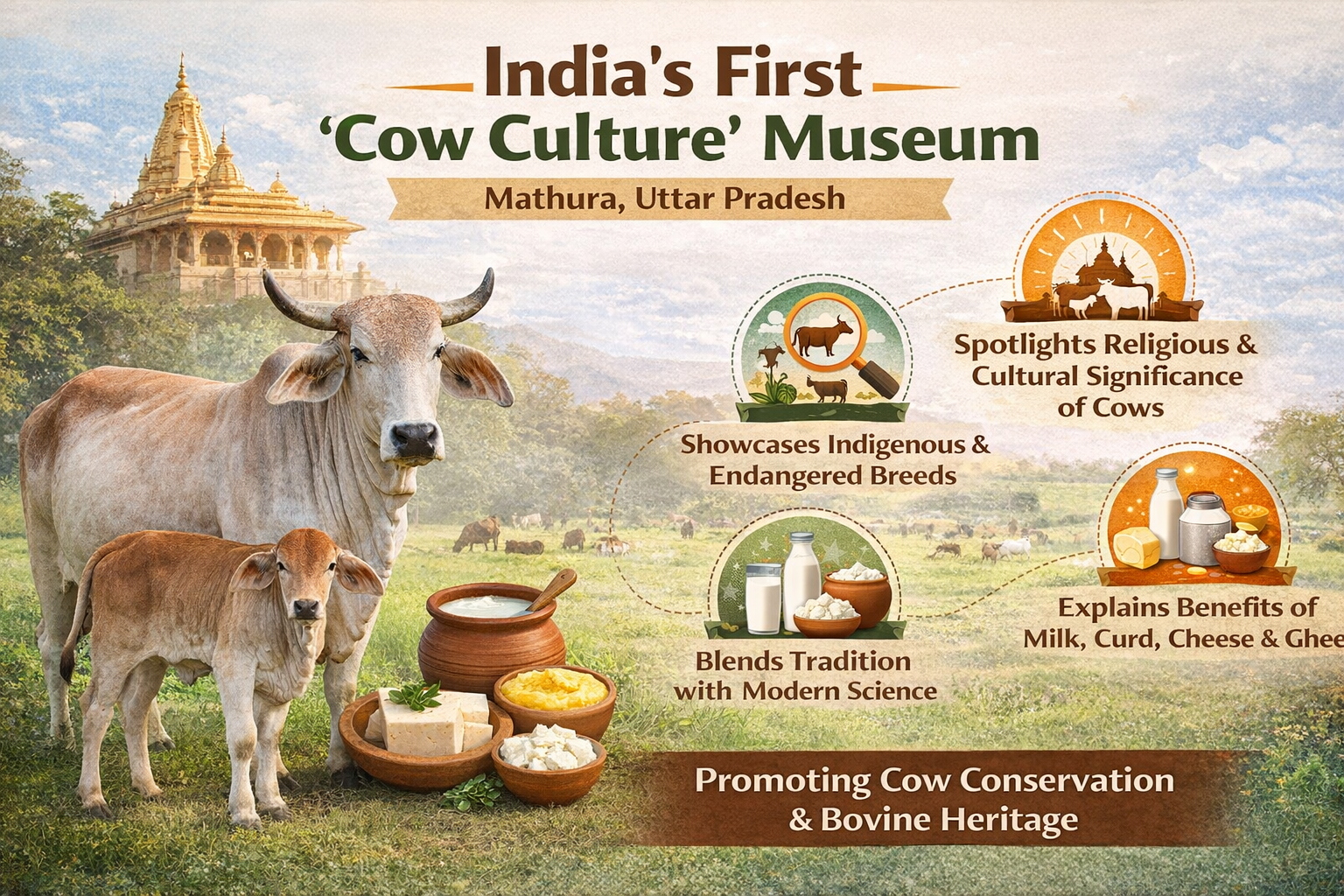
The museum will be India’s first National Cow Culture Museum, established in Mathura at the Pandit Deendayal Upadhyaya Veterinary Science University campus under the Uttar Pradesh Braj Teerth Vikas Parishad initiative.
- It aims to highlight the religious, cultural and spiritual importance of cows in Indian tradition, linking heritage with modern scientific understanding.
-
The project will showcase around 100 digital and physical models of indigenous and endangered cattle breeds to educate visitors about bovine biodiversity.
-
Exhibits will explain the scientific, nutritional and Ayurvedic benefits of dairy products such as milk, curd, cheese and ghee, using modern display methods.
-
A dairy parlour is planned on site to provide an experiential connection to fresh dairy products.
-
The museum is designed as both an educational centre and tourist attraction, promoting awareness about cattle, sustainable agricultural practices and conservation.
-
It seeks to foster a holistic understanding of cow conservation, rural livelihoods and the role of cattle in India’s economy and culture.
-
By blending tradition and science, the project reinforces the cultural identity of the Braj region and celebrates India’s bovine heritage.
Conclusion (Cow Culture Museum)
The establishment of India’s first Cow Culture Museum in Mathura reflects an effort to preserve and present the deep cultural, spiritual and economic importance of cattle in Indian society. By combining traditional knowledge with scientific insights, the museum aims to educate visitors about indigenous breeds, dairy practices and sustainable agriculture. It is expected to strengthen awareness about conservation and rural livelihoods while promoting tourism in the Braj region. Overall, the initiative represents a structured attempt to document bovine heritage and encourage informed understanding of the role of cows in India’s cultural and agricultural landscape.