

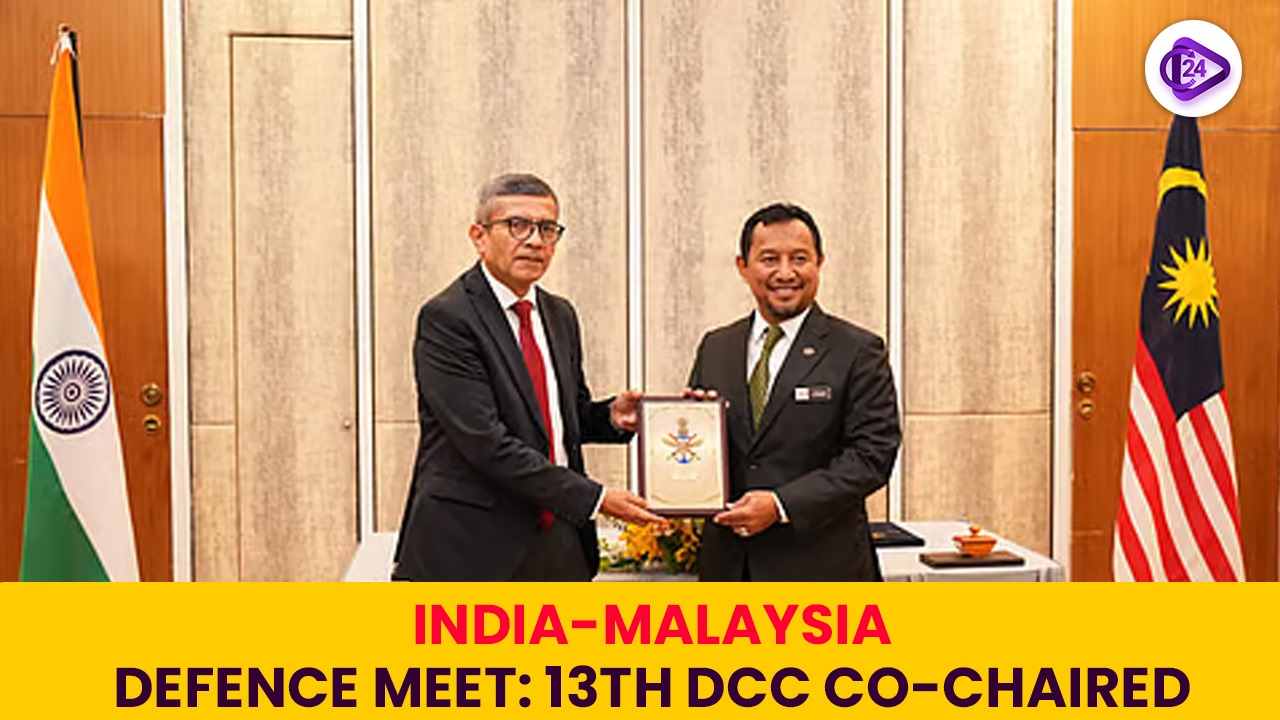
India and Malaysia held the 13th Malaysia-India Defence Cooperation Committee (MIDCOM) meeting in Kuala Lumpur on 19 February 2025. The meeting marked an important step towards strengthening defence and security cooperation between the two countries.
The meeting was co-chaired by India’s Defence Secretary Shri Rajesh Kumar Singh and Malaysia’s Secretary-General of the Ministry of Defence Mr Lokman Hakim Bin Ali.
Both sides discussed ways to expand defence industry cooperation, improve maritime security and strengthen engagement in multilateral forums. They also identified new areas of cooperation, including cybersecurity and artificial intelligence (AI).
Two important outcomes were the exchange of finalised Terms of Reference for establishing a Strategic Affairs Working Group (SAWG) and a Su-30 Forum. These mechanisms are intended to improve strategic consultations and cooperation between the Indian and Malaysian Air Forces.
13th India-Malaysia MIDCOM Meeting 2025: Key Highlights
| Particulars | Details |
| Meeting | 13th Malaysia-India Defence Cooperation Committee |
| Abbreviation | MIDCOM |
| Date | 19 February 2025 |
| Venue | Kuala Lumpur, Malaysia |
| Indian Co-Chair | Rajesh Kumar Singh |
| Malaysian Co-Chair | Lokman Hakim Bin Ali |
| Main Areas | Defence industry, maritime security, cybersecurity and AI |
| Important Outcomes | Strategic Affairs Working Group and Su-30 Forum |
| Bilateral Framework | India-Malaysia Comprehensive Strategic Partnership |
What Is the Malaysia-India Defence Cooperation Committee (MIDCOM)?
The Malaysia-India Defence Cooperation Committee is a bilateral institutional mechanism that provides a platform for India and Malaysia to review and strengthen their defence relationship.
It facilitates discussions on military cooperation, defence policy, security challenges, defence industry collaboration and regional developments.
The two countries have maintained defence cooperation through regular meetings, military exchanges, training programmes and joint exercises.
The foundation of modern India-Malaysia defence cooperation is the Memorandum of Understanding on Defence Cooperation signed in 1993.
The 13th MIDCOM meeting was particularly important because it advanced practical initiatives under the defence pillar of the Comprehensive Strategic Partnership between India and Malaysia.
Major Outcomes of the 13th MIDCOM Meeting
The meeting produced several important outcomes aimed at improving bilateral defence cooperation.
1. Establishment of a Strategic Affairs Working Group
India and Malaysia exchanged the finalised Terms of Reference (ToR) for establishing a Strategic Affairs Working Group (SAWG).
The working group is designed to serve as a consultative mechanism between the MIDCOM and its two sub-committees.
Its main purpose is to help advance different aspects of bilateral defence cooperation through structured discussions and coordination.
It will provide an additional platform for examining strategic issues and following up on agreed initiatives.
2. Formation of the Su-30 Forum
Another major outcome was the exchange of the finalised Terms of Reference for establishing the Su-30 Forum.
Both India and Malaysia operate Su-30 fighter aircraft in their respective air forces. The forum will support closer cooperation between the Indian Air Force and the Royal Malaysian Air Force.
Its main objectives include:
- Sharing technical expertise.
- Exchanging maintenance practices.
- Improving knowledge of aircraft maintenance.
- Strengthening professional cooperation between the two air forces.
The forum is particularly relevant because both countries operate Su-30 aircraft and can benefit from sharing operational and maintenance experience.
3. Joint Focus Group on Maritime Security
India and Malaysia agreed to establish a joint focus group to address non-traditional maritime security threats.
Traditional maritime threats generally involve military confrontation and naval security challenges. Non-traditional threats can include piracy, trafficking, illegal activities at sea and other risks to maritime safety.
The proposed focus group will help both countries improve coordination and examine practical ways to address these challenges.
This cooperation is important because both countries have strategic interests in maintaining safe and stable maritime routes in the Indo-Pacific region.
4. Cooperation in Cybersecurity and Artificial Intelligence
The two countries also identified cybersecurity and artificial intelligence as emerging areas for defence cooperation.
Modern security challenges increasingly involve digital infrastructure, cyber threats and advanced technologies.
Cooperation in these areas can support:
- Information sharing.
- Technical knowledge exchange.
- Capacity building.
- Better understanding of emerging security threats.
- Greater coordination in the use of new technologies.
This reflects the growing importance of technology in modern defence planning.
5. Strengthening Defence Industry Cooperation
Defence industry collaboration was another major discussion area.
India and Malaysia explored ways to deepen cooperation between their defence industries and identify practical opportunities for collaboration.
Such engagement can support technology sharing, maintenance, research and development, and participation in defence-related exhibitions.
The initiative is also relevant to India’s objective of expanding its defence manufacturing capabilities and international partnerships.
6. Greater Cooperation in Multilateral Forums
Both countries discussed regional and global security issues and the importance of multilateral engagement.
India reaffirmed its commitment to strengthening cooperation with Malaysia through regional platforms, including ASEAN-related defence mechanisms.
India and Malaysia also have an important role in the ASEAN Defence Ministers’ Meeting Plus (ADMM-Plus) framework.
Both countries co-chaired the ADMM-Plus Experts’ Working Group on Counter-Terrorism for the 2024–2027 term.
Significance of the Meeting for India
The 13th MIDCOM meeting is significant for India’s defence and diplomatic interests in Southeast Asia and the wider Indo-Pacific.
1. Strengthening Indo-Pacific Security
India and Malaysia share an interest in maintaining peace, stability and freedom of navigation in the Indo-Pacific region.
Greater cooperation in maritime security can help both countries address common security challenges.
2. Supporting India’s Act East Policy
India’s Act East Policy aims to strengthen political, economic, cultural and strategic engagement with Southeast Asian countries.
Defence cooperation with Malaysia supports India’s wider engagement with ASEAN and its member states.
3. Promoting Defence Manufacturing
The meeting created opportunities to strengthen cooperation between the defence industries of both countries.
Such partnerships can support India’s defence manufacturing and technology development objectives.
4. Improving Military Cooperation
The Su-30 Forum provides a specific mechanism for the two air forces to exchange technical knowledge and maintenance practices.
This can strengthen professional interaction and improve understanding between their defence establishments.
5. Supporting Regional Cooperation
India and Malaysia can use bilateral and multilateral platforms to address regional challenges, including terrorism, maritime threats and emerging security risks.
India-Malaysia Defence Relations: Background
India and Malaysia have maintained defence relations for several decades.
The signing of the 1993 Memorandum of Understanding on Defence Cooperation provided a formal foundation for expanding military engagement.
Over the years, cooperation has developed through military exercises, training programmes, naval interactions, defence exhibitions and institutional meetings.
Some important examples include:
| Exercise / Mechanism | Service / Area | Purpose |
| Exercise Harimau Shakti | Army | Joint military training |
| Exercise Samudra Laksamana | Navy | Naval cooperation |
| Exercise Udara Shakti | Air Force | Air force cooperation |
| MIDCOM | Defence ministries | Review of bilateral defence cooperation |
| Su-30 Forum | Air Force | Aircraft maintenance expertise exchange |
The two countries elevated their relationship to a Comprehensive Strategic Partnership in August 2024, during Malaysian Prime Minister Anwar Ibrahim’s visit to India.
The 13th MIDCOM meeting helped advance initiatives under the defence pillar of this partnership.
Conclusion
The 13th India-Malaysia Defence Cooperation Committee meeting held in Kuala Lumpur on 19 February 2025 marked an important development in bilateral defence relations.
The exchange of the Terms of Reference for the Strategic Affairs Working Group and Su-30 Forum, along with the proposed joint focus group on non-traditional maritime security threats, provided practical mechanisms for expanding cooperation.
The discussions on defence manufacturing, cybersecurity, artificial intelligence and multilateral engagement also reflected the changing nature of regional security.
For India, stronger defence ties with Malaysia support its Act East Policy and wider engagement in the Indo-Pacific. The meeting reinforced the importance of bilateral cooperation in maintaining regional peace and security.