


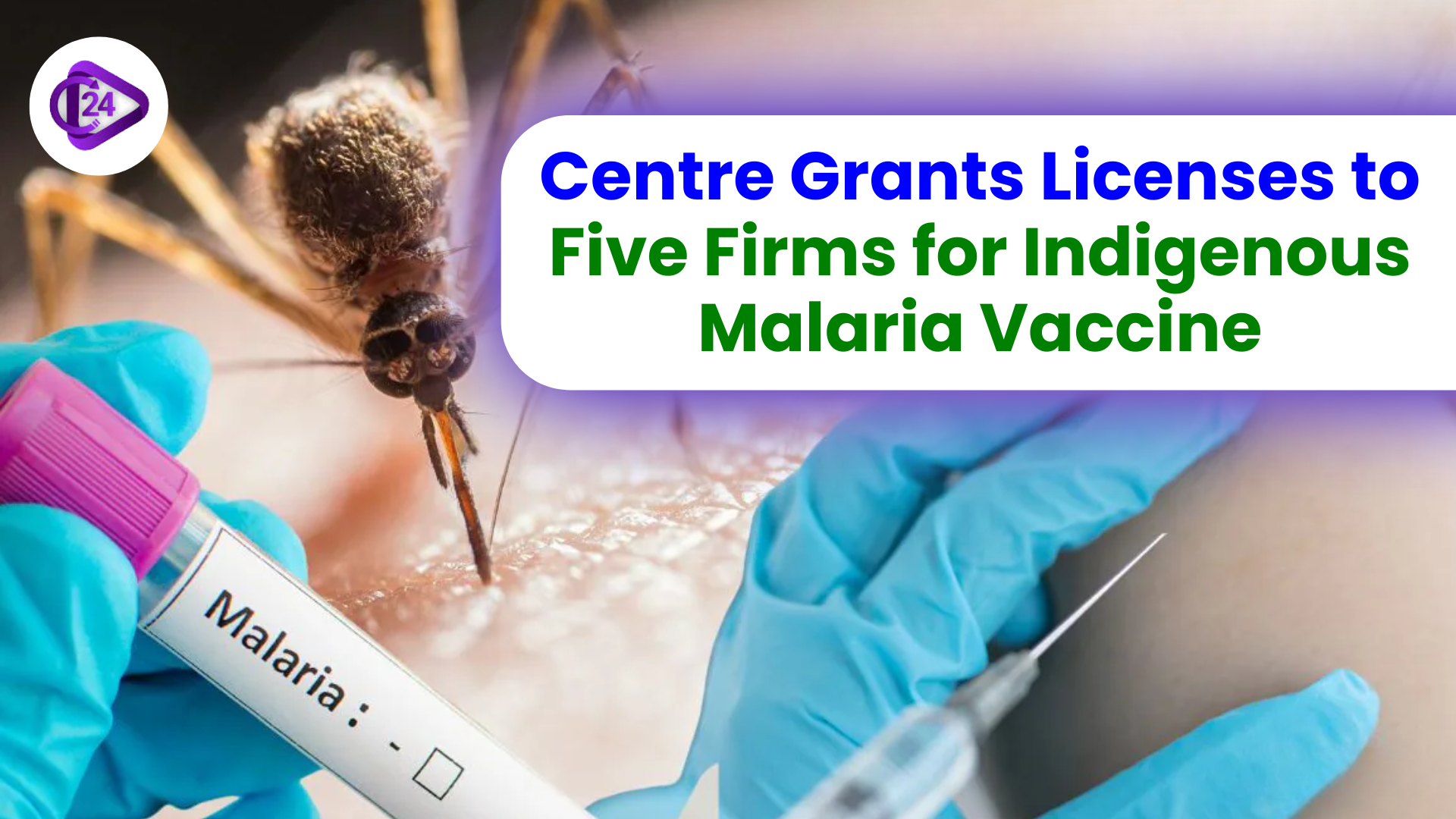
The Union government has licensed five companies to produce and commerciallyise the first indigenous multi-stage malaria vaccine in India that was developed by the Indian Council of Medical Research (ICMR). AdFalciVax vaccine is an anti malaria infection vaccine targeting the malaria parasite before it gains access into the bloodstream and is transmitted. The vaccine will be manufactured at Indian Immunologicals Ltd., Lifecare Pvt. Ltd., Panacea Biotec Ltd., Biological E Ltd., and Zydus Lifesciences and is affordable, stable, and scalable. The vaccine is longer lasting and can be kept at the room temperature over nine months as a successful option to address the existing public health problem of malaria in India.
Key Points in Detail
Background and Context
-
AdFalciVax is a vaccine that was created by the ICMR in cooperation with National Institute of Malaria Research (NIMR) and the National Institution of Immunology (NII).
-
Malaria is a significant health concern in India with 1.4 percent of the world malaria and 66 percent in Southeast Asia.
-
The government is interested in commercialising this native malaria vaccine to help abate the spread of the malaria and help to increase the health outcomes of people.
Technology and Vaccine Features.
-
AdFalciVax attacks the plasmodium falciparum before it invades into the blood.
-
The vaccine is aimed at preventing human infection and decreasing the spread in society.
-
Key Advantages:
-
Solution stable and scalable, longer than nine months at room temperature.
-
Cheap and can be utilized at large-scale production and distribution, especially in areas that have low cold storage capacity.
Licensing and Manufacturing.
-
Five firms have been licenced by the government:
-
Indian Immunologicals Ltd.
-
Techinvention Lifecare Pvt. Ltd.
-
Panacea Biotec Ltd.
-
Biological E Ltd.
-
Zydus Lifesciences
-
These companies will take the responsibility of producing the vaccine under the transfer of technology framework under initiated WHO, at ICMR.
Public Health Impact
-
Malaria is an important health issue in India and the vaccine is likely to contribute towards curbing the level of infection and transmission of the disease to the community.
-
The vaccine will dramatically decrease the morbidity and mortality of malaria cases in the region of Southeast Asia and India by treating the parasite at an early stage.
Conclusion
The Indian government approving of AdFalciVax, which is an indigenous malaria vaccine, is a major sign in combating malaria in India. It has affordable, stable, and scaled features, which are promising to be used widely especially in regions with high malaria burden. To UPSC, this development should represent an important case study of indigenous innovation, government health policy and the role of government-industry cooperation in addressing significant health concerns.