


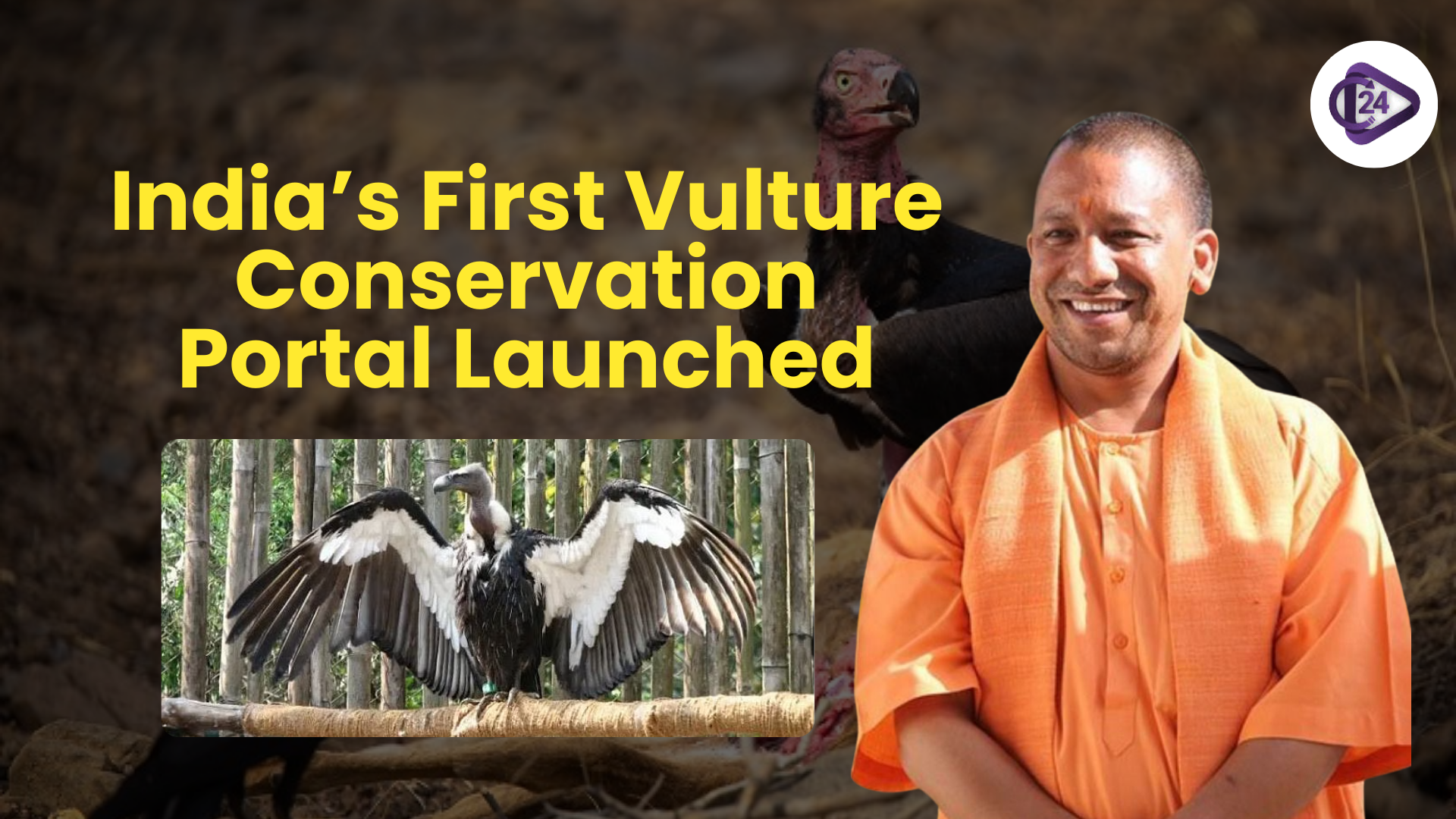
India’s first dedicated vulture knowledge and conservation portal, The Vulture Network, was launched in Assam on 2 September 2025. The initiative was developed by We Foundation India in collaboration with the Department of Zoology, Gauhati University.
The portal aims to connect researchers, conservationists, organisations and local communities working to protect India’s vulture species. It provides scientific information, awareness resources and educational materials to encourage conservation activities at the grassroots level.
An important feature of the initiative is its focus on local-language communication. The portal began sharing information in Assamese so that communities could better understand the ecological importance of vultures and the threats affecting their survival.
The launch took place ahead of International Vulture Awareness Day 2025, which was observed on 6 September. The initiative highlights the need for public participation and scientific cooperation to protect these important scavenger birds.
India’s First Vulture Conservation Portal: Key Highlights
| Particulars | Details |
| Portal Name | The Vulture Network |
| Launch Date | 2 September 2025 |
| Launch Location | Guwahati, Assam |
| Main Organisation | We Foundation India |
| Academic Partner | Department of Zoology, Gauhati University |
| Main Objective | Vulture conservation and public awareness |
| Initial Local Language | Assamese |
| Supporting Partners | Assam Bird Monitoring Network, LASA Foundation, Suraksha Samitee and others |
| Website | thevulturenetwork.org |
| Related Observance | International Vulture Awareness Day |
What Is The Vulture Network?
The Vulture Network is a cloud-based knowledge and awareness platform dedicated to the conservation of vultures in India.
It was initiated by We Foundation India to bring together individuals and organisations involved in vulture research, protection and awareness programmes.
The portal aims to make scientific information about vultures easier to understand and accessible to a wider audience.
Its major objectives include:
- Providing reliable information about India’s vulture species.
- Sharing scientific research and conservation-related knowledge.
- Connecting researchers and wildlife conservation organisations.
- Promoting awareness among local communities.
- Providing freely downloadable educational and outreach materials.
- Encouraging individuals to participate in conservation activities.
The platform also aims to connect vulture conservation with local livelihoods and community awareness. This is important because protecting wildlife often requires the involvement of people living close to natural habitats.
Organizations Behind the Initiative
The Vulture Network was launched through collaboration between We Foundation India and the Department of Zoology, Gauhati University.
Several other organisations and individual conservationists also support the initiative.
1. We Foundation India
We Foundation India is an Assam-based organisation involved in conservation and environmental awareness activities.
It initiated The Vulture Network with the aim of creating a common platform for people working to protect vultures and their habitats.
2. Gauhati University
The Department of Zoology at Gauhati University collaborated in developing and launching the portal.
The university’s involvement connects the initiative with scientific research, academic expertise and wildlife education.
3. Other Supporting Organisations
The network includes participation and support from:
- Assam Bird Monitoring Network (ABMN).
- LASA Foundation.
- Suraksha Samitee.
- Bihongo Bondhu.
- Individual researchers and wildlife conservationists.
This collaborative structure aims to connect scientific institutions with grassroots organisations and local communities.
Why Are Vultures Important for the Environment?
Vultures are large scavenging birds that feed mainly on the carcasses of dead animals. They play an important role in maintaining ecological balance.
Their feeding behaviour helps remove animal remains from the environment and reduces the availability of carcasses that may harbour disease-causing microorganisms.
Major Ecological Roles of Vultures
- Natural Scavengers: Vultures consume dead animal remains and help clean the environment.
- Disease Prevention: By rapidly disposing of carcasses, they can reduce opportunities for some pathogens to spread through the environment.
- Ecological Balance: They are an important part of food webs and natural nutrient cycles.
- Environmental Health: Changes in vulture populations can provide important information about environmental conditions and wildlife health.
A decline in vulture populations can therefore create ecological concerns, particularly in areas where these birds play an important role in carcass disposal.
Vulture Species Found in India
According to The Vulture Network, India is home to nine species of vultures.
These species include:
| No. | Vulture Species |
| 1 | Slender-billed Vulture |
| 2 | White-rumped Vulture |
| 3 | Red-headed Vulture |
| 4 | Himalayan Griffon |
| 5 | Egyptian Vulture |
| 6 | Cinereous Vulture |
| 7 | Indian Vulture |
| 8 | Eurasian Griffon |
| 9 | Bearded Vulture |
These species occupy different geographical regions and habitats. Their conservation requires species-specific research, habitat protection and monitoring.
The portal provides information about these birds to improve public understanding of India’s vulture diversity.
Major Threats to Vulture Populations in India
Vultures have experienced serious population declines in South Asia. Several environmental and human-related factors have contributed to this decline.
1. Diclofenac and Harmful Veterinary Drugs
One of the major causes of vulture mortality in India has been exposure to the veterinary drug diclofenac.
When vultures feed on carcasses of animals treated with diclofenac, they can suffer kidney failure and die.
The Government of India prohibited the manufacture of diclofenac for veterinary use in 2008. Restrictions were also introduced to prevent misuse of human diclofenac formulations in animals.
Other veterinary non-steroidal anti-inflammatory drugs (NSAIDs) have also raised conservation concerns because some can be harmful to vultures.
2. Carcass Poisoning
Poisoned animal carcasses can cause the death of multiple vultures feeding at the same location.
Such incidents are a serious threat to scavenging birds and require monitoring and community awareness.
3. Habitat Loss
Changes in land use, disturbance of nesting areas and loss of suitable feeding habitats can affect vulture populations.
Protecting natural habitats is therefore an important part of conservation planning.
4. Electrocution and Infrastructure Risks
Vultures may face risks from power infrastructure, particularly when they come into contact with unsafe electrical lines.
Reducing such risks through appropriate infrastructure planning can support bird conservation.
5. Negative Social Perceptions
Vultures are sometimes misunderstood because of their association with dead animals.
Public education can help communities recognise their ecological importance and support conservation activities.
International Vulture Awareness Day
International Vulture Awareness Day (IVAD) is observed every year on the first Saturday of September.
The day aims to raise awareness about the ecological importance of vultures and the threats that have caused their population decline.
In 2025, International Vulture Awareness Day was observed on 6 September.
The launch of The Vulture Network on 2 September was organised ahead of this annual observance. The initiative used the occasion to encourage discussions on vulture conservation and community participation.
Major objectives of International Vulture Awareness Day include:
- Increasing public awareness about vulture species.
- Highlighting threats such as poisoning and harmful veterinary drugs.
- Promoting scientific research and population monitoring.
- Encouraging conservation organisations to work together.
- Involving local communities in wildlife protection.
Government Initiatives for Vulture Conservation in India
The Government of India has introduced several measures to address the decline in vulture populations.
One major initiative was the Action Plan for Vulture Conservation in India (2020–2025), launched by the Ministry of Environment, Forest and Climate Change in November 2020.
The plan identified priority actions for protecting vultures and their habitats.
Its major objectives included:
- Preventing the misuse of veterinary drugs harmful to vultures.
- Establishing additional Vulture Conservation Breeding Centers.
- Developing vulture-safe zones in different states.
- Establishing dedicated vulture rescue centers.
- Strengthening population monitoring and conservation research.
- Promoting awareness about the ecological importance of vultures.
The plan also called for conservation breeding efforts for species such as the red-headed vulture and Egyptian vulture.
The Vulture Network complements these wider conservation efforts by focusing on knowledge sharing, public awareness, and collaboration among researchers and local organizations.
Significance of India’s First Vulture Conservation Portal
The launch of The Vulture Network is significant because conservation requires more than scientific research alone. It also depends on public awareness, community participation, and coordination between organizations.
1. Local-Language Awareness
Starting with Assamese makes conservation information more accessible to communities in Assam.
2. Support for Scientific Research
The portal brings together information about India’s vulture species and conservation requirements.
3. Community Participation
It encourages individuals, students, and local organizations to participate in conservation activities.
4. Free Educational Resources
Downloadable awareness materials can support campaigns, educational programs, and local outreach activities.
5. Stronger Conservation Networks
The platform connects researchers, academic institutions, conservation groups and individuals working towards a common objective.
Conclusion
The launch of the Vulture Network in Assam on 2 September 2025 marked an important development in India’s vulture conservation efforts. Initiated by We Foundation India in collaboration with Gauhati University’s Department of Zoology, the portal aims to improve scientific awareness and connect organizations and communities working to protect vultures.
Its focus on Assamese-language information, freely available educational resources, and collaboration among conservation groups can help strengthen grassroots participation.
As vultures play an essential role as natural scavengers, their protection is important for maintaining ecological balance. The initiative highlights the need for continued research, public awareness, and coordinated conservation action.