

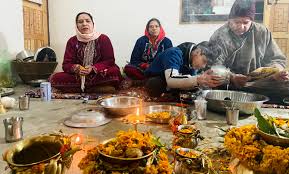
Known as a holy event by Kashmiri Pandits, Herath provides them a distinct tradition to observe Mahashivratri. Herath runs as a multi-day observance throughout India while most regions follow one-day celebrations for this spiritual festival. The word "Herath" comes from "Har-Ratri" which means "Night of Hara" thus referring to Lord Shiva. The symbolic nature of Herath manifests the divine connection between cosmic powers and the mutual relationship of Shiva and Parvati.

Historical & Cultural Context
-
Kashmir’s cultural heritage provides the foundation for these traditions which express themselves through its historical heritage.
-
Both the celebration of Heritage have been carried out with magnificence throughout Kashmir's entire region.
-
The observance of Herath by Kashmiri Pandits continues worldwide after their mass migration became history in 1990.
Spiritual & Religious Significance
-
According to popular belief Lord Shiva appears before humans during this sacred nighttime manifestation.
-
A time of spiritual awakening, purification, and divine blessings.
-
In contrast to most parts of India Herath celebrations involve custom-based rituals at homes instead of mainly visiting temples.
Rituals & Traditions
1. Vatuk Pooja – Worship of Vatuk Dev
-
In the belief of Kashmiri Pandits Vatuk Dev still represents the sacred power of Lord Shiva.
-
Each vessel in the worship contains water mixed with walnuts and may be made from earthen or metal materials.
-
Water functions as a symbol of spiritual purity and spiritual essence while walnuts communicate success together with holy gifts.
2. Doon Pooja – The Sacred Walnuts
-
The proper ceremonial procedure involves walnut water soaking.
-
The distribution of walnuts follows a process of sacred blessing to become Prasad.
-
Symbolizes purification and divine grace.
3. Night Vigil & Fasting
-
During the nighttime ritual of devotion devotees maintain vigil by reciting devotional songs about Lord Shiva.
-
Religious traditions of Herath require strict fasting by certain people yet other followers eat simple vegetarian foods during times of observance.
4. Salaam – Post-Herath Celebration
-
The festivities take place the day after Herath in an Eid-type manner.
-
During Herath families both share their blessed messages and serve the traditional meals of Kashmiri culture.
-
The celebration expresses both communal unity and culture-based peace between people.
Herath: A Lost Tradition in Kashmir
-
A widespread traditional holiday connecting Muslims with Pandits used to be celebrated throughout Kashmir.
-
Within Kashmir Pandits regularly received visiting greetings from their Muslim neighbors.
-
The celebration of Herath ended after the mass migration of 1990 in the Kashmir Valley.
-
The writer expresses hope that Herath will come back to Kashmir to celebrate with its people.
Conclusion
Herath functions beyond its role as a celebration since it represents the perseverance and traditional beliefs and roots of Kashmiri Pandits. The celebration of Herath persists externally from Kashmir yet Pandit and Muslim Kashmiris continue to hope for its restoration within their ancestral land. The people of Kashmir hope one day the celebration of Herath will restore its original major element in the region by bringing together prayers and communal joy and harmony.