


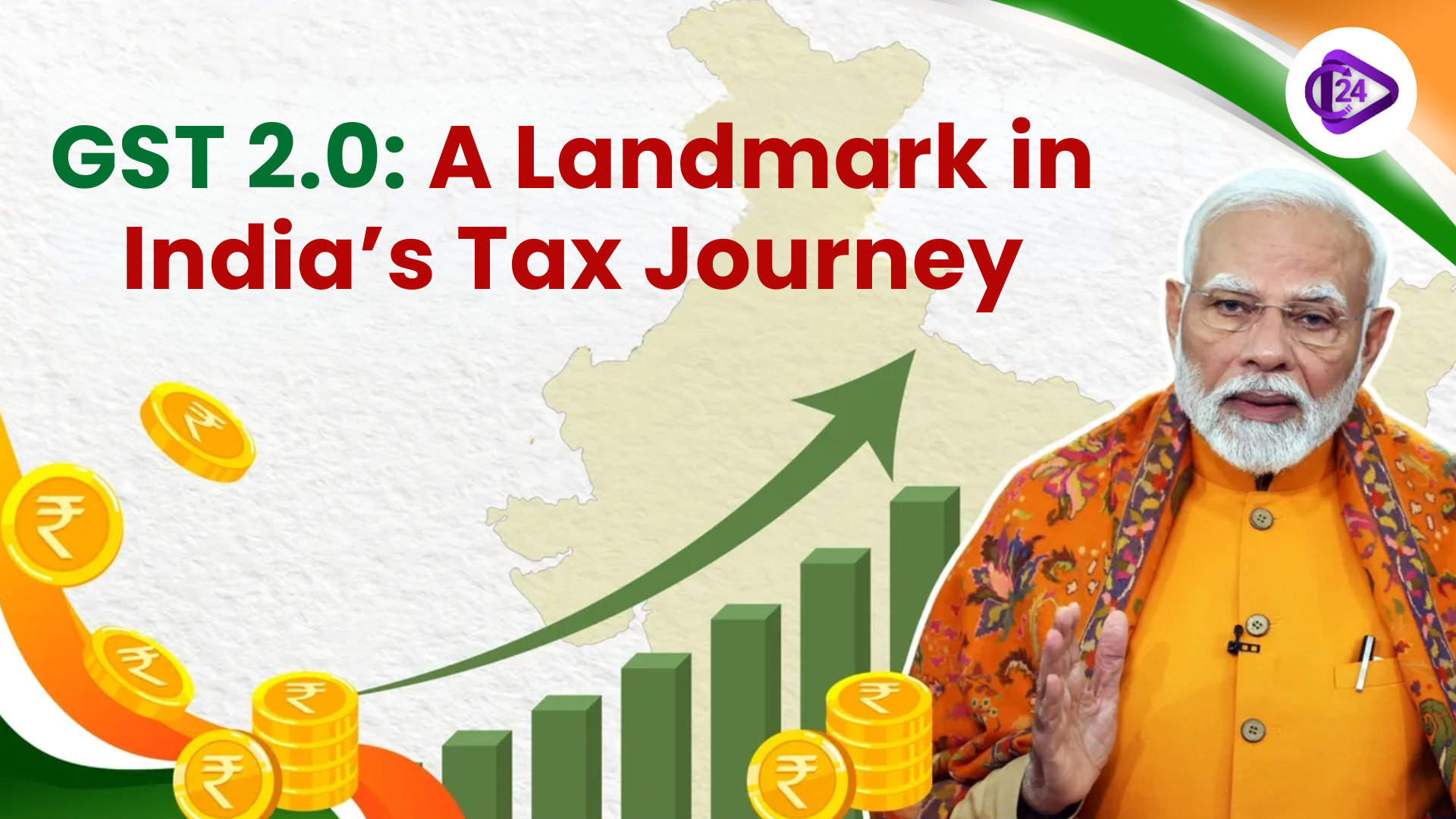
India’s Goods and Services Tax (GST) system entered a new phase with the reforms announced at the 56th GST Council meeting on September 3, 2025. Known as GST 2.0, the changes aim to simplify the tax structure, provide relief to consumers, reduce compliance burdens for businesses, and support economic growth. The reforms are also aligned with India’s long-term vision of becoming a developed nation by 2047.
GST 2.0 focuses on making taxation easier to understand and more efficient. By rationalising tax rates and introducing sector-specific changes, the reforms seek to improve affordability, strengthen domestic industries, and create a more predictable business environment.
What Is GST 2.0?
GST 2.0 refers to a series of changes designed to simplify India’s indirect taxation system. The Goods and Services Tax was introduced on July 1, 2017, to bring multiple indirect taxes under a common framework.
Simplification of GST Tax Slabs
One of the major features of GST 2.0 is the restructuring of tax rates. The revised framework primarily uses two standard rates—5% and 18%—alongside a higher 40% rate for selected demerit goods.
This approach aims to reduce complexity, make tax classification easier, and improve compliance for businesses. The actual tax rate applicable to a product or service depends on its classification under the relevant GST notifications.
Improving Tax Compliance
A simpler rate structure can help businesses manage invoicing, accounting, and tax reporting more efficiently. Clearer rules can also reduce classification disputes and make tax obligations easier to understand.
How GST 2.0 Benefits Consumers
Consumer relief is a key objective of the reforms. Changes to the GST rates on selected household products, food items, and healthcare-related goods aim to make essential purchases more affordable.
Lower Taxes on Everyday Products
Selected personal-care and household products, including items such as soap, shampoo, toothpaste, and kitchenware, received GST rate reductions under the revised framework. Such changes may reduce retail prices, although the final impact depends on manufacturers, retailers, and the extent to which tax savings are passed on to consumers.
Relief in Healthcare and Insurance
The reforms also introduced important changes relating to health insurance, life insurance, medicines, and medical products. Exemptions and rate reductions in eligible categories can lower the financial burden on households.
However, the precise benefit depends on the product or service concerned and the applicable tax provisions.
GST 2.0 and Agricultural Development
Agriculture remains an important part of India’s economy, and the cost of machinery and inputs directly affects farmers’ expenses.
Reduced GST on Agricultural Machinery
Lower GST rates on eligible agricultural machinery, including tractors and related equipment, can help reduce purchase costs. More affordable machinery may encourage farmers to adopt modern equipment and improve productivity.
The overall benefit depends on the applicable rate, equipment category, and market pricing.
Supporting Rural Businesses
Tax relief for eligible agricultural products and equipment can also support rural enterprises and businesses connected with the farming sector. Lower input costs may improve competitiveness across parts of the agricultural supply chain.
Impact on Employment and Manufacturing
GST 2.0 also aims to strengthen domestic manufacturing and labour-intensive industries. Sectors such as textiles, leather, handicrafts, and construction can benefit from changes to applicable tax rates.
Boost for Textiles and Traditional Industries
Lower GST rates on selected textile products and other eligible goods can improve affordability and competitiveness. This may support demand for domestically manufactured products and create opportunities for small businesses and workers.
Handicrafts and traditional industries are particularly important because they provide livelihoods to artisans and support local economies.
Cement and Infrastructure Development
The revised GST framework reduced the rate on cement from 28% to 18%. This change can help lower the tax component of construction costs and support housing and infrastructure activity, although the final cost also depends on transportation, raw materials, and market conditions.
Institutional Reforms and GST Dispute Resolution
Effective tax administration is essential for the success of GST reforms. Faster dispute resolution and more transparent compliance procedures can improve confidence among taxpayers.
Role of the GST Appellate Tribunal
The Goods and Services Tax Appellate Tribunal (GSTAT) is intended to provide a dedicated mechanism for resolving GST-related appeals. Its operational rollout can help address disputes more systematically and reduce dependence on prolonged litigation.
The tribunal’s effectiveness will depend on its functioning, accessibility, and ability to resolve cases within reasonable timelines.
Better Refunds and Compliance Procedures
Measures such as improved refund processing, risk-based scrutiny, and clearer valuation standards can reduce unnecessary administrative burdens. These improvements are particularly relevant for small and medium-sized enterprises, which often have limited resources for tax compliance.
Implementation and the Road Ahead
The revised GST rates were scheduled to take effect from September 22, 2025, subject to the relevant notifications and product-specific provisions. Successful implementation requires clear communication, consistent administration, and awareness among businesses and consumers.
Businesses need to update their billing systems, product classifications, and accounting processes wherever required. Consumers should check the applicable tax treatment rather than assume that every product has received a rate reduction.
The long-term success of GST 2.0 will depend on how effectively the reforms balance consumer relief, government revenue, business growth, and tax compliance.
Conclusion
GST 2.0 represents an important stage in the development of India’s indirect taxation system. By simplifying tax rates, providing relief in selected sectors, supporting agricultural and industrial activity, and strengthening dispute resolution, the reforms aim to create a more efficient and accessible tax environment.
Their actual impact will depend on effective implementation and the extent to which tax benefits reach consumers and businesses. A transparent, predictable, and well-administered GST system can contribute to India’s broader economic development goals.