

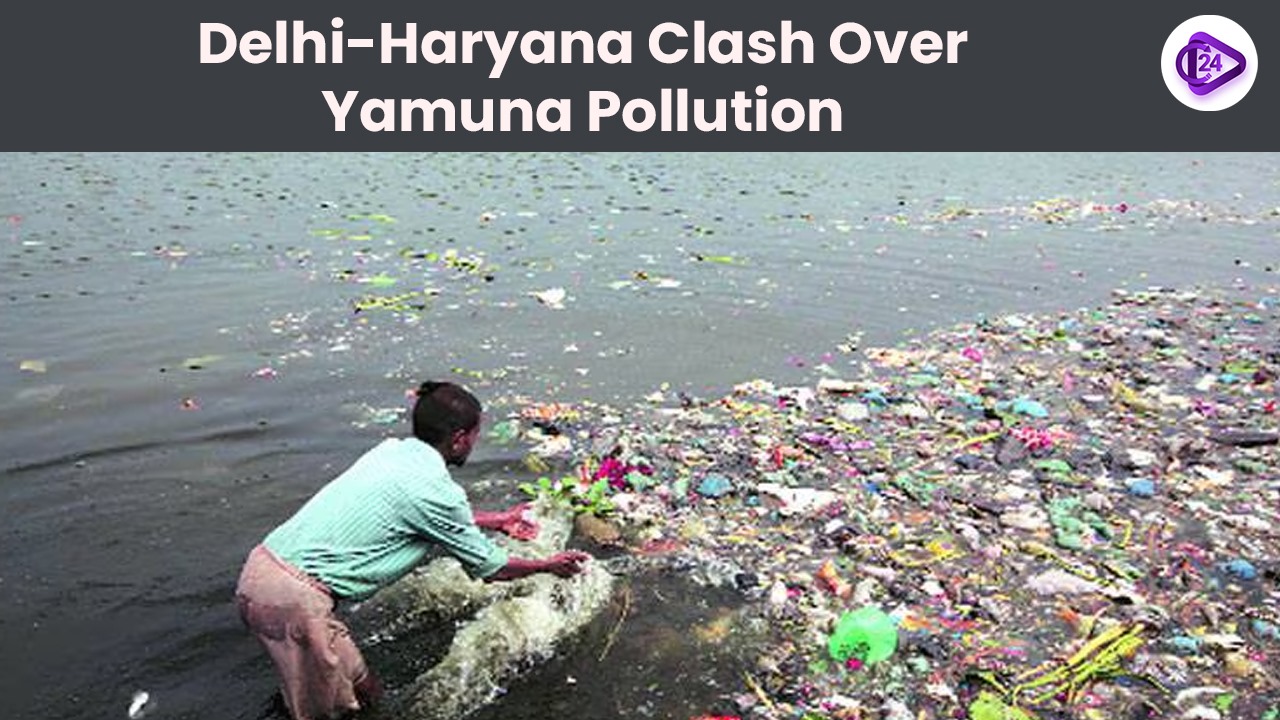
The conflict over Yamuna river water escalated when Delhi's CM Arvind Kejriwal blamed the Haryana government under BJP rule for polluting the Yamuna with ammonia substances that threatened Delhi's water source. The river water quality and environment suffer damage due to ammonia that enters from industrial plants and sewage treatment centers. Water treatment facilities in Delhi face difficulties treating excessive amounts of ammonia which results in water supply problems throughout the city. Temporary measures that boost chlorine use in the water supply exist but the problem requires a long-term solution involving both Delhi and Haryana to establish a permanent facility and forge better cooperative practices for maintaining a constant water supply.
About Ammonia Pollution
What is Ammonia?
-
The odorless colorless gas known as ammonia maintains wide usage throughout industries together with agricultural practices. Water easily dissolves this substance so it appears in industrial wastewater together with agricultural runoff and untreated wastewater produced by domestic sources. The natural occurrence of ammonia takes place when organic materials degrade.
-
The presence of ammonia within water systems creates two major health ramifications and deteriorates water supply quality.
-
A high level of ammonia exposure leads to painful harm of internal organs. The presence of ammonia in the Yamuna water stream decreases oxygen content in the water which creates harmful conditions for aquatic life to exist. The rise of ammonia concentrations within water sources produces adverse effects on water treatment operations and degrades water quality which results in population-wide water shortages throughout Delhi's urban districts.
-
The presence of ammonia creates negative effects on the drinking water supply system in Delhi.
Source of Pollution
Industrial pollution along with sewage discharges within Panipat and Sonipat districts creates conditions that let ammonia enter the Yamuna River while degrading its quality until it reaches Delhi. The water pollution worsens during winter because low freshwater flow makes the situation more critical.
Challenges for Water Treatment
The treatment facilities in Delhi experience difficulties when processing water with ammonia contamination. The water treatment plants use chlorine as a means to eliminate ammonia yet their ability to do so stops at 1 ppm (parts per million). The water treatment process suffers when ammonia concentrations surpass its safe capacity point which results in disrupted water supply.
Government Responses and Challenges
-
Temporary Measures:
-
For each ppm of ammonical nitrogen, the water treatment facilities in Delhi must operate 11.5 kilograms of excess chlorine events per liter throughout an hour. The temporary approach proves futile when ammonia exceeds the 1 ppm concentration threshold.
-
-
Proposed Solutions:
-
The local government in Delhi aims to construct a treatment facility for ammonia which will operate at Wazirabad on the Yamuna River. Construction of the proposed site has not been finalized at Wazirabad for in-situ ammonia treatment on the Yamuna River in 2024.
-
Political and Environmental Effects
-
The water pollution crisis continues to generate political tensions because Arvind Kejriwal holds the Haryana government responsible for neglecting the ammonia pollution issue.
-
The two states held numerous meetings yet failed to discover any permanent solution that caused water scarcity while making political relationships worse.
About Yamuna River
-
Tributary of Ganga: The Yamuna River serves as the largest connecting tributary extending from the Ganges River.
-
Origin: Its source point is the Yamunotri Glacier which exists at 4,421 meters above sea level in the elevated Himalayas.
-
Length: The Yamuna River runs 1,376 kilometers along Uttarakhand then Uttar Pradesh and Haryana before it meets the Ganges at Prayagraj.
-
Flow of Yamuna: The river begins its path in Uttarakhand by flowing through mountainous regions before entering Uttar Pradesh and then Haryana while crossing Delhi. The river supplies water through three important canal passages including the Western and Eastern Yamuna canals as well as the Agra Canal.
-
Confluence: At the sacred Hindu location of Prayagraj the Yamuna stream merges with the Ganges before flowing into each other.
-
Tributaries of Yamuna: The Yamuna River accepts tributary waters from the Tons, Chambal, Hindon, Sarda, Giri, Betwa and Sindh rivers.
Conclusion
Delhi suffers critical environmental problems alongside divisive political circumstances when managing its water resources because of Yamuna ammonia pollution. Short-term chlorine treatment methods help mitigate current conditions but lasting changes to water facilities together with active state collaboration must occur to provide long-term safety for Delhi residents. The water crisis in Delhi will persist because effective solutions have not been found to address this problem.