
Day: January 31, 2025

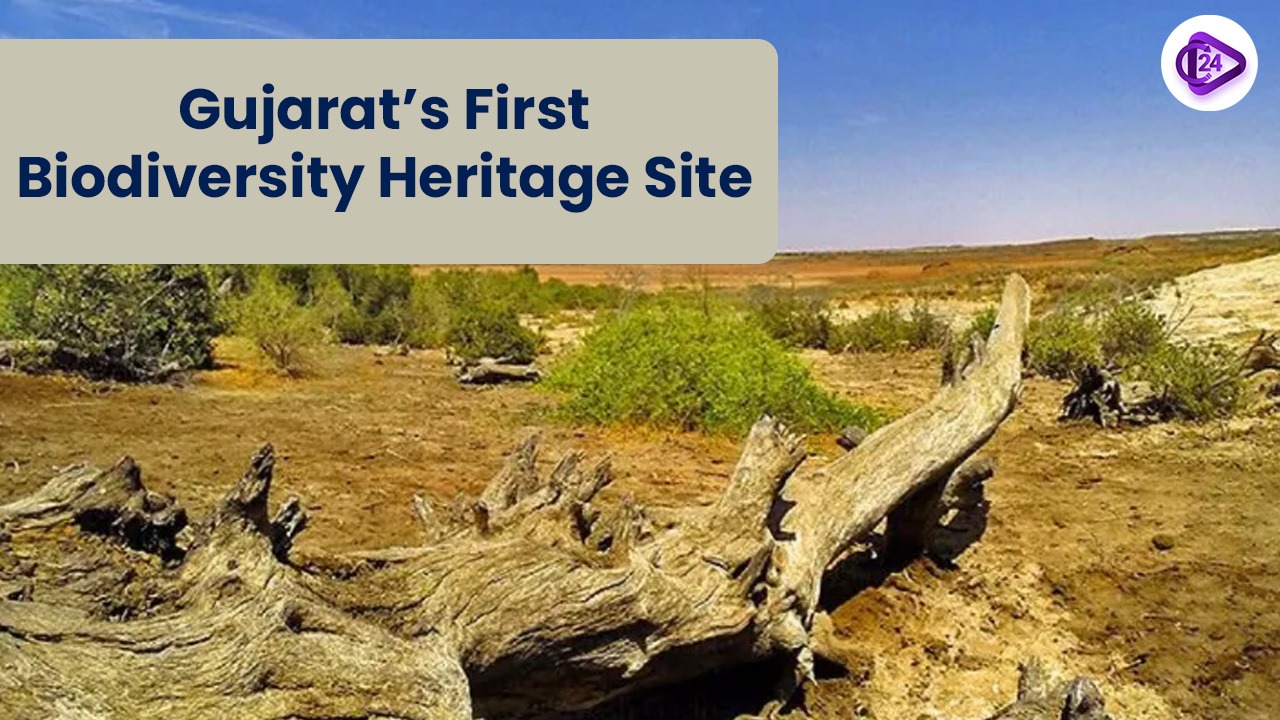
Gujarat’s First Biodiversity Heritage Site: Inland Mangrove Guneri in Kutch

The Gujarat Biodiversity Board has officially recognized the ‘Inland Mangrove Guneri’ in Kutch as the state's first-ever Biodiversity Heritage Site (BHS). This significant declaration marks a milestone in Gujarat's ongoing efforts to conserve its rich biodiversity and natural ecosystems. The Inland Mangrove Guneri, with its unique non-tidal mangrove ecosystem, holds immense ecological importance, and its recognition under the BHS initiative ensures better protection and sustainable management. By securing this protected status, Gujarat aims to safeguard this rare habitat, which not only supports a diverse range of flora and fauna but also serves as an essential element in maintaining the ecological balance of the region. This move also highlights the state's commitment to preserving its natural resources for future generations.

The concept of Biodiversity Heritage Sites (BHS) 

  • Definition:

    • The uniqueness of ecosystems together with abundant biodiversity defines Biodiversity Heritage Sites which receive official recognition for their ecological value. Successfully conserving habitats depends on these locations which protect natural balance systems between ecosystems.

  • Ecological Importance:

    • Indian states have identified BHS as areas which include terrestrial ecosystems together with coastal areas alongside inland water ecosystems. These sites protect species diversity while providing essential habitat maintenance for ecosystems along with their services.

  • Legal Framework:

    • The Biological Diversity Act of 2002 grants authority to state governments to choose such regions. NBA functions as a guide to help select and manage these sites.

Characteristics of the Inland Mangrove Guneri

  • The Inland Mangrove Guneri forms a distinctive mangrove ecosystem that exists within the Kutch district at a 45 km distance from the Arabian Sea shoreline. Natural water tides are not required for this mangrove habitat to survive although they are essential for normal mangrove ecosystems.

  • The flat landscape on which this mangrove grows displays dense forest characteristics opposite to the usual coastal mangrove arrangement.

  • The site contains numerous plant and animal species which makes the location an important ecological site for the area.

Objectives of the BHS Designation

  • A key reason behind establishing the Inland Mangrove Guneri as a Biodiversity Heritage Site revolves around several critical aims.

    • The goal exists to achieve better biodiversity conservation within this area.

    • The main objective of this action is to establish a connection between human action and natural systems.

    • The initiative seeks to develop conservation ethics through public awareness programs about biodiversity protection.

    • The management objective exists to tackle increasing biodiversity reduction in lands experiencing extensive human oversight.

Management of Biodiversity Heritage Sites

  • Responsibility:

    • BHS management falls as the responsibility of the Biodiversity Management Committee (BMC) which the local body convenes. Under the supervision of the committee the site's conservation needs and management requirements are both directed toward sustainable practices.

  • Management Plan:

    • The BMC develops site management plans that extend from five to ten years in duration for every installment. This planning approach collects methods for protecting natural resources as well as instructions for good ecological practices and full community participation.

Conclusion

The recognition of the Inland Mangrove Guneri as Gujarat’s first Biodiversity Heritage Site represents a major achievement for state biodiversity preservation. The achievement of sustainable management and locally-involved conservation strategies with improved practices stands as a vital step towards defending the unique regional ecosystems for future generations.

India Marks World NTD Day 2025 with Landmark Illumination at India Gate to Raise Awareness

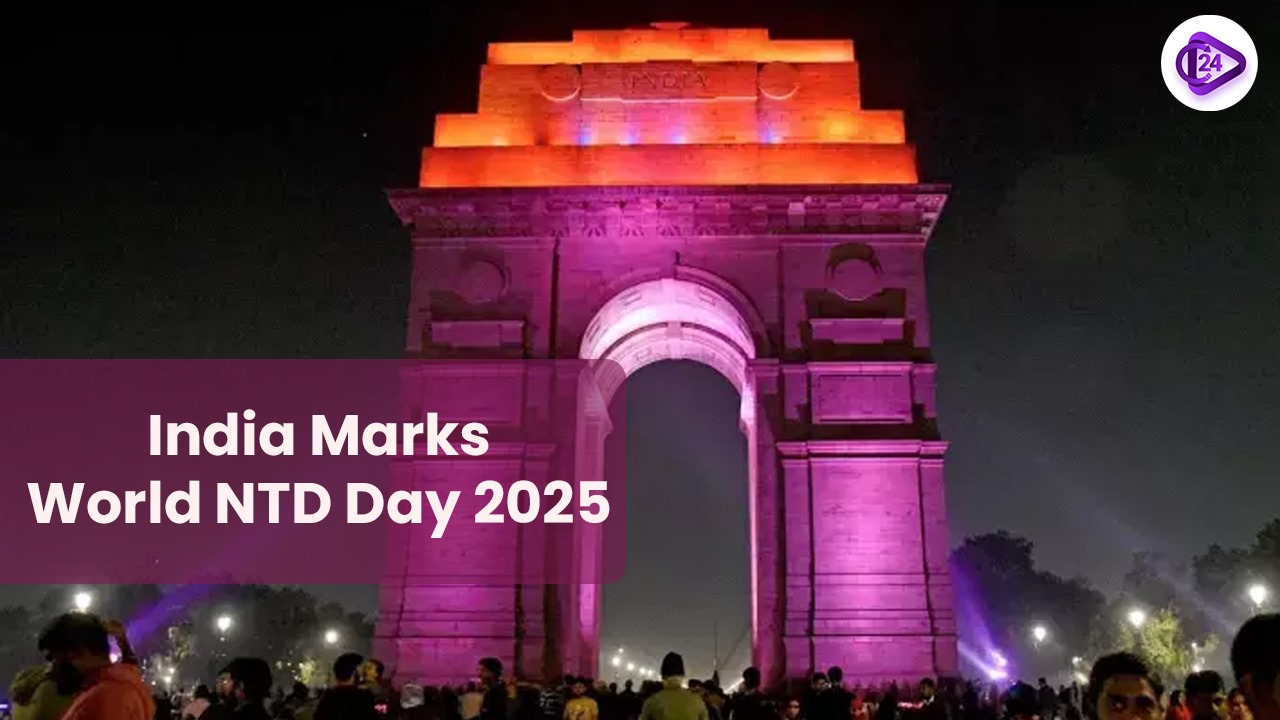
The National Observance of World Neglected Tropical Diseases (NTD) Day 2025 featured India Gate as an awareness-raising landmark that used purple and orange illumination to discuss Neglected Tropical Diseases (NTDs). The communal effort together with government policy achievements demonstrated India's success in controlling Lymphatic Filariasis and Visceral Leishmaniasis, which affect over 1.7 Billion people globally, it is often neglected in global discussions despite affecting several people and causing severe health issues.

What are Neglected Tropical Diseases (NTDs)?

Definition

The group of infectious diseases named NTDs mostly targets poor communities existing within tropical and subtropical locations. These diseases remain outside the scope of most international health plans and receive inadequate funding support.

Prevalence:

NTDs exist as a global health problem that impacts more than 1.7 billion people specifically within areas with restricted healthcare access including low-income nations.

Types of NTDs

  • Some common NTDs include:

    • The parasitic infection Lymphatic Filariasis brings about severe leg swelling which produces permanent disability for patients.

    • The deadly infection of Visceral Leishmaniasis attacks the internal body organs with the main impact on the spleen and liver.

    • Other diseases like Schistosomiasis, Trachoma, Guinea Worm Disease, and Soil-transmitted helminths.

Impact of NTDs

Due to their nature NTDs bring about extreme disability and permanent health disabilities and damaging physical deformities. NTDs cause affected individuals to experience social exclusion which worsens due to stigma.

Neglect:

NTDs receive minor attention from global health institutions so they qualify as neglected diseases even though they affect numerous populations. NTDs remain hidden beneath the international health schedule due to more prominent diseases taking precedence.

Solutions for NTDs

  • Mass Drug Administration (MDA):

    • NTD reduction through mass treatment programs becomes possible when medication is offered to all community members residing in areas with high risk.

  • Community Engagement:

    • The success of NTD control programs depends on public participation since community members need proper education for disease prevention methods and available treatments.

  • Improved Sanitation:

    • Sanitation and hygiene improvement measures stop numerous NTDs from spreading since they reduce soil contamination which acts as an NTD transmission mechanism.

India's Progress in Eliminating NTDs

  • Substantial progress regarding negligent tropical diseases has occurred in India, especially after its successful elimination of Lymphatic Filariasis and Visceral Leishmaniasis.

  • Human involvement as well as government programs through mass medication have enabled India to reduce these diseases substantially.

Conclusion

The celebration of World NTD Day 2025 brought attention to how institutions still fight against neglected tropical diseases. The nighttime illumination of India Gate with purple and orange light demonstrated India's resolve to spread awareness and solve the health and social problems resulting from NTDs. With community engagement, policy actions, and improved healthcare systems India is making progress toward eliminating these diseases and making progress of better health in the nation.

Delhi-Haryana Water Dispute Escalates Over Ammonia Pollution in the Yamuna River

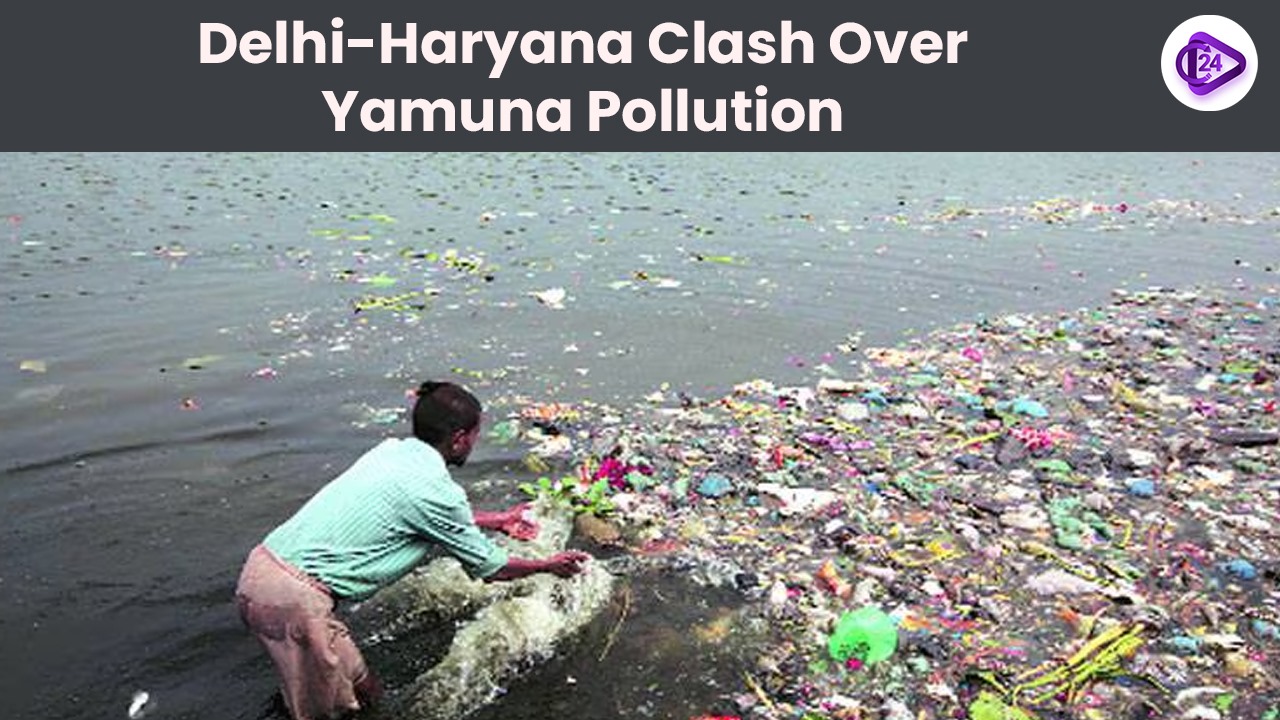
The conflict over Yamuna river water escalated when Delhi's CM Arvind Kejriwal blamed the Haryana government under BJP rule for polluting the Yamuna with ammonia substances that threatened Delhi's water source. The river water quality and environment suffer damage due to ammonia that enters from industrial plants and sewage treatment centers. Water treatment facilities in Delhi face difficulties treating excessive amounts of ammonia which results in water supply problems throughout the city. Temporary measures that boost chlorine use in the water supply exist but the problem requires a long-term solution involving both Delhi and Haryana to establish a permanent facility and forge better cooperative practices for maintaining a constant water supply.

About Ammonia Pollution

What is Ammonia?

  • The odorless colorless gas known as ammonia maintains wide usage throughout industries together with agricultural practices. Water easily dissolves this substance so it appears in industrial wastewater together with agricultural runoff and untreated wastewater produced by domestic sources. The natural occurrence of ammonia takes place when organic materials degrade.

  • The presence of ammonia within water systems creates two major health ramifications and deteriorates water supply quality.

  • A high level of ammonia exposure leads to painful harm of internal organs. The presence of ammonia in the Yamuna water stream decreases oxygen content in the water which creates harmful conditions for aquatic life to exist. The rise of ammonia concentrations within water sources produces adverse effects on water treatment operations and degrades water quality which results in population-wide water shortages throughout Delhi's urban districts.

  • The presence of ammonia creates negative effects on the drinking water supply system in Delhi.

Source of Pollution

Industrial pollution along with sewage discharges within Panipat and Sonipat districts creates conditions that let ammonia enter the Yamuna River while degrading its quality until it reaches Delhi. The water pollution worsens during winter because low freshwater flow makes the situation more critical.

Challenges for Water Treatment

The treatment facilities in Delhi experience difficulties when processing water with ammonia contamination. The water treatment plants use chlorine as a means to eliminate ammonia yet their ability to do so stops at 1 ppm (parts per million). The water treatment process suffers when ammonia concentrations surpass its safe capacity point which results in disrupted water supply.

Government Responses and Challenges

  • Temporary Measures:

    • For each ppm of ammonical nitrogen, the water treatment facilities in Delhi must operate 11.5 kilograms of excess chlorine events per liter throughout an hour. The temporary approach proves futile when ammonia exceeds the 1 ppm concentration threshold.

  • Proposed Solutions:

    • The local government in Delhi aims to construct a treatment facility for ammonia which will operate at Wazirabad on the Yamuna River. Construction of the proposed site has not been finalized at Wazirabad for in-situ ammonia treatment on the Yamuna River in 2024. 

Political and Environmental Effects

  • The water pollution crisis continues to generate political tensions because Arvind Kejriwal holds the Haryana government responsible for neglecting the ammonia pollution issue.

  • The two states held numerous meetings yet failed to discover any permanent solution that caused water scarcity while making political relationships worse.

About Yamuna River

  • Tributary of Ganga: The Yamuna River serves as the largest connecting tributary extending from the Ganges River.

  • Origin: Its source point is the Yamunotri Glacier which exists at 4,421 meters above sea level in the elevated Himalayas.

  • Length: The Yamuna River runs 1,376 kilometers along Uttarakhand then Uttar Pradesh and Haryana before it meets the Ganges at Prayagraj.

  • Flow of Yamuna: The river begins its path in Uttarakhand by flowing through mountainous regions before entering Uttar Pradesh and then Haryana while crossing Delhi. The river supplies water through three important canal passages including the Western and Eastern Yamuna canals as well as the Agra Canal.

  • Confluence: At the sacred Hindu location of Prayagraj the Yamuna stream merges with the Ganges before flowing into each other.

  • Tributaries of Yamuna: The Yamuna River accepts tributary waters from the Tons, Chambal, Hindon, Sarda, Giri, Betwa and Sindh rivers.

Conclusion

Delhi suffers critical environmental problems alongside divisive political circumstances when managing its water resources because of Yamuna ammonia pollution. Short-term chlorine treatment methods help mitigate current conditions but lasting changes to water facilities together with active state collaboration must occur to provide long-term safety for Delhi residents. The water crisis in Delhi will persist because effective solutions have not been found to address this problem.

Hamas Confirms Death of Military Leader Mohammed Deif Following Israeli Airstrike

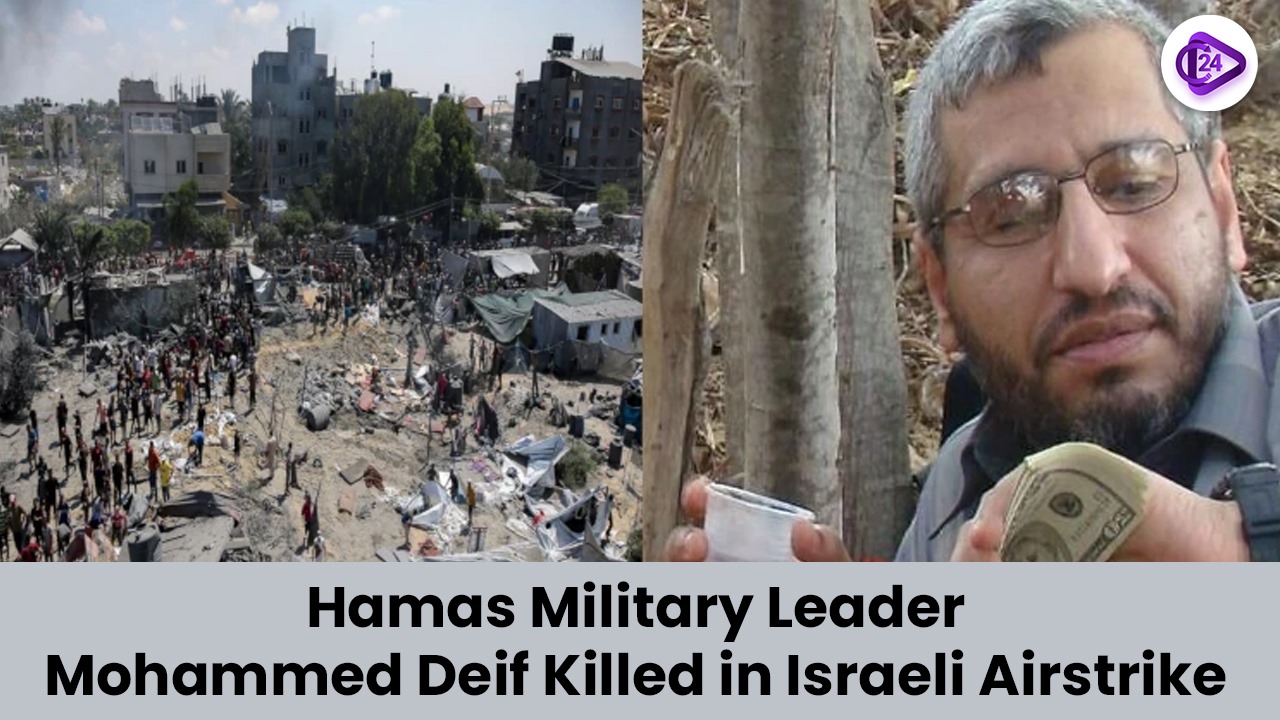
Hamas leadership confirmed that its military leader Mohammed Deif died after Israeli aircraft targeted him. Hamas military leader Mohammed Deif died alongside various top-ranking Hamas officials because of an Israeli airstrike in Khan Younis Gaza. Israel previously announced his death in August 2023 when intelligence showed he had become a target. The airstrike eliminated multiple military leaders of Hamas apart from killing its leader Mohammed Deif. Israeli airstrikes have taken the life of Hamas leader Mohammed Deif as the Israel-Hamas conflict intensifies through the major Hamas attack against Israel in October 2023. 

About the Death of Mohammed Deif

  • The Hamas spokesperson Abu Obeida formally verified through a video statement that the military leader Deif met his fate together with other senior Hamas military officials. 

  • Deif encountered his demise during a July 13 Israeli airstrike on Khan Younis according to an Israeli announcement made in August 2023. Receiving fresh intelligence led the Israel Defense Forces (IDF) to confirm the death of this individual.

  • The Israeli military conducted an airstrike against Rafa’a Salameh’s compound located in Khan Younis because Deif was present at the location during that time.

About Hamas

  • Nature: The largest Palestinian militant Islamist group and one of the two major political parties in the region.

  • Governance: Governs over two million Palestinians in the Gaza Strip.

  • Formation: Early formation occurred in 1988 when Palestinians launched a revolt against Israel during its administration of the West Bank and Gaza territories.

  • Designation: Considered a terrorist organization by Israel, the United States, the European Union, the United Kingdom, and other countries.

Background of the Conflict

  • Hamas conducted its most significant assault on Israel on October 7, 2023, when they murdered 1,200 civilians alongside taking 200 hostages.

  • Israel launched a massive counterattack against Hamas fighters during its offensive in Gaza and Palestinian casualties exceeded 46,000.

Israeli-Palestinian Prisoner Exchange

A different Israeli move came through when they allowed 110 Palestinian prisoners to go free following safety promises from ceasefire negotiators. The security operations were part of ongoing strategies to free all captured hostages maintained by Hamas including both Israeli and Thai hostages.

Israel previously delayed prisoner exchanges because the leadership wanted promises regarding safe transportation for future hostage exchanges to protect the prisoners during upcoming transfers.

Reason of the Israel-Palestine conflict

  • The main issue started from the territorial dispute over Palestine, particularly Gaza, the West Bank, and East Jerusalem. 

  • Since 2007, Israel has blocked the Gaza Strip which hinders the movement of people, and goods causing economic and humanitarian issues in Gaza.

  • Hamas's continuous rocket attacks on Israel territory cause major security threats and military operations of Israel in its respond

  • Border conflicts to take control over religious places like Jerusalem, especially al-Aqsa mosque.

  • Political rivalry between Hamas and Fatah causes internal conflict in Palestine, Gaza is under the control of Hamas while Fatah controls the West Bank region.

India and its support for Palestine

  • India recently voted in favor of Palestine in the United Nations General Assembly (UNGA) resolution “Peaceful Settlement of the Question of Palestine”. The resolution calls for the withdrawal of Israel from the Palestinian area occupied by them since 1967, including East Jerusalem. 

Conclusion

Israeli air forces delivered a fatal blow to Hamas leader Mohammed Deif marking a strategic point in the present conflict. Hamas stands weaker following the demise of Mohammed Deif because the organization lost its most prominent military commander through the fatal airstrike. The larger ongoing conflict continues to generate catastrophic damage to the people on both sides. Both Israeli retaliatory campaigns and large-scale military strikes alongside prisoner exchanges show mounting hostility while highlighting the severe losses of civilian lives which have killed tens of thousands. 

Indian Astronaut Shubhanshu Shukla to Pilot Axiom-4 Mission to International Space Station(ISS)

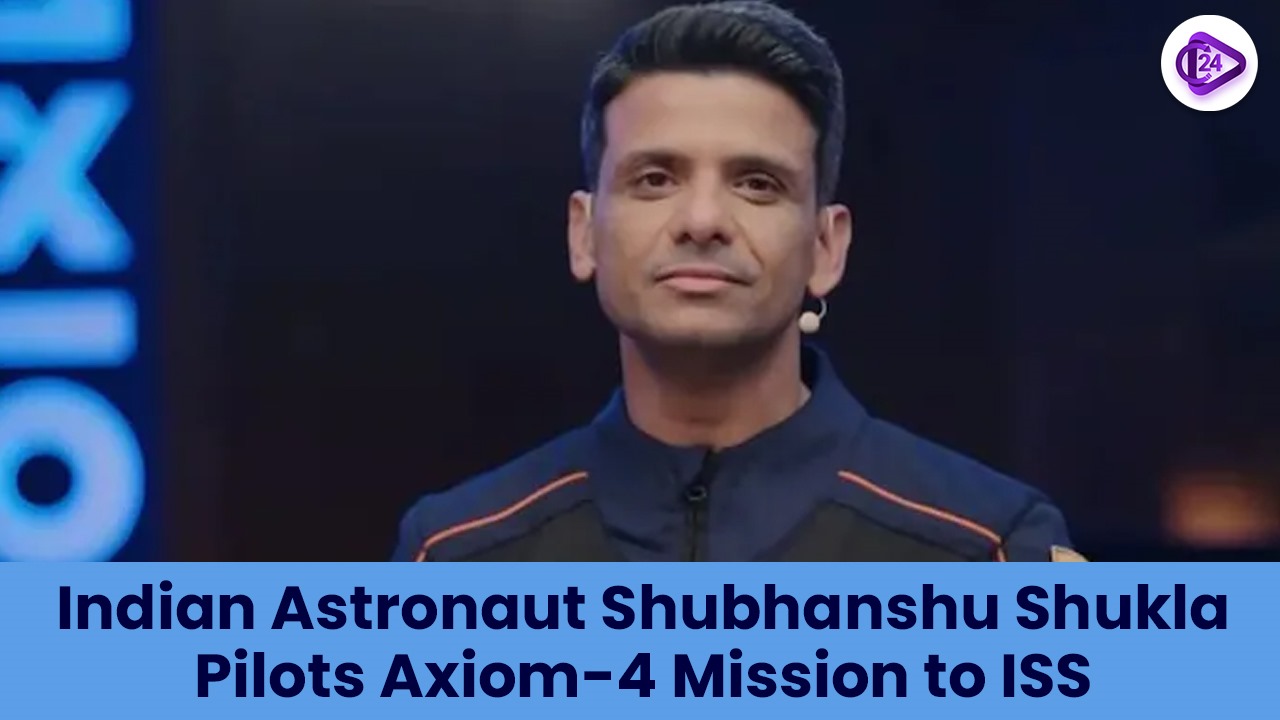
NASA authorized the Axiom-4 mission that assigned Indian Air Force officer Shubhanshu Shukla to serve as its pilot. A 14-day International Space Station (ISS) mission has received NASA approval with Peggy Whitson in command position alongside former NASA astronauts as well as Sławosz Uznanski-Wisniewski and Tibor Kapu as European Space Agency astronauts. Activities and experiments under microgravity conditions will be carried out by the crew members. The personnel will arrive through a SpaceX Dragon spacecraft delivery. Shukla participated in the Gaganyaan mission along with achieving a historic first as the first Indian astronaut to visit the ISS which represents substantial progress in Indo-US space cooperation.

About 

Group Captain Shubhanshu Shukla from India received a selection from NASA to pilot the Axiom-4 mission which will take astronauts to the International Space Station (ISS). The Axiom-4 ISS mission stands as a major achievement for India because Shukla has become its first national space explorer to visit the space station.

About Axiom-4 Mission

  • The Axiom-4 mission will maintain a 14-day stopover on the ISS together with its crew of four astronauts.

  • Axiom Space director of human spaceflight Peggy Whitson holds both NASA astronaut status and commander role.

  • Pilot: Group Captain Shubhanshu Shukla, an ISRO astronaut and officer in the Indian Air Force.

  • Crew Members: Two European Space Agency (ESA) astronauts, Sławosz Uznanski-Wisniewski (Poland) and Tibor Kapu (Hungary).

  • The Spacecraft carrying this crew will utilize a SpaceX Dragon spacecraft to transport personnel to the ISS.

  • After the ISS arrival, the astronauts will dedicate their 14-day stay to running laboratory research and executing space-based projects under microgravity conditions.

Significance of the Mission

  • Shubhanshu Shukla will become the first Indian astronaut who visit the International Space Station in space history while making India proud of its future ambitions in space exploration.

  • Shukla serves as an astronaut selection for India's Gaganyaan Mission in addition to his duties on Axiom-4 because the mission intends to launch Indian astronauts into space.

  • The mission serves as a vital component of Indo-US space collaboration after Prime Minister Narendra Modi pointed out this cooperation during his US visit.

  • Axiom-4 stands as another operative private astronaut mission heading to the International Space Station following its predecessors Axiom Mission 1 (April 2022) and Axiom Mission 2 (May 2023). The missions create new paths toward expansive space accessibility while enabling different nations to team up for research exploration in space environments.

Astronaut Training and Preparation

Shubhanshu Shukla and his backup replacement Group Captain Prashanth Nair received extensive training from NASA, the European Space Agency (ESA) and Japan Aerospace Exploration Agency (JAXA) space agencies. The astronauts participate in demanding training that fully prepares them for both spaceflight conditions and the specific conditions of ISS existence.

About the International Space Station

  • Established: Since 1998 when it launched the International Space Station (ISS) has become the largest artificial structure in space while roaming at 400 km elevation and 28,000 km/h velocity. Astronauts use this platform as their habitat while scientists conduct their research activities from it.

  • NASA (USA) together with Roscosmos (Russia) and ESA (Europe) along with JAXA (Japan) and CSA (Canada) collaborate to manage the ISS project.

  • Since the 2022 Ukraine War, Russia declared its exit from the ISS to construct its own space station as the United States and Europe committed to keep operating until 2030.

  • New orbital laboratories are being constructed by China alongside India and Japan in addition to other countries. Early in 2022, Tiangong launched operations as China's space station while India announced its plans to build Bhartiya Antriksh Station with projections for its completion by 2035 as expansion occurs in global space station development.

Conclusion

India positions itself as an important space exploration force through its Axiom-4 mission. By joining the Axiom-4 mission Shubhanshu Shukla enables closer India space agency partnerships with international organizations which will create future opportunities for space exploration and scientific advancement.

Frequently Asked Questions (FAQs)

The current affairs cover recent national and international events related to UPSC, SSC, Banking, Railways, and State PCS.

You need to read about the current affairs daily, and revise them every week and every month to keep them longer in your memory.

Yes, Class24 provides free downloadable Daily Current Affairs PDFs for easy revision.

Yes, you can practice MCQs and quizzes to boost your exam preparation.

Absolutely. The content is written in simple, easy-to-understand bilingual language suitable for beginners.

Go to class24.com and click on the current affairs section directly, where you find everything that you need.

ssc-toppers

Start Learning Today with Class24

Related current affairs

Class24 offers free video lectures for smart preparation, covering CGL, CPO, CHSL, MTS, and GD exams. Learn from expert faculty, revise concepts easily, practice with PYQs, and improve speed and accuracy through high-quality, exam-focused video lessons anytime, anywhere.

Get success in your hand. Start study anytime anywhere.

The journey becomes simple and enjoyable when you start taking interest in it. And through our app “Class24”, we will be your trusted partners in developing that interest.

Daily Quizzes
Mock Tests
Ongoing

No ongoing tests right now.