


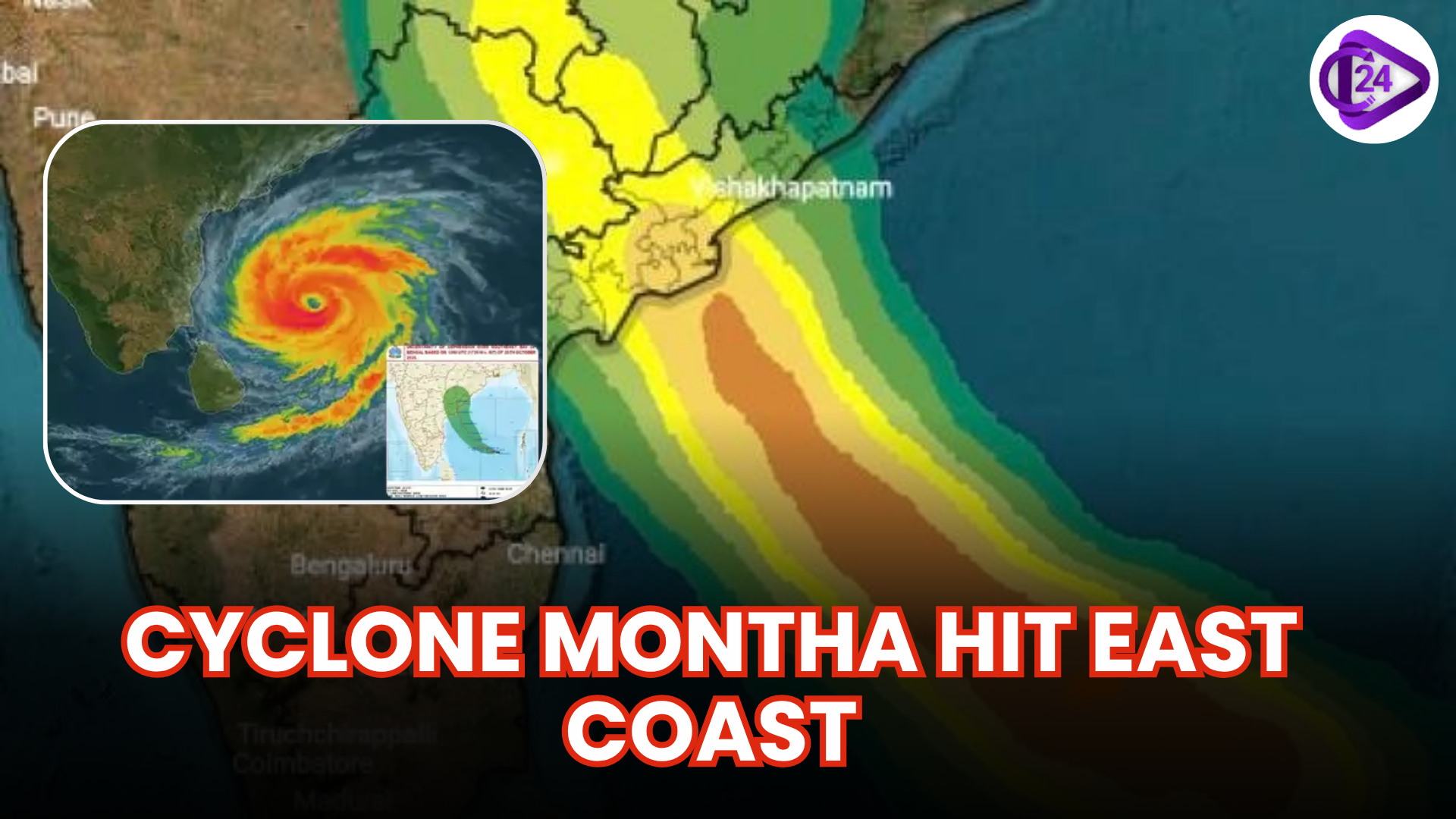
Cyclone Montha made landfall near Kakinada on the Andhra Pradesh coast in October 2025, bringing strong winds, heavy rainfall, and the risk of coastal flooding. The storm developed over the Bay of Bengal and affected coastal areas of Andhra Pradesh, while Odisha also prepared for adverse weather conditions.
With wind speeds reaching approximately 100 km/h and gusts of up to 110 km/h, the cyclone created significant challenges for local authorities and disaster management agencies. Governments undertook evacuation measures in vulnerable areas, closed schools where necessary, and deployed emergency response teams to minimise the impact on communities.
What Is Cyclone Montha?
Cyclone Montha was a tropical cyclone that developed over the Bay of Bengal. It intensified over warm ocean waters and moved towards India’s eastern coastline, bringing strong winds and heavy rainfall.
The cyclone highlighted the vulnerability of coastal communities to severe weather events and the importance of timely warnings and disaster preparedness.
Origin and Naming of Cyclone Montha
Cyclone Montha developed from a low-pressure system over the Bay of Bengal. Thailand contributed the name “Montha” to the regional cyclone naming list. Cyclones in the North Indian Ocean region are named according to a system coordinated by the World Meteorological Organization and the United Nations Economic and Social Commission for Asia and the Pacific.
How Do Tropical Cyclones Form?
Tropical cyclones generally form over warm ocean waters when atmospheric conditions support the development of a rotating low-pressure system. Warm, moist air rises from the sea surface, creating thunderstorms and releasing heat as water vapour condenses.
When wind conditions and other environmental factors remain favourable, the system can strengthen into a tropical cyclone.
Major Impact of Cyclone Montha
The cyclone brought strong winds and heavy rainfall to parts of the eastern coast. Coastal districts faced risks from flooding, damage to infrastructure, and disruption to transportation and daily activities.
Impact on Andhra Pradesh
Kakinada and nearby coastal areas faced challenging weather conditions during landfall. Strong winds and heavy rain increased the risk of damage to homes, electricity infrastructure, roads, and agricultural land. Authorities prioritised public safety and precautionary measures in vulnerable locations.
Impact on Odisha
Although the main landfall occurred on the Andhra Pradesh coast, Odisha remained vulnerable to heavy rainfall and strong winds associated with the weather system. Local authorities monitored the situation and prepared emergency services to respond to possible flooding and other weather-related disruptions.
Disaster Management and Government Response
Timely warnings, evacuation arrangements, and coordination among government agencies are essential during cyclones. Authorities in affected and vulnerable districts took precautionary measures to protect residents and support emergency operations.
Evacuation and Emergency Services
Residents of vulnerable and low-lying areas were moved to safer locations where required. Disaster response teams remained prepared to assist with rescue operations, provide emergency support, and respond to weather-related incidents.
Role of the India Meteorological Department
The India Meteorological Department (IMD) monitors cyclones and issues forecasts, warnings, and updates on wind speeds, rainfall, and expected landfall. These alerts help governments, fishermen, coastal communities, and emergency services prepare for dangerous weather conditions.
Important Cyclones and Their Naming
Cyclone names are selected from lists contributed by countries in the relevant regional meteorological system. The names help authorities and the public identify individual storms clearly during forecasts and emergency communications.
Cyclone Montha was named by Thailand. Cyclone Dana, which affected India’s eastern coast in October 2024, is another example of a named tropical cyclone in the North Indian Ocean region.
Conclusion
Cyclone Montha’s landfall near Kakinada highlighted the risks posed by tropical cyclones to India’s eastern coastal states. Heavy rainfall, strong winds, and the threat of flooding made evacuation, weather monitoring, and emergency preparedness essential. The event also reinforced the importance of accurate forecasts, public awareness, and coordinated disaster management to reduce damage and protect lives.