


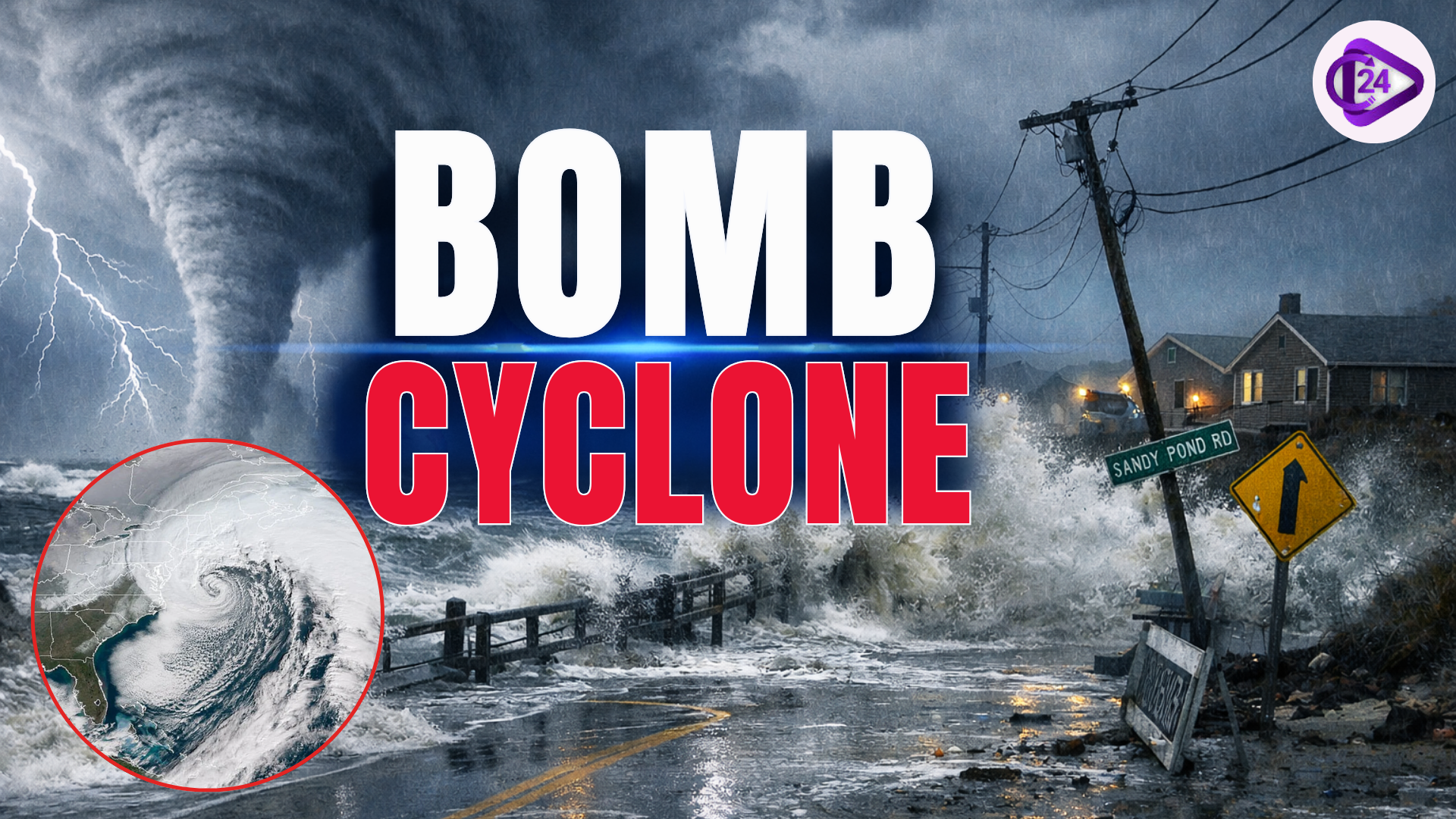
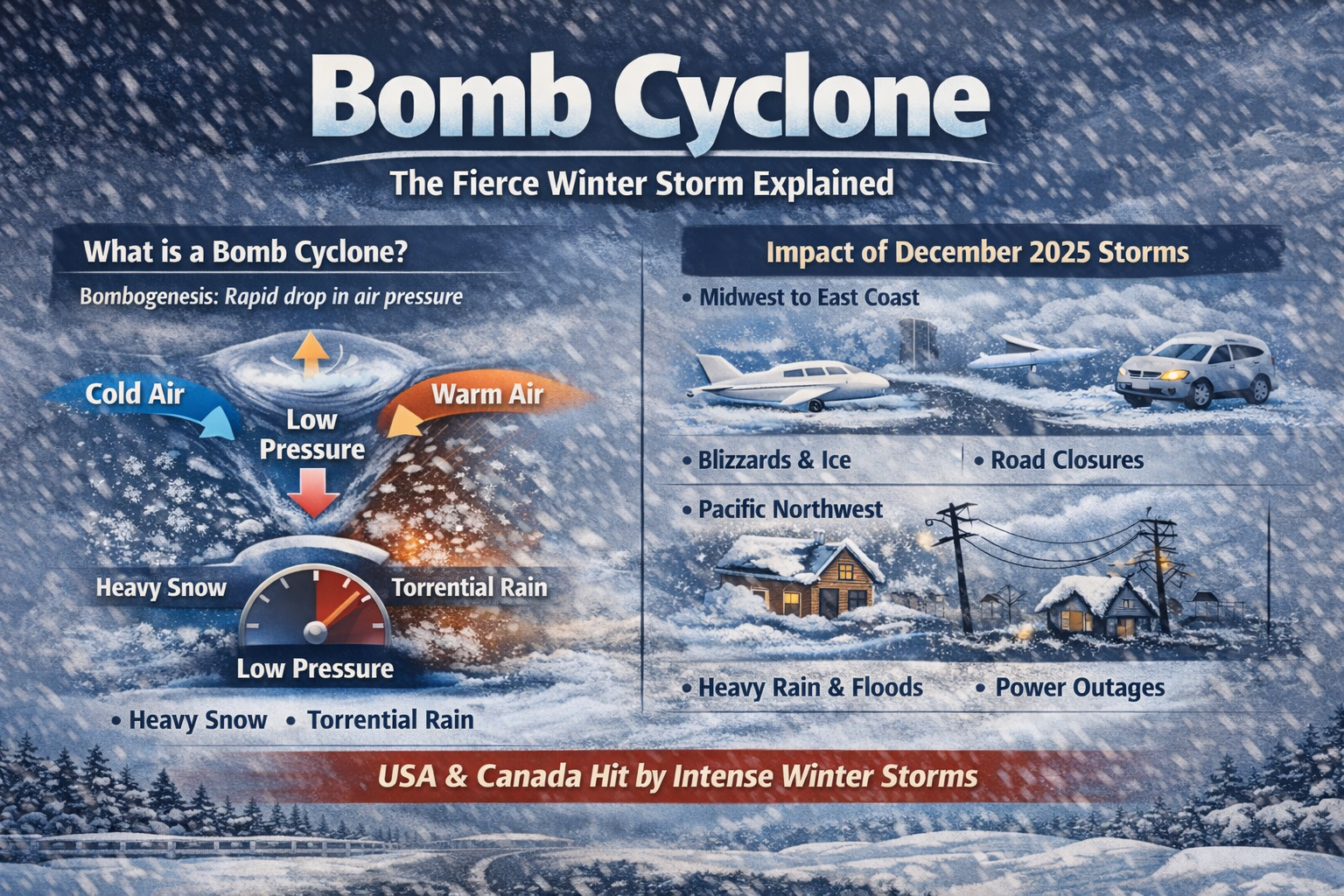
A bomb cyclone is a fierce storm that moves across the mid-latitudes and develops rapidly. The process is also called bombogenesis, in which the air pressure at the storm's centre drops, forming a deep low-pressure system that produces intense winds and heavy precipitation. This phenomenon creates conditions resembling heavy snowstorms and torrential rainfall, and it is more evident when cold and warm air masses collide. The winter is given specific consideration for bomb cyclones due to their ability to cause brutal weather.
What is a Bomb Cyclone?
-
In late December 2025, a powerful bomb cyclone hit the United States and very quickly intensified, leading to blizzard conditions, heavy snow, ice, flooding rains, and stormy winds affecting the Midwest to the East coast, resulting in travel being paralysed during the high holiday season.
-
Thousands of delays and cancellations of flights, unsafe road conditions caused by icy surfaces, and significant warnings on travelling issued by the authorities were the result of the storm.
-
A second bomb cyclone struck the Pacific Northwest, including Northern California and British Columbia, causing torrential rains, floods, and wind surges, as well as power failure to many of the residents.
-
Cyclones of bombs caused snow, devastating winds, and massive destabilisation of much of the United States and Canada, and other mid-Atlantic states earlier.
All Important Cyclone Questions 2025 for Upcoming Exams
Which super typhoon was recorded as the strongest storm of 2025 in the Western Pacific basin?
A. Super Typhoon Kalmaegi
B. Super Typhoon Koto
C. Super Typhoon Ragasa
D. Super Typhoon Fung‑Wong
Answer: C. Super Typhoon Ragasa
Explanation: Ragasa reached extremely high intensity in 2025, making landfall in the northern Philippines with severe rain, storm surge, and extended impacts across Southeast Asia.
Severe Tropical Storm Wutip (2025) primarily affected which countries?
A. India and Sri Lanka
B. China, Vietnam and the Philippines
C. Australia and New Zealand
D. Japan and South Korea
Answer: B. China, Vietnam and the Philippines
Explanation: Wutip made landfall in southern China after moving through the South China Sea, causing flooding and significant rainfall impacts in multiple Southeast Asian countries.
Cyclone Zelia (February 2025) impacted which region when it made landfall?
A. Eastern Africa
B. Western Australia
C. Caribbean Islands
D. Southern India
Answer: B. Western Australia
Explanation: Zelia rapidly intensified off the Pilbara coast and struck near Port Hedland, bringing destructive winds and heavy rain to Western Australia.
Tropical Cyclone Jude mostly affected which areas in 2025?
A. Philippines and Taiwan
B. Madagascar, Mozambique and Malawi
C. India’s east coast
D. Gulf of Mexico
Answer: B. Madagascar, Mozambique and Malawi
Explanation: Jude brought heavy winds, damage, and casualties as it passed through parts of southern Africa and the Indian Ocean islands.
Which cyclonic storm was part of the 2025 Asia floods, causing unprecedented flooding in Sri Lanka?
A. Cyclone Kalmaegi
B. Cyclone Ditwah
C. Cyclone Monica
D. Cyclone Shakti
Answer: B. Cyclone Ditwah
Explanation: Ditwah formed in the Bay of Bengal and was linked to extreme rain and flooding across Sri Lanka and southern India as part of 2025’s flood events.
Which rare cyclonic system formed in the Strait of Malacca in 2025?
A. Cyclone Shakti
B. Cyclonic Storm Senyar
C. Cyclone Monta
D. Cyclone Fina
Answer: B. Cyclonic Storm Senyar
Explanation: Senyar became the first named storm to develop in the Strait of Malacca in over a century and contributed to severe flooding impacts in Indonesia.
Typhoon Fung‑Wong (2025) impacted which of the following countries?
A. USA and Mexico
B. Philippines, China and Taiwan
C. Australia and Fiji
D. South Africa and Madagascar
Answer: B. Philippines, China and Taiwan
Explanation: This Western Pacific typhoon brought destructive winds and damage across multiple East and Southeast Asian countries.
The 2025 Pacific typhoon season saw how many named tropical cyclones?
A. 15
B. 27
C. 33
D. 40
Answer: B. 27
Explanation: The Japan Meteorological Agency recorded 27 named storms in the Western Pacific in 2025, the highest since 2019.
Severe cyclonic activity in 2025 contributed to flooding and landslides across which region?
A. Northern Canada
B. South and Southeast Asia
C. Western Europe
D. Central Africa
Answer: B. South and Southeast Asia
Explanation: Multiple storms combined with monsoon dynamics to cause widespread floods and landslides in countries including Sri Lanka, Indonesia and Vietnam.
Which storm is associated with exacerbating monsoon rains and extreme flooding in 2025 Asia?
A. Cyclone Sidr
B. Cyclonic Storm Ditwah
C. Cyclone Tracy
D. Cyclone Yasi
Answer: B. Cyclonic Storm Ditwah
Explanation: Ditwah’s formation and movement strengthened seasonal monsoon rains, leading to severe flood impacts in 2025.
Conclusion (Bomb Cyclone)
A bomb cyclone is a very high-intensity storm that comprises the falling atmospheric pressure, leading to very high winds, torrential rains, snow, and flooding. These hurricanes may affect extensive areas, cause travel inconveniences, and damage property, and thus the need to give early warnings and be ready to mitigate the impact of hurricanes.