

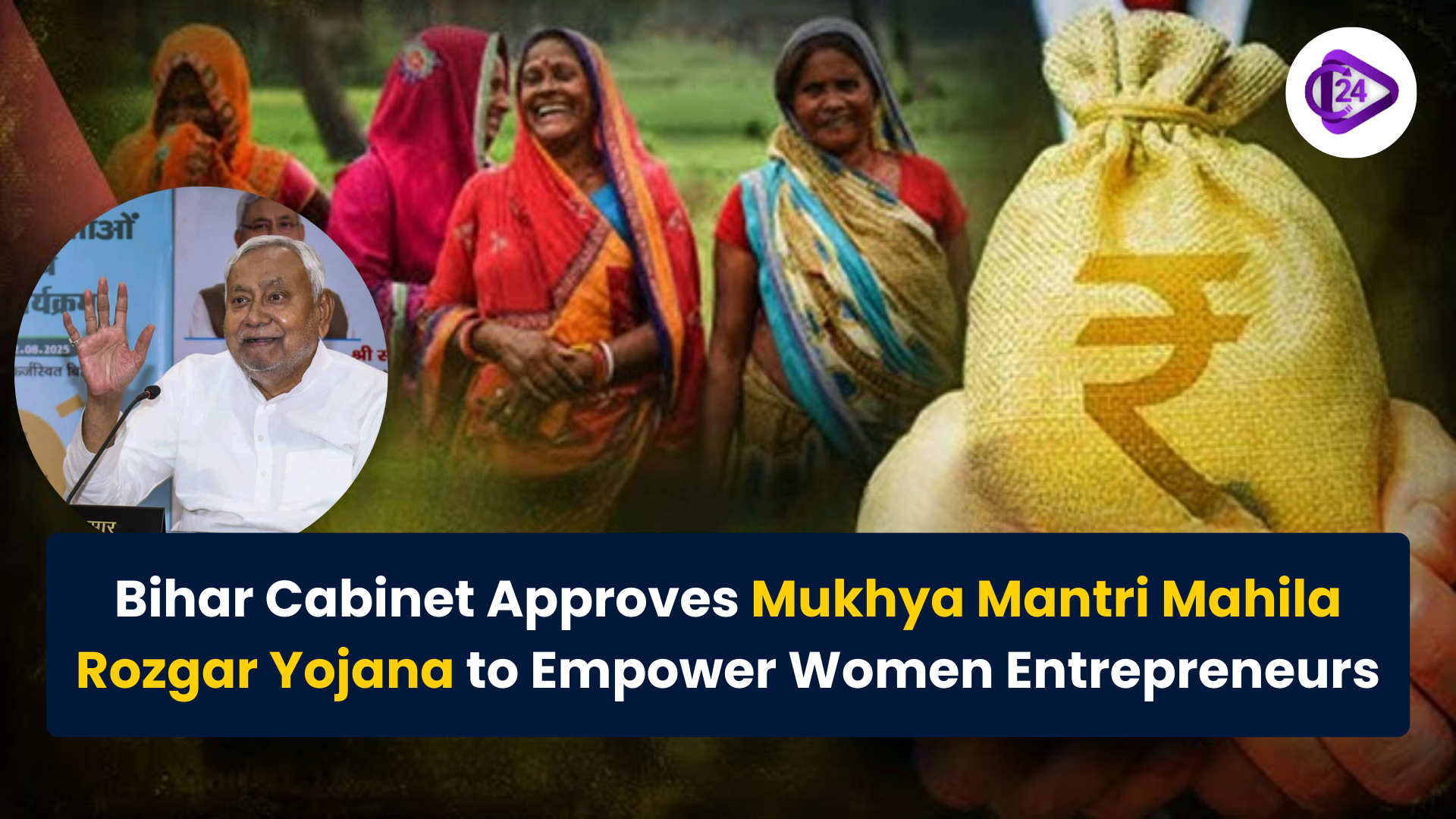
The Government of Bihar introduced the Mukhyamantri Mahila Rojgar Yojana to help women become financially independent by starting their own employment or livelihood activities. Approved by the state cabinet in August 2025, the scheme focuses on providing financial assistance to one eligible woman from each family so that she can pursue a business or occupation of her choice.
The initiative is part of Bihar’s broader efforts to promote women’s empowerment, encourage self-employment and strengthen household incomes. Rather than limiting support to a single type of business, the scheme allows beneficiaries to explore different livelihood opportunities based on their interests, skills and local market needs.
Under the scheme, eligible beneficiaries receive an initial financial assistance of ₹10,000 through Direct Benefit Transfer (DBT). Depending on the progress of their work and the applicable assessment process, they may also receive additional assistance of up to ₹2 lakh in a subsequent phase.
The Mukhyamantri Mahila Rojgar Yojana 2025 is an important topic for competitive examinations because it connects state government initiatives with women’s economic empowerment, rural livelihoods and entrepreneurship.
Key Highlights of Bihar Mahila Rojgar Yojana
The following are the main facts about the scheme:
- Scheme name: Mukhyamantri Mahila Rojgar Yojana
- State: Bihar
- Approval: August 2025
- Launch: 26 September 2025
- Chief Minister: Nitish Kumar at the time of launch
- Initial financial assistance: ₹10,000 per eligible beneficiary
- Additional assistance: Up to ₹2 lakh, subject to the applicable process and assessment
- Main objective: To encourage women to start self-employment and livelihood activities
- Beneficiary focus: One eligible woman from each family
- Payment method: Direct Benefit Transfer (DBT)
- Nodal department: Rural Development Department, Bihar
- Implementation support: Bihar Rural Livelihoods Promotion Society (JEEViKA)
- Supporting measures: Training, community-level assistance and development of local markets
The scheme was launched on 26 September 2025. During the launch, the government announced the transfer of ₹10,000 each to 75 lakh women, amounting to ₹7,500 crore. The programme was intended to expand financial and livelihood opportunities for women across the state.
What Is Mukhyamantri Mahila Rojgar Yojana?
The Mukhyamantri Mahila Rojgar Yojana is a Bihar government initiative designed to help women establish their own sources of income. Many women have practical business ideas but face difficulties arranging the initial money needed to buy materials, equipment, livestock or other essentials.
The scheme seeks to address this challenge by providing initial financial support. A beneficiary can use the assistance to begin an eligible livelihood activity of her choice, subject to the scheme’s applicable rules.
For example, a woman may want to start a tailoring business, sell handmade products, rear livestock or develop a small local enterprise. Initial financial assistance can help her purchase basic supplies and begin working towards a regular income.
The idea is not simply to transfer money into bank accounts. The wider objective is to help women build sustainable livelihoods and strengthen their participation in the local economy.
Financial Assistance Under the Scheme
Financial support is one of the most important features of the Bihar Mahila Rozgar Yojana.
Initial assistance of ₹10,000
Eligible women receive an initial grant of ₹10,000 through Direct Benefit Transfer. This amount is intended to help them begin an employment or livelihood activity.
The money may be used for business-related needs, such as purchasing raw materials, basic tools, tailoring equipment, seeds or other essentials suitable for the chosen activity.
Additional assistance of up to ₹2 lakh
The scheme also provides for the possibility of additional financial assistance of up to ₹2 lakh in a subsequent phase. This support is not an automatic payment to every beneficiary. It depends on the applicable rules, assessment and the needs of the livelihood activity.
The additional assistance can potentially help a woman expand an existing enterprise, increase production or invest in resources needed to make her work more sustainable.
Beneficiaries should consult official scheme guidelines or the relevant local authorities for the latest conditions and procedures.
Who Can Benefit From Bihar Mahila Rojgar Yojana?
The scheme is designed to provide financial assistance to one eligible woman from each family in Bihar. The precise eligibility conditions and verification requirements must be checked against the official scheme guidelines.
The following points explain the broad beneficiary focus:
- The applicant should meet the scheme’s applicable eligibility conditions.
- The applicant should be an eligible woman from a family covered by the scheme.
- The proposed activity should fall within the permitted livelihood or employment activities.
- Required identity, bank and other verification details must be completed as prescribed.
- The beneficiary must follow the applicable rules for receiving and using the assistance.
These points describe the general framework and should not be treated as a complete official eligibility checklist. Applicants should confirm their eligibility with the relevant authorities before applying or relying on a payment expectation.
What Activities Can Women Start Under the Scheme?
One of the useful features of the Mukhyamantri Mahila Rojgar Yojana is that women can choose from different types of livelihood activities according to their skills and circumstances.
Examples mentioned in the government’s announcement include:
1. Agriculture
Women can explore suitable agricultural activities, such as growing vegetables, cultivating crops or undertaking other small-scale agricultural work.
2. Animal husbandry
Livestock-related activities may provide an income opportunity for women with access to suitable space, resources and local markets. Examples include dairy-related work and other eligible animal husbandry activities.
3. Tailoring and stitching
Women with sewing skills may use initial assistance to purchase a sewing machine, fabric and other basic materials needed to offer stitching services.
4. Handicrafts and weaving
Handmade products, traditional crafts and weaving can provide income opportunities, particularly where local skills and customer demand already exist.
5. Small-scale enterprises
Other eligible small businesses may include local production, household-based services and suitable trading activities, subject to the scheme’s rules.
Choosing the right activity is important. Women should consider the cost of starting, their skills, local demand and the time required to generate income before investing in a business.
Role of Self-Help Groups and JEEViKA
Financial assistance alone may not be enough to establish a successful business. Women may also need guidance on managing expenses, buying materials, pricing products and finding customers.
Bihar’s rural livelihood framework includes community institutions and Self-Help Groups (SHGs) that support women through collective participation and livelihood-related activities.
Under the scheme’s announced implementation approach, community resource persons connected with Self-Help Groups can provide guidance and training to help beneficiaries develop their chosen activities.
The Bihar Rural Livelihoods Promotion Society, commonly known as JEEViKA, plays an important role in the state’s rural livelihood and women’s self-help group ecosystem.
Such support can help beneficiaries learn practical skills, understand business requirements and build connections with other women involved in similar activities.
How Will the Scheme Help Women Become Self-Reliant?
The Bihar women employment scheme aims to create opportunities that can improve women’s economic participation over time.
First, initial financial assistance can reduce one of the common barriers to starting a small business: the lack of money for basic materials and equipment.
Second, earning an income from one’s own work may give women greater financial independence and a stronger role in household decisions.
Third, small enterprises can support local economic activity. When women buy supplies locally and sell products or services in their communities, money can circulate within the local economy.
Fourth, livelihood opportunities may help some families reduce their need to move elsewhere in search of employment. However, this outcome depends on whether the business becomes viable and generates a dependable income.
The scheme’s long-term impact will depend on implementation, access to markets, appropriate training and the ability of beneficiaries to sustain their activities.
Development of Gramin Haat-Bazaars
Finding customers is often as challenging as starting a business. A woman may produce good-quality goods but struggle to sell them if she lacks access to a suitable market.
To address this issue, the government announced plans to further develop Gramin Haat-Bazaars, or local rural markets, where women can sell their products.
These markets can provide a place for small producers and entrepreneurs to reach customers without depending entirely on distant commercial centres.
For women involved in handicrafts, tailoring-related products, agricultural produce and other eligible activities, better market access can support sales and help build regular customer relationships.
The actual benefit will depend on the availability, accessibility and effective operation of these markets in different areas.
Latest Official Update on the Scheme
The scheme moved beyond its initial announcement in September 2025. According to the Bihar Chief Minister’s Office, by 28 November 2025, financial assistance of ₹10,000 each had been transferred to 1.56 crore women, totalling ₹15,600 crore.
A later official update dated 15 February 2026 reported that the total had reached 1.81 crore women, with ₹18,100 crore transferred under the scheme’s initial assistance programme.
These figures are important for understanding the scale of implementation. They are official reported transfer figures for the dates mentioned and should not be interpreted as a guarantee that every applicant is eligible or that every beneficiary has received additional assistance of up to ₹2 lakh.
For new applications, eligibility verification or payment-related queries, women should rely on official Bihar government announcements and the relevant implementing authorities.
Significance of Mukhyamantri Mahila Rojgar Yojana for Bihar
The scheme has significance beyond its financial assistance component.
It promotes women’s entrepreneurship by encouraging beneficiaries to develop their own livelihood activities. It also recognises that small businesses and household-based enterprises can contribute to local employment and economic participation.
The emphasis on training, community support and local markets is relevant because a sustainable business requires more than initial funding. Skills, product quality, customer demand and financial planning also influence whether an enterprise can continue operating.
The programme is particularly relevant to discussions about rural development, women’s empowerment, self-help groups and inclusive economic growth in Bihar.
For students preparing for government examinations, the scheme is a useful example of a state-level initiative that combines direct financial assistance with livelihood promotion.
Conclusion
The Mukhyamantri Mahila Rojgar Yojana is an important initiative by the Government of Bihar to encourage women to start their own employment and livelihood activities. Through initial assistance of ₹10,000, the possibility of additional support of up to ₹2 lakh, and provisions for training and market access, the scheme aims to help women build stronger sources of income.
Its success will depend on effective implementation, clear eligibility procedures, practical guidance, and access to customers. For beneficiaries, choosing a suitable activity and managing the available resources carefully will be important steps towards developing a sustainable enterprise.
For current affairs preparation, remember the scheme’s name, its launch date of 26 September 2025, the initial ₹10,000 assistance, the possibility of up to ₹2 lakh in additional support, and its focus on women’s self-employment in Bihar.