


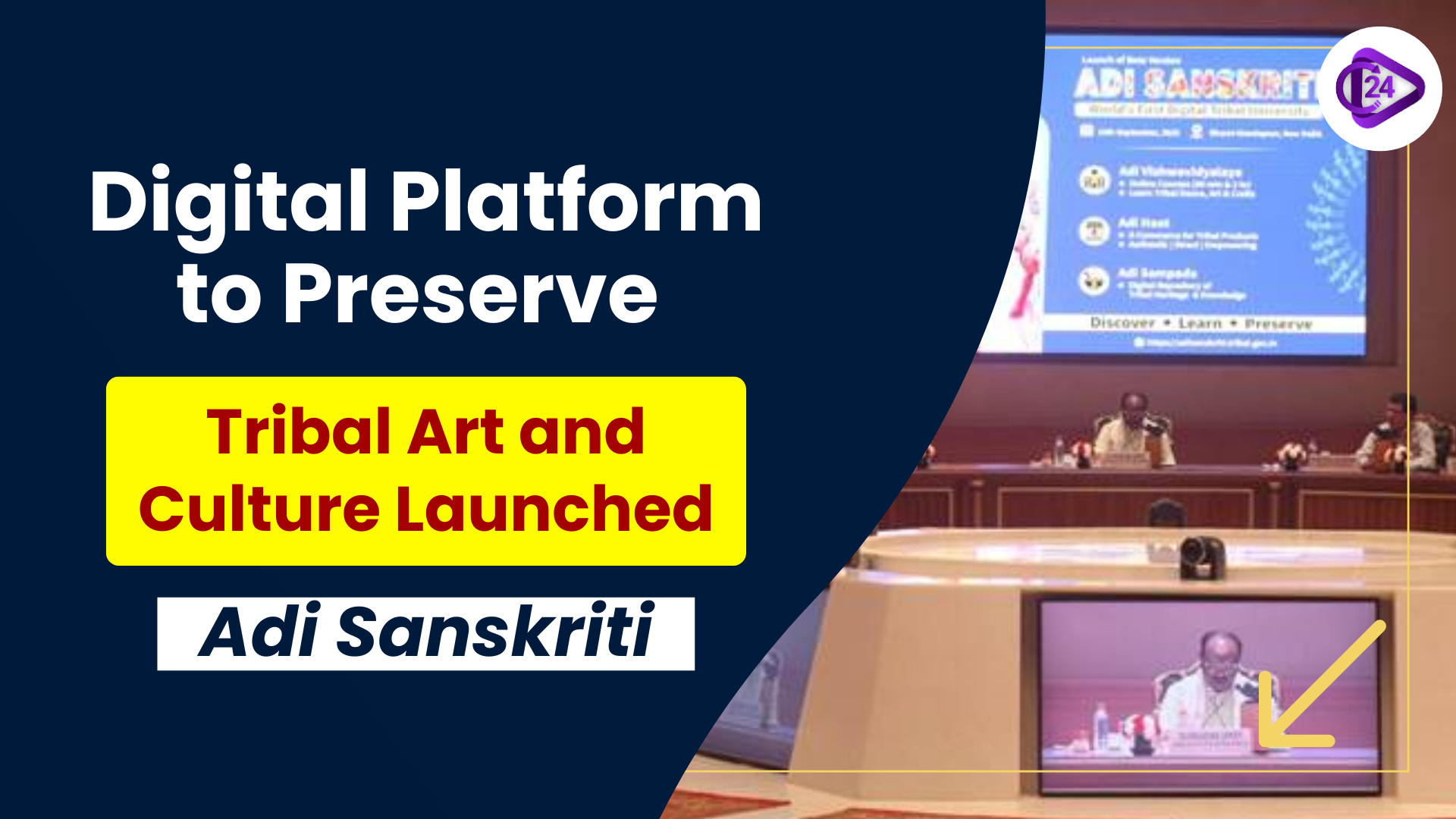
The Ministry of Tribal Affairs launched the beta version of Adi Sanskriti in September 2025 to preserve, promote, and digitally showcase India’s rich tribal art and cultural heritage. The platform aims to connect traditional knowledge with modern technology while creating new opportunities for tribal artists, artisans, and cultural practitioners.
Adi Sanskriti is envisioned as a digital learning and cultural ecosystem for tribal communities. It brings together online learning, cultural documentation, and a digital marketplace under one initiative. By making tribal traditions more accessible, the platform aims to support cultural preservation, improve the visibility of indigenous art forms, and strengthen the economic opportunities available to tribal artisans.
What Is Adi Sanskriti?
Adi Sanskriti is a digital initiative designed to document and promote tribal art, crafts, languages, traditions, and indigenous knowledge. It aims to help preserve cultural practices that are traditionally passed down through generations.
Main Objectives of the Platform
The platform focuses on preserving India’s tribal heritage while encouraging wider recognition of traditional art forms. Its major objectives include:
- Digitally documenting tribal art, folklore, and cultural practices.
- Providing opportunities for learning traditional art forms.
- Connecting tribal artisans with potential buyers.
- Supporting the economic empowerment of tribal communities.
- Promoting digital inclusion and cultural awareness.
Three Major Components of Adi Sanskriti
The platform has three principal components: Adi Vishwavidyalaya, Adi Sampada, and Adi Haat. Each serves a different purpose in promoting tribal heritage and supporting community development.
Adi Vishwavidyalaya: Digital Tribal Art Academy
Adi Vishwavidyalaya is designed as a digital learning platform for tribal art and traditional skills. It aims to provide educational resources and training opportunities that can help preserve artistic knowledge and encourage younger generations to learn traditional practices.
Digital learning can also help traditional artists share their expertise with audiences beyond their local communities.
Adi Sampada: Socio-Cultural Repository
Adi Sampada is intended to serve as a digital repository of tribal culture and heritage. It can document traditional art, folklore, customs, knowledge systems, and cultural practices for wider access and long-term preservation.
Such documentation can help safeguard cultural knowledge, provided that communities’ consent, ownership, and cultural sensitivities are respected.
Adi Haat: Digital Marketplace
Adi Haat is the proposed digital marketplace for tribal products and handicrafts. It aims to connect artisans with customers and provide greater visibility to traditional products.
By expanding online access to potential buyers, the marketplace can help artisans explore new sales opportunities and strengthen their participation in the digital economy.
Benefits of Adi Sanskriti for Tribal Communities
The platform combines cultural preservation with opportunities for social and economic development. Its effectiveness will depend on accessibility, community participation, and the ability of artisans to use digital services.
Economic Empowerment of Tribal Artisans
Traditional artisans may face challenges such as limited market access, low product visibility, and dependence on intermediaries. A digital marketplace can help them reach a broader customer base and present their products to new audiences.
Fair pricing, transparent transactions, reliable delivery, and appropriate recognition of artisans are important for ensuring that digital access translates into meaningful economic benefits.
Preservation of Traditional Knowledge
Tribal communities possess diverse knowledge related to art, music, storytelling, crafts, languages, and local traditions. Digital documentation can help preserve this knowledge and make educational resources available to future generations.
However, sacred or sensitive cultural information should only be documented and shared in accordance with the wishes and consent of the communities concerned.
Role of the Ministry of Tribal Affairs
The Ministry of Tribal Affairs is responsible for policy initiatives and programmes aimed at the welfare and development of Scheduled Tribes in India. Its work includes supporting tribal livelihoods, education, cultural preservation, and social inclusion.
Promoting Digital Inclusion
Digital platforms can help tribal communities participate in online education, commerce, and cultural exchange. To achieve these benefits, initiatives such as Adi Sanskriti need to consider internet connectivity, digital literacy, local-language accessibility, and support for artisans who have limited experience with online platforms.
Conclusion
Adi Sanskriti represents an important effort to combine digital technology with the preservation of India’s tribal art and cultural heritage. Through Adi Vishwavidyalaya, Adi Sampada, and Adi Haat, the initiative aims to support traditional learning, document cultural knowledge, and improve market access for tribal artisans. Its long-term impact will depend on meaningful community participation, responsible cultural documentation, and fair economic opportunities for the people whose heritage the platform seeks to preserve.