


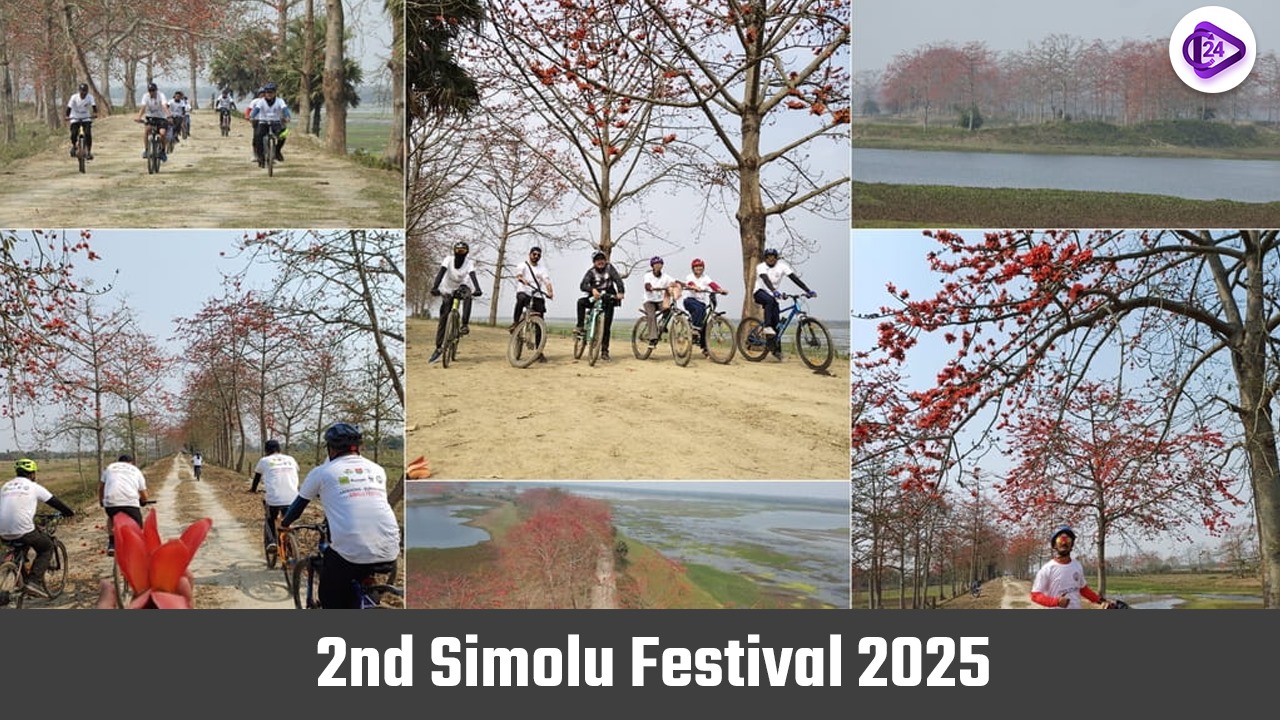
The 2nd Simolu Festival 2025 was organised on 15 and 16 February 2025 at Bwisang-Na, Barunguri, Laokhowa, in Assam’s Nagaon district. The festival celebrated the beautiful blooming of Bombax ceiba, commonly known as the Shimul or Simolu flower. It brought together nature lovers, local communities, students and conservation enthusiasts to promote environmental awareness and sustainable tourism.
The festival combined nature-based activities with traditional Assamese culture. Visitors participated in cycling activities, nature walks, cultural performances and community programmes while enjoying the natural beauty of the region.
The Simolu Festival also highlighted the importance of protecting wetlands, grasslands and biodiversity. It aimed to encourage responsible tourism and create awareness about the ecological importance of Assam’s natural landscapes.
2nd Simolu Festival 2025: Overview
| Particulars | Details |
| Festival Name | 2nd Simolu Festival |
| Edition | Second |
| Year | 2025 |
| Dates | 15-16 February 2025 |
| Venue | Bwisang-Na, Barunguri, Laokhowa |
| District | Nagaon |
| State | Assam |
| Main Attraction | Bombax ceiba (Shimul) Flowers |
| Main Theme | Nature, Culture and Conservation |
| Major Activities | Cycling, Nature Walks, Cultural Programmes and Camping |
| Main Objectives | Eco-tourism, Environmental Awareness and Community Participation |
- What Is the Simolu Festival?
The Simolu Festival is a nature and cultural festival organised in Assam to celebrate the blooming of Bombax ceiba flowers and promote environmental conservation.
The festival provides an opportunity for visitors to explore the natural beauty of the Laokhowa region while learning about its biodiversity and local traditions.
The second edition was held over two days, on 15 and 16 February 2025.
Its major objectives include:
- Promoting nature-based and sustainable tourism.
- Creating awareness about biodiversity conservation.
- Encouraging the protection of wetlands and grasslands.
- Showcasing the traditional culture of local communities.
- Involving students and young people in environmental education.
- Supporting community participation in rural tourism development.
The festival connects environmental protection with cultural activities and responsible tourism.
- Where Was the 2nd Simolu Festival 2025 Organised?
The 2nd Simolu Festival was organised at Bwisang-Na, an ethnic eco-resort located in Barunguri, Laokhowa, in Assam’s Nagaon district.
The surrounding landscape is known for its wetlands, grasslands, flowering Shimul trees and rich wildlife.
The location provides an opportunity to experience the natural environment of the Laokhowa-Burhachapori region.
| Location Detail | Information |
| Eco-Resort | Bwisang-Na |
| Village/Locality | Barunguri |
| Region | Laokhowa |
| District | Nagaon |
| State | Assam |
| Nearby Ecological Landscape | Laokhowa-Burhachapori Ecosystem |
Laokhowa Wildlife Sanctuary is located on the southern bank of the Brahmaputra River. It covers approximately 70.13 square kilometres and forms an important part of the Laokhowa-Burhachapori ecosystem.
The wider landscape contains wetlands, grasslands and woodlands that support several species of wildlife.
- What Is Bombax ceiba (Shimul)?
Bombax ceiba is a flowering tree commonly known as Shimul or Simolu in the northeastern region of India. It is also known as the red silk-cotton tree.
The tree is particularly recognised for its large and attractive red flowers, which generally bloom during the late winter and early spring season.
Its colourful flowers create a beautiful natural landscape and attract the attention of nature lovers and visitors.
Important Facts About Bombax ceiba
| Particulars | Details |
| Scientific Name | Bombax ceiba |
| Common Name | Red Silk-Cotton Tree |
| Local Name | Shimul / Simolu |
| Plant Type | Flowering Tree |
| Family | Malvaceae |
| Main Attraction | Large Red Flowers |
| Significance | Ecological and Cultural Importance |
Key Features of the Shimul Tree
- It is a large deciduous flowering tree.
- It produces attractive red or scarlet flowers.
- Its flowers generally appear before or around the emergence of new leaves.
- It is found in different parts of South and Southeast Asia.
- Its flowers provide food resources for birds and other pollinators.
- It is an important part of the natural vegetation of the region.
The Assam State Biodiversity Board also identifies Bombax (Simul) among the important plant species found in the state’s forests.
- Major Attractions of the 2nd Simolu Festival
The festival offered several activities that connected visitors with nature, local traditions and environmental conservation.
Some of the major attractions included:
Cycling Along the Simolu Track
Cycling was one of the main attractions of the festival. Participants travelled along scenic routes surrounded by blooming Shimul trees, wetlands and grasslands.
The cycling experience allowed visitors to explore the natural beauty of the Laokhowa region while encouraging environmentally friendly tourism.
Camping and Local Cuisine
The festival also included camping activities at Bwisang-Na eco-resort.
Visitors got an opportunity to experience traditional Assamese food and learn about the local culinary heritage.
Traditional Cultural Performances
Cultural programmes showcased the traditional art, folk performances and cultural identity of the local communities.
These activities helped promote Assam’s cultural heritage among visitors.
Nature Walks and Educational Activities
Nature walks and educational programmes were organised to help students and visitors understand the importance of biodiversity and ecological conservation.
These activities also encouraged young participants to develop an interest in protecting the natural environment.
Major Festival Activities at a Glance
| Activity | Main Purpose |
| Cycling | Exploring the Simolu track |
| Camping | Experiencing nature and outdoor tourism |
| Ethnic Food | Promoting local culinary traditions |
| Folk Performances | Showcasing Assamese cultural heritage |
| Nature Walks | Understanding local biodiversity |
| Student Activities | Promoting environmental education |
| Conservation Discussions | Creating ecological awareness |
- Importance of the Simolu Festival for Eco-Tourism
Eco-tourism was one of the major objectives of the Simolu Festival.
Assam is known for its forests, wetlands, grasslands, rivers and wildlife habitats. However, several natural areas have the potential to attract more responsible tourism.
The festival helped bring attention to the natural beauty of the Laokhowa region.
How the Festival Promotes Sustainable Tourism
- Promoting Natural Destinations: It introduces visitors to lesser-known natural landscapes in Assam.
- Encouraging Responsible Travel: Cycling and nature walks promote activities that allow visitors to experience nature responsibly.
- Supporting Local Communities: Traditional food, cultural performances and local participation create opportunities for community involvement.
- Environmental Awareness: Visitors learn about biodiversity and the importance of protecting natural ecosystems.
- Promoting Regional Tourism: Such events can increase interest in nature-based tourism destinations.
Sustainable tourism aims to balance tourism activities with environmental protection and the welfare of local communities.
The Simolu Festival provides an example of how cultural events and nature-based activities can support this objective.
- Ecological Importance of the Laokhowa-Burhachapori Region
The Laokhowa-Burhachapori ecosystem is an important natural landscape in Assam.
It includes wetlands, grasslands, woodlands and riverine habitats that support a variety of plants, birds, mammals, reptiles and aquatic species.
According to the Nagaon district administration, Laokhowa Wildlife Sanctuary covers approximately 70.13 square kilometres, while Burhachapori Wildlife Sanctuary covers around 44.06 square kilometres.
Important Biodiversity Facts
| Ecological Feature | Details |
| Laokhowa Wildlife Sanctuary Area | 70.13 sq. km |
| Burhachapori Wildlife Sanctuary Area | 44.06 sq. km |
| Important River | Brahmaputra |
| Major Habitats | Wetlands, Grasslands and Woodlands |
| Important Mammals | One-horned Rhinoceros, Elephant, Tiger and Wild Buffalo |
| Recorded Bird Diversity | More than 225 species in Laokhowa |
| Other Biodiversity | Fish, Amphibians and Reptiles |
Why Are Wetlands Important?
Wetlands are essential ecosystems that provide several environmental benefits.
Their major functions include:
- Providing habitats for birds, fish and other wildlife.
- Supporting aquatic biodiversity.
- Helping regulate water flow and reduce flood impacts.
- Supporting fish breeding and feeding grounds.
- Maintaining ecological balance.
- Storing carbon and supporting climate regulation.
The wetlands and grasslands of the Laokhowa-Burhachapori region are important for maintaining the ecological balance of Assam.
- Role of Community Participation and Environmental Education
Community participation was another important aspect of the 2nd Simolu Festival.
The event provided opportunities for local residents, students, nature enthusiasts and conservation professionals to participate in activities related to environmental protection.
Environmental education helped visitors understand the importance of biodiversity, wetlands and climate change awareness.
Major Benefits of Community Participation
- Awareness Among Students: Educational activities encourage young people to understand environmental issues.
- Local Cultural Promotion: Traditional food, folk art and performances help preserve regional heritage.
- Conservation Participation: Local communities can play an important role in protecting natural resources.
- Rural Development: Responsible tourism can create opportunities for local businesses and tourism-related services.
- Knowledge Sharing: Interaction among visitors, students and conservation experts encourages environmental learning.
The involvement of local communities is important because long-term conservation efforts require public awareness and cooperation.
Why Is the 2nd Simolu Festival 2025 Important?
The Simolu Festival is significant because it combines the celebration of natural flowering with cultural heritage and environmental conservation.
Its importance can be understood through the following points:
- Nature Conservation: It highlights the need to protect Assam’s wetlands, grasslands and biodiversity.
- Sustainable Tourism: It promotes responsible ways of exploring natural destinations.
- Cultural Heritage: It provides a platform for traditional Assamese food, folk art and cultural performances.
- Environmental Education: It encourages students and visitors to learn about ecological protection.
- Community Development: It creates opportunities for local participation in tourism and conservation activities.
- Biodiversity Awareness: It brings attention to the ecological importance of the Laokhowa-Burhachapori landscape.
Conclusion
The 2nd Simolu Festival 2025 was an important nature and cultural event organised at Bwisang-Na, Barunguri, Laokhowa, Assam, on 15-16 February 2025. Celebrating the blooming of Bombax ceiba (Shimul) flowers, the festival brought together nature lovers, students and local communities.
Through cycling, camping, nature walks and traditional cultural activities, the event promoted environmental awareness and sustainable tourism. It also highlighted the ecological importance of the Laokhowa-Burhachapori region, particularly its wetlands, grasslands and biodiversity.
The Simolu Festival demonstrates how local cultural celebrations can help promote nature conservation, community participation and responsible tourism.