
Day: March 3, 2025

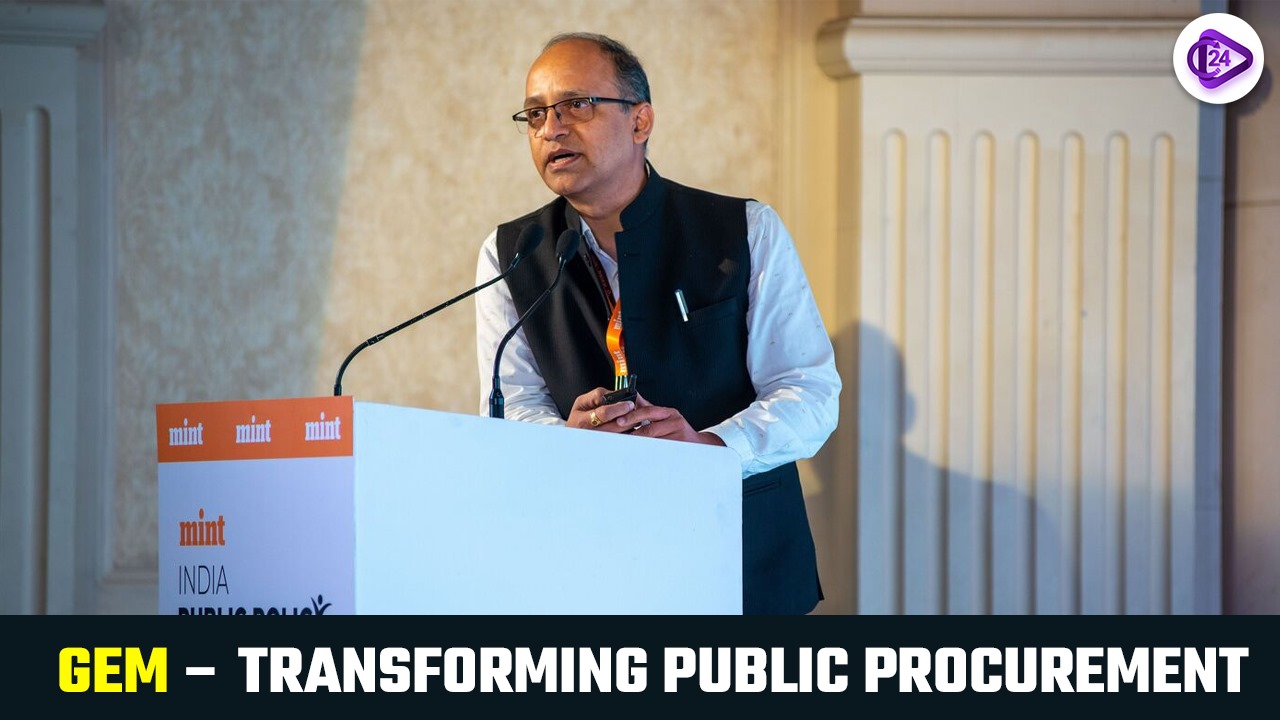
GeM: Revolutionizing Public Procurement with Transparency & Inclusion

Government e-Marketplace (GeM) introduced in 2016 as a revolutionary system within the Indian public procurement framework to create transparent, efficient and inclusive services for procurement. Through its infrastructure the platform allows government buyers to perform easy procurement activities that benefit both domestic enterprises and local start-ups and entrepreneurs as well as micro small and medium-sized businesses. Through strategic initiatives like SWAYATT, Startup Runway 2.0, and Womaniya, GeM fosters economic growth and social equity. Through its online platform GeM enables fair market competition and expanded access to purchasing opportunities for disadvantaged groups which has significantly strengthened India's economy.

GeM: Mission 

Core Principles of GeM:

  • Open market: Easy market data availability combined with transparent pricing is ensured by this principle.

  • Fairness: Offers a level playing field to all sellers, irrespective of size.

  • Inclusiveness: By welcoming every government buyer and seller the system helps marginalized communities take part in purchasing and selling activities.

Key Initiatives for Economic Growth:

  • Swayatt: SWAYATT creates businesses-friendly conditions and helps establish market connections between startups and women entrepreneurs as well as MSMEs and self-help groups (SHGs).

  • Startup Runway 2.0: Bootstrap Runway 2.0 builds a specific marketplace for startups to present innovative products to government purchasers through its platform.

  • Womaniya: Through Womaniya the platform promotes women entrepreneurs to sell their products while fulfilling government procurement reservations for women MSMEs.

  • SC/ST Entrepreneurs & MSMEs: Ensures 25% procurement from MSMEs, with a sub-target of 4% for SC/ST entrepreneurs.Saras: Through The Saras Collection customers can explore handcrafted items from Self-Help Group members in order to support local artisan craft producers who work in rural areas.

Statistical Impact:

  • Startups have completed orders worth ₹35,950 Crore through their operations.

  • Women entrepreneurs comprise 8 percent of the seller base on GeM while generating order value worth ₹46,615 Crore.

  • The financial year turnover for GeM reached ₹4,03,305 Crore.

  • MSEs contribute a major portion of 37.87% to the entire value of orders placed through the platform.

Conclusion

GeM has transformed Indian public procurement through its mission to create efficient procurement processes with transparency and broad participation of businesses. The platform enables economic development while advancing social fairness because it dedicates itself to helping startups along with women business owners and underserved populations. GeM's strategic programs function to establish fair market opportunities while enhancing innovation thus positioning itself as a crucial instrument for India's development of an open competitive procurement system. GeM continues to be the foundation of sustainable and inclusive economic development as it advances.

Prani Mitra and Jeev Daya Award Ceremony 2025: Recognizing Excellence in Animal Welfare

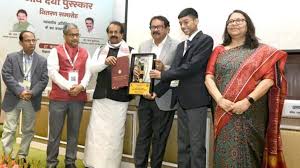
The Prani Mitra and Jeev Daya Award Ceremony took place on 27th February 2025 at Vigyan Bhawan in New Delhi through an organization of the Animal Welfare Board of India (AWBI) which functions under the Department of Animal Husbandry and Dairying. The ceremony recognized people and entities whose activities displayed major accomplishments in animal welfare and protective and compassionate animal treatment.

Introduction

  • AWBI conducted the Prani Mitra and Jeev Daya Award Ceremony in Vigyan Bhawan New Delhi during 27th February 2025.

  • The ceremony honored selected organizations and people who made noteworthy impacts towards animal welfare efforts and protection whereas showing compassion towards animals.

  • AWBI acts as a statutory organization under the Department of Animal Husbandry and Dairying which executes animal rights and welfare responsibilities through the enforcement of the Prevention of Cruelty to Animals (PCA) Act of 1960.

  • The audience at the assembly consisted of Union Ministers and senior officials together with animal welfare representatives and representatives from each state.

Launch of Key Books on Animal Welfare

Four important books were launched during the event to enhance knowledge about animal welfare legislation while improving its execution.

  1. Handbook for Veterinary Officers on Animal Welfare Laws – A guide for veterinarians on legal responsibilities.

  2. The Law Enforcement Handbook on Animal Welfare Laws serves as a reference manual which helps law enforcement agencies perform their duties in animal welfare enforcement.

  3. Animal Law Handbook for Urban Local Bodies – A manual for municipal authorities to better implement animal welfare laws.

  4. The Animal Birth Control (ABC) Module received revisions to establish a plan that oversees street dogs and fights flu through prevention and manages human-dog conflicts.

Prani Mitra Awards 2025 – Honoring Excellence in Animal Welfare

Recognized individuals and organizations for outstanding commitment to animal welfare under five categories:

Category

Awardee

Location

Advocacy – Individual

Shri Akhil Jain

Raipur, Chhattisgarh

Innovative Idea – Individual

Shri Ramesh Bhai Veljibhai Ruparelia

Gondal, Gujarat

Lifetime Animal Service – Individual

Shri Harnarayan Soni

Osiyan, Jodhpur, Rajasthan

Animal Welfare Organization (AWO)

Sri Sri 1008 Sriram Ratandasji Vaishnav Go Sewa Samiti

Karahdham, Morena, Madhya Pradesh

Corporate/PSUs/Government Bodies/Cooperatives

Radhe Krishna Temple Elephant Welfare Trust

Jamnagar, Gujarat

Jeev Daya Awards 2025 – Recognizing Compassion in Animal Welfare

Honored individuals and institutions for their compassionate work in animal welfare:

Category

Awardee

Location

Individual

Ms. Nisha Subramanian Kunju

Mumbai, Maharashtra

Animal Welfare Organization

Bhagwan Mahavir Pashu Raksha Kendra

Kutch, Gujarat

Schools/Institutions/Teachers/Children (Below 18 Years)

Master Chaitanya M Saxena

Jaipur, Rajasthan


Master Aadi Shah

Mumbai, Maharashtra

Prani Mitra Award

  • The Prani Mitra Award was established by the government in 1966 to reward people for their outstanding role in animal welfare work.

  • THe organizations began to join this expanded program throughout its historical development.

  • The prestigious honor has been given to 54 people since its founding.

Jeev Daya Award

  • The Jeev Daya Award began operations in 2001 as a mechanism to express gratitude towards animal supporters and their supporting activities.

  • The animal welfare promotion awards have been given to 12 people and organizations since their establishment.

Conclusion

Through the Prani Mitra and Jeev Daya Award Ceremony 2025 India showcases its dedication to animal welfare by celebrating people who work for animal protection. The AWBI enhances both awareness levels and encourages people to take action through its recognition of contributions toward compassionate coexistence. These programs develop a compassionate society through their work to protect animals by granting them proper care and dignity while offering necessary defense.

National Science Day 2025: Celebrating Scientific Innovation and Progress

Indian people mark National Science Day every year on 28th February to remember Sir C.V. Raman's discovery of the ‘Raman Effect’ that won him a Nobel Prize in Physics in 1930. The observance of this day in 1987 established its mission to raise awareness about science and gauge India's progress in science and technology development. For 2047 when India seeks to become a developed self-reliant nation, the 2025 theme elects to empower India's youth to lead global science innovation towards VIKSIT BHARAT.

Objectives of National Science Day

  • The goal behind this activity involves raising public understanding about scientific methods used for everyday applications.

  • Next the public sees scientific advancements together with their benefits to human communities.

  • People should examine scientific problems and technological progress which help the nation develop.

  • Science and technology participation should be promoted among the general public.

Key Development in 2024

The year 2024 brought several essential scientific breakthroughs and technological developments to the world.

1. India’s Global Standing in Innovation and Intellectual Property

  • The country occupies position 39 across the Global Innovation Index 2024 global ranking.

  • 6th position in global Intellectual Property (IP) filings as per the WIPO report.

  • The Network Readiness Index (NRI) 2024 rankings advanced to position 49 from its previous location at 79 in 2019 indicating better ICT infrastructure along with digital transformation development.

2. Anusandhan National Research Foundation (ANRF) – Driving Research & Inclusivity

  • ANRF Act 2023 established the foundation through its key scientific research programs including:

  • PM Early Career Research Grant (PMECRG) – Funding young researchers for independent studies.

  • EV Mission – Promoting innovation in electric vehicle technology for sustainable mobility.

  • Partnerships for Accelerated Innovation and Research (PAIR) – Encouraging collaborative scientific research.

  • Inclusivity Research Grant (IRG) – Supporting SC/ST researchers in frontier fields.

3. National Quantum Mission (NQM) receives ₹6003.65 crore in funding to build India's 

quantum capabilities through an eight-year period.

  • The government invested ₹6003.65 crores over the span of eight years to progress quantum computing and communication and sensing while developing materials.

  • A total of 152 research workers from 43 organizations contribute to this mission.

  • The startup support mechanisms create systems that connect mentors with startups while providing funding along with resource distribution functions.

4. National Supercomputing Mission (NSM) – Expanding Computational Power

  • India achieved a 32 PetaFlops supercomputing capability in 2024 that increased by 5 PetaFlops during that year.

  • IUAC in New Delhi received the largest supercomputing system equipped with 3 PetaFlops computing power.

  • The future objective involves building the system to reach 77 PetaFlops capabilities with homegrown technology.

5. Artificial Intelligence & Cyber-Physical Systems

  • Under the National Mission for The Implementation of Commercially-Ready Informatics Products the BharatGen Initiative began its work on developing India's first multilingual and multimodal Large Language Model (LLM) for Generative AI.

  • The I-HUB Quantum Technology Foundation helps established startups in quantum computing and communication segments.

  • The Technology Innovation Hubs (TIHs) transition their focus towards Technology Translation Research Parks (TTRPs) to commercialize innovation products.

6. Geospatial Science – Expanding Awareness and Research

  • The Spatial Thinking Programs reached 116 schools situated across 7 states which included 6205 students as beneficiaries.

  • The total number of participants who received geospatial science training was 575 during Summer/Winter Schools programs.

  • The organization plans to spread to five additional states along with scheduling its first national research symposium.

7. Climate Research and Disaster Preparedness

  • The establishment of four new flood and drought risk mapping centers formed part of the Center of Excellence expansion.

  • Governments across the nation started implementing improved plans for nationwide disaster preparedness together with climate adaptation strategies.

8. Technology Development Board (TDB) – Funding Innovation

  • Seven major technology projects received a funding allocation of ₹220.73 crore which enabled critical sector development through breakthroughs.

The INSPIRE Program as part of scientific talent development

  • The Indian scientific community receives guidance through the Department of Science & Technology (DST) directed INSPIRE (Innovation in Science Pursuit for Inspired Research) program.

Key 2024 Achievements:

  • The research initiatives received support from 34343 INSPIRE Scholars together with 3363 INSPIRE Fellows and 316 INSPIRE Faculty Fellows.

  • Nine INSPIRE Fellows will share their research during the 15th JSPS-HOPE Meeting taking place between February 26th to March 1st 2024 in Kyoto Japan.

  • The annual INSPIRE Faculty Fellowship admission limit was raised to 150 openings.

  • The 11th National Level Exhibition & Project Competition (NLEPC) enrolled ten thousand students as thirty-one winners received recognition at Vigyan Bhavan New Delhi.

  • INSPIRE-MANAK 2024-25 received an unprecedented number of 1 million nominations for its program.

Future Vision for 2025:

  • INSPIRE-MANAK will grow to include students from Class 11 and Class 12 to boost their interest in scientific research.

The Gender Gap in STEM Fields

  • The DST founded WISE-KIRAN (Women in Science & Engineering) as a program that delivers help to women scientists from various career positions for gender equity in science.

Key Initiatives:

  • The WISE-PhD along with WISE-Post Doctoral Fellowship (WISE-PDF) initiative selected more than 340 women scientists for participation.

  • The Women’s International Grants Support (WINGS) provides grants for research training activities at international laboratories.

  • Women Leadership Programme: Empowering early & mid-level women scientists.

  • Through the Vigyan Jyoti Program the organization reached 29,000 schoolgirls from class IX-XII in 34 states and UTs.

  • CURIE Programme: Selected 22 Women PG Colleges for advanced research facilities.

Conclusion

Scientific progress in India demonstrates national determination towards independence as well as world-leadership and development through innovative methods. The future success of Viksit Bharat 2047 requires dedicated funding for research and technology development and inclusive scientific empowerment throughout the country.

Amir Khusrau: A Flag-Bearer of India’s Pluralistic Sufi Tradition

During the 25th anniversary of Jahan-e-Khusrau, Prime Minister Narendra Modi participated in the grand Sufi music festival held in New Delhi to pay tribute to the legendary 13th-century poet, musician, and scholar, Amir Khusrau. Known as the "Parrot of India," Khusrau played a crucial role in shaping India's rich cultural and artistic heritage through his poetry, music, and linguistic innovations. His works reflect a beautiful blend of Persian, Turkish, and Indian influences, symbolizing the essence of the Ganga-Jamuni tehzeeb, which promotes unity in diversity. His contributions continue to inspire generations, fostering harmony, artistic expression, and the deep-rooted traditions of Sufism in India.

Key Contributions of Amir Khusrau

Historical Context and Patronage

  • During the Delhi Sultanate period he served five rulers starting with Muizuddin Qaiqabad until Ghiyasuddin Tughlaq completed his patronage.

  • Muizuddin Qaiqabad, Jalaluddin Khalji, Alauddin Khalji, Qutbuddin Mubarak Shah, and Ghiyasuddin Tughlaq.

  • His birth took place in Patiyali Uttar Pradesh where he emerged as the son of a Turkish lineage and an Indian Muslim descent.

  • The Mongol invasions prompted Khusrau to migrate to India when living in Transoxiana.

The 'Parrot of India': A Symbol of Cultural Synthesis

  • Khusrau received the title Tuti-yi-Hind (Parrot of India) because of his remarkable skills as a poet.

  • He used the term "Indian Turk" to unite the Persian cultural heritage with Turkic heritage as well as the Indian traditions.

  • The association between Khusrau and his Turkic noble father occurred after the Turkic nobles chose to migrate to India because of the Mongol invasions while his Indian Muslim mother remained in his lineage.

Poet of the Sultans

  • At the age of 20 Khusrau started writing poetry at the Delhi court where he served five Delhi Sultans throughout his career.

  • Muizuddin Qaiqabad, Jalaluddin Khalji, Alauddin Khalji, Qutbuddin Mubarak Shah, and Ghiyasuddin Tughlaq.

  • He wrote poetry that combined praise of royal patrons with native elements through his use of Persian and Hindavi languages.

  • King Sultan Jalaluddin Khalji bestowed upon him the noble rank of "Amir".

Devotion to Sufism and Nizamuddin Auliya

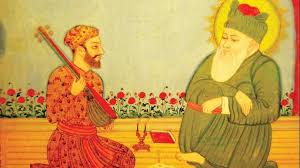
  • Through devotion he achieved the rank of closest follower under Sufi saint Nizamuddin Auliya.

  • During his life Khusrau maintained an extremely close connection with his teacher because he declared in his verse:

  • The absence of my master in Paradise makes any entry into his heavenly realm impossible.

  • The poetic works and qawwali compositions of the mystic poet constitute essential spiritual components of Sufi spiritual practice.

the Foundation of Hindavi Which Became Hindi as Well as Urdu

  • He established Hindavi through the fusion of Persian together with Sanskrit as well as local linguistic elements.

  • Early Urdu and Hindi literary traditions formed through the poetic forms and works of Khagzals, masnavis, riddles and proverbs created by him.

  • Within Nuh Siphir he commended Hindu philosophical ideas to promote his inclusive spiritual approach.

Musical Legacy: Father of Qawwali & Indian Classical Music

  • Through qawwali he made music popular by combining the musical elements of Persian and Arabic with Indian musical culture.

  • Hindustani classical music gained new innovations from him which include:

  • Development of several ragas.

  • Introduction of khayal and bol-bant singing styles.

  • Although the claims of his invention of sitar and tabla remain disputed.

Enduring Influence: From Dargahs to Bollywood

  • His qawwalis and ghazals continue to be timeless masterpieces among others like Chhaap Tilak, Zehal-e-Maskeen, Sakal Ban Phool Rahi Sarson.

  • Chhaap Tilak, Zehal-e-Maskeen, Sakal Ban Phool Rahi Sarson.

  • His music exists beyond spiritual and secular domains because he performs both at Sufi shrines and Bollywood musical events.

Conclusion

Amir Khusrau will always be remembered for uniting traditions and linguistic components in music. His status as poet together with musician and Sufi follower allowed him to form a vital part of India's rich cultural heritage. The musical compositions he created in Hindavi, qawwali and Indian classical music have kept living their power throughout multiple centuries helping to unite different cultures and create harmony.

The place where Khusro Al Amili rests down continues to stand as proof of his dedicated following of spiritual teachings near Nizamuddin Auliya’s dargah. The celebration of Jahan-e-Khusrau preserves his vision for syncretic India so that the heart of Sufi mysticism and inclusive approaches remain alive for new generations.

National Waterways 2025: A Game-Changer for India’s Inland Water Transport

The Inland Waterways Authority of India (IWAI), under the Ministry of Ports, Shipping, and Waterways, has introduced the National Waterways (Construction of Jetties/Terminals) Regulations, 2025 to revolutionize India's Inland Water Transport (IWT) sector. These regulations promote private sector participation, streamline approvals, and enhance logistics efficiency. By integrating digital processes and encouraging investment, the initiative aims to boost cargo movement, reduce costs, and strengthen national waterways as a key transport mode. This step aligns with India's vision of modernized, sustainable, and competitive water-based trade and transport infrastructure.

Key Features of the Regulations

Enabling Private Sector Participation

  • Private, public along with joint ventures have the authority to create jetties and terminals throughout national waterways.

  • New and existing terminal development requires a No Objection Certificate issued by IWAI from investors.

  • Permanent jetties maintain indefinite operation while temporary jetties receive a five-year initialize term which the authorities can extend upon request.

  • New terminal designs will be managed by developers alongside construction activities to meet their organization's business objectives.

Digital Portal for Seamless Operations

  • IWAI establishes an online portal system that enhances terminal application processing ease.

  • The digital initiative helps fulfill government plans for Ease of Doing Business (EODB) and digital transformation of operations.

  • Through this platform applicants can submit their requests while viewing approval status along with gaining transparency.

boost economic expansion and build national infrastructure.

  • The total national waterway freight volume has grown dramatically from 18 million tons in 2023-24 to surpass 133 million tons in 2023-24.

  • The Jalvahak scheme as an initiative aims to boost waterway transportation by 17% thus accelerating national growth rates.

  • Private industry participation will construct better infrastructure and lower operational expenses together with enhanced supply chain capabilities.

Conclusion

Through the National Waterways (Construction of Jetties/Terminals) Regulations, 2025 India will advance both investment potential and inland waterways development. These regulations position the IWT sector to become an economic growth catalyst because of their public-private investment strategies combined with digital governance systems which enhance cost-effective cargo transportation. Persistent work will ultimately transform inland waterways into a sustainable and efficient and competitive transportation method within India's logistics sphere.

Frequently Asked Questions (FAQs)

The current affairs cover recent national and international events related to UPSC, SSC, Banking, Railways, and State PCS.

You need to read about the current affairs daily, and revise them every week and every month to keep them longer in your memory.

Yes, Class24 provides free downloadable Daily Current Affairs PDFs for easy revision.

Yes, you can practice MCQs and quizzes to boost your exam preparation.

Absolutely. The content is written in simple, easy-to-understand bilingual language suitable for beginners.

Go to class24.com and click on the current affairs section directly, where you find everything that you need.

ssc-toppers

Start Learning Today with Class24

Related current affairs

Class24 offers free video lectures for smart preparation, covering CGL, CPO, CHSL, MTS, and GD exams. Learn from expert faculty, revise concepts easily, practice with PYQs, and improve speed and accuracy through high-quality, exam-focused video lessons anytime, anywhere.

Get success in your hand. Start study anytime anywhere.

The journey becomes simple and enjoyable when you start taking interest in it. And through our app “Class24”, we will be your trusted partners in developing that interest.

Daily Quizzes
Mock Tests
Ongoing

No ongoing tests right now.