

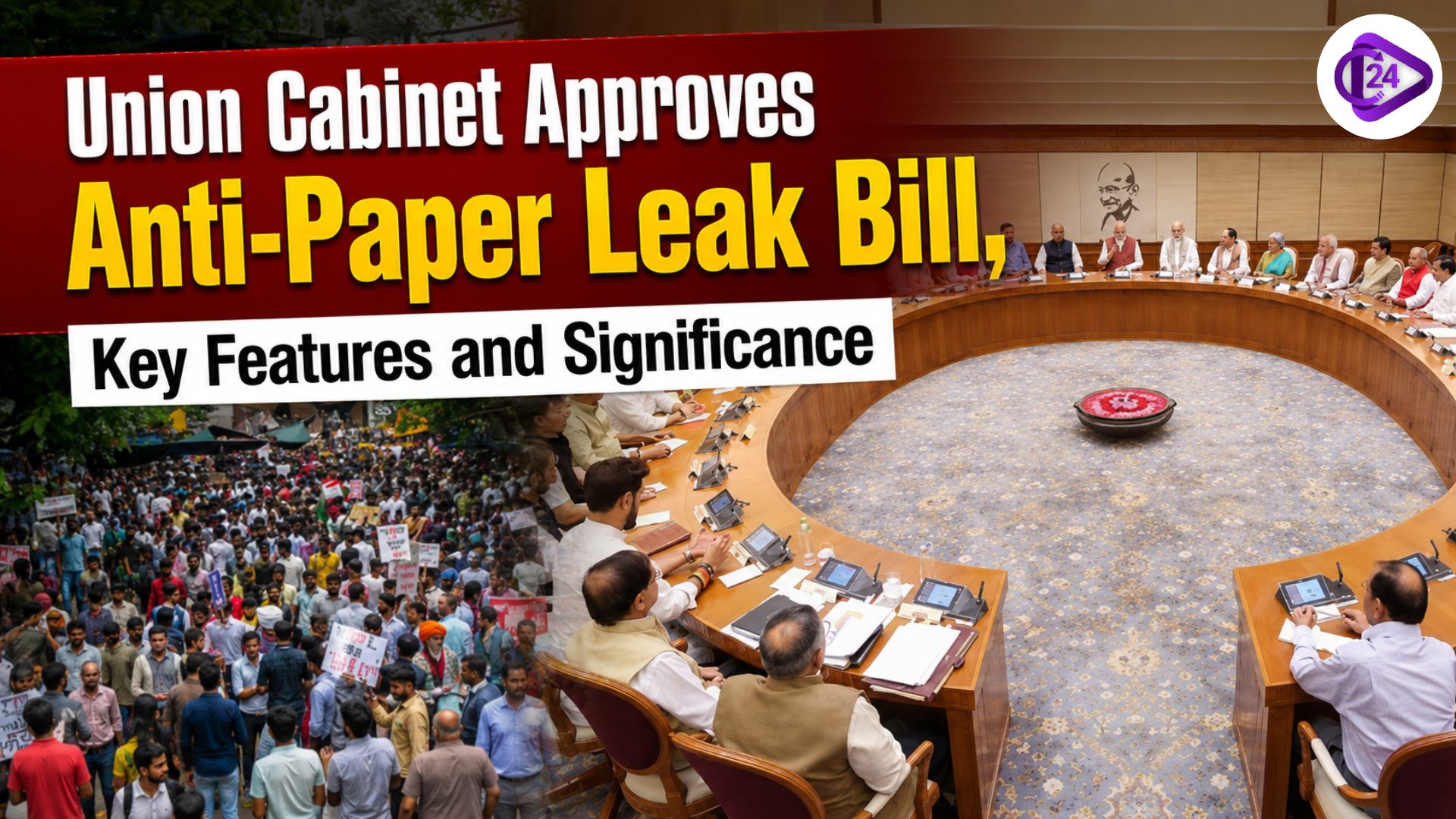
Examination paper leaks are proven debilitating for India’s recruiting and education system. Over the past few years, question paper leaks, organised cheating and examination fraud have plagued some of these competitive examinations, leading to calls for greater transparency and fairness in conducting these exams. Union Cabinet approved a draft Anti-Paper Leak Bill at the Union level to ensure tough punishment, speedy trial and stringent institutional accountability against individuals and organisations involved in examination malpractices to rebuild public confidence in the system as well as restore public credibility on impersonation.
Why in News?
Prime Minister Narendra Modi chaired a Union Cabinet meeting that approved the draft Anti-Paper Leak Bill to fortify India’s legal situation against examination paper leaks and irregularities occurring in public examinations. The legislation proposes tougher punishment, a penalty of up to ₹10 crore and imprisonment of up to 10 years; fast-track courts for speedier justice. The Bill is likely to be in Parliament during the ongoing session.
What is the Anti-Paper Leak Bill?
It is a proposed bill concerning the tightening of anti-paper leak legislation to deal with both paper leaks and organised cheating and frauds connected with examinations, etc. It aims to amend and strengthen the already stringent existing provisions related to public examinations by providing for tougher punishment, quick investigation and fast-track disposal of cases.
It aims to protect the sanctity of recruitment and entrance exams, so that deserving candidates are selected on merit, and those resorting to unfair means are punished.
Why Was the Anti-Paper Leak Bill Needed?
In view of the ever-increasing incidents of paper leaks of recruitment and entrance examinations across the country, the government wanted to bring in stringent legal provisions. These occurrences not only prolong the recruitment process but also shake the trust in examination systems as a whole and take away confidence from the public.
Need for the Bill
- Increasing instances of leaking of examination papers.
- Growth of organised cheating networks.
- Protection of honest candidates.
- Restoring faith in public recruitment
- Ensuring transparency and merit-based selection.
- Strengthening examination security.
- Loss Avoidance from cancellation of examination
India’s First Medal at Commonwealth Games 2026
Objectives of Anti-Paper Leak Bill
The pending bill aims to enhance the security, transparency and accountability of the examination system of India.
Major Objectives
- Avoid paper leaks and malpractices in examinations.
- Eliminate organised cheating rackets.
- Ensure fair and merit-based recruitment.
- Safeguard the interests of real applicants.
- Improve transparency in public examinations.
- Strengthen legal action against offenders.
- Improve public trust in government exams
Key Features of the Anti-Paper Leak Bill
By February 17, the draft Bill will introduce several necessary reforms to tighten the noose around examination malpractices.
Major Features
- Maximum sentence of several years in prison for serious crimes.
- Penalty of₹10 crores at maximum for offenders.
- In a separate development, the Government has decided that Paper Leak cases will be tried in fast-track courts.
- WhereYouCanWorkwithoutFear2ancellations of the issuance of work permits.
- Better accountability mechanisms for institutions associated with examination fraud.
- Strengthened anti-examination malpractice laws. Reference data till October 2023
- In short, efforts to enhance examination integrity and transparency.
Union Cabinet Gives Nod to Anti-Paper Leak Bill: Conclusion
Approval of the Anti-Paper Leak Bill by the Union Cabinet is a significant step to hold fair, transparent and merit-based public examinations across India. The Bill is meant to safeguard the interests of honest candidates and reinforce the credibility of recruitment and entrance examinations by providing for tougher penalties, increased fines, and time-bound prosecution against paper leak racketeers. The role of the right system is pivotal in establishing faith and security with political will, state-of-the-art technology, cyber resilience and institutional accountability.