

Daily Quizzes
Mock Tests
No tests attempted yet.
Select Category
List of Biosphere Reserves of India (Updated)

Enquire Now
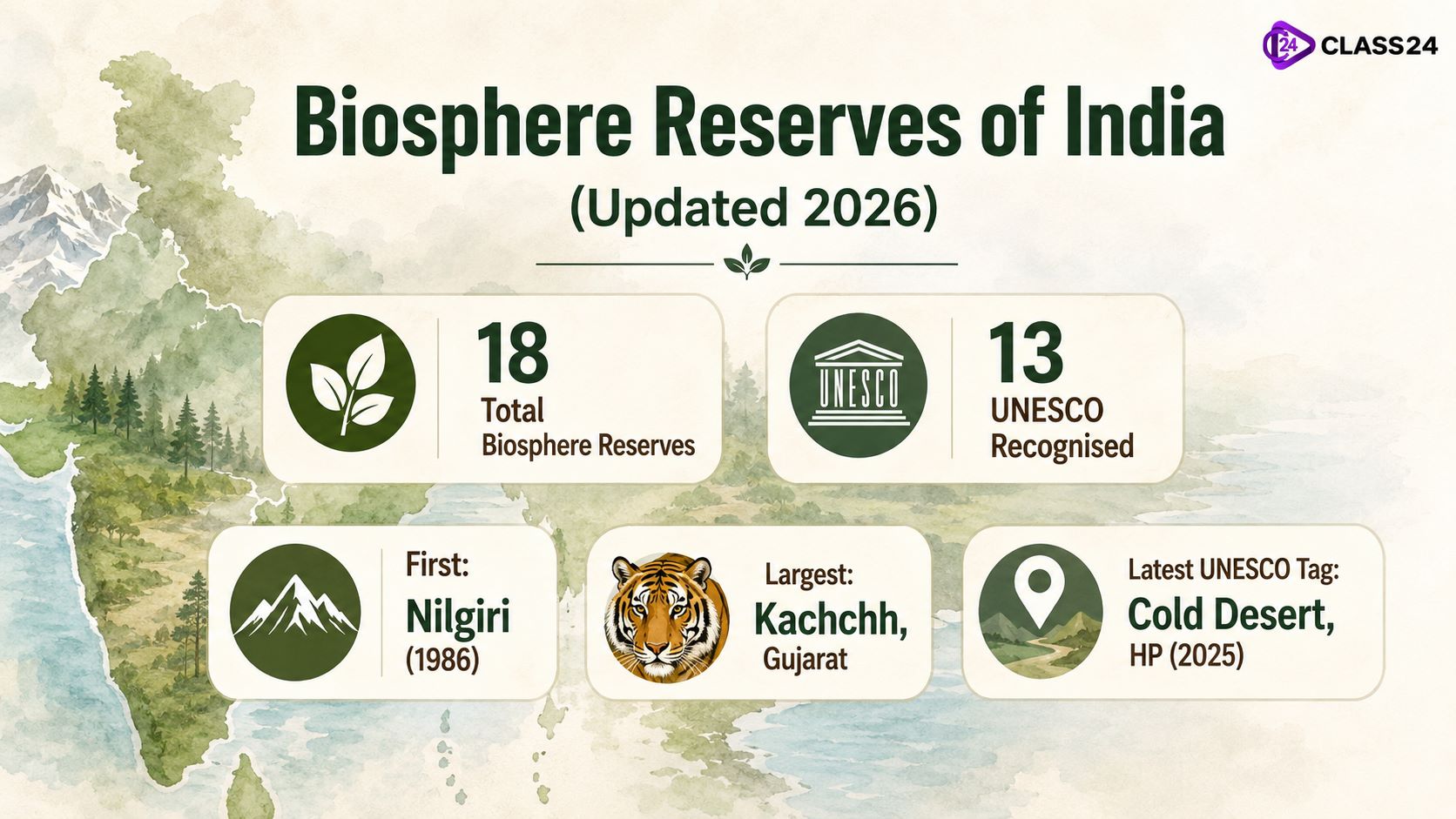
Biosphere Reserves in India are protected zones created to conserve biodiversity while allowing local communities to live and work sustainably inside them. As of 2026, India has 18 notified Biosphere Reserves spread across mountains, deserts, coasts, mangroves, and islands. These Biosphere Reserves in India are managed under UNESCO's Man and the Biosphere (MAB) Programme, and out of the 18, 13 have received international UNESCO recognition so far.
This topic on Biosphere Reserves in India is asked frequently in SSC, Railway, Banking, RPSC, RSSB, and other Rajasthan state exams under the Environment and Geography sections. This article covers the complete list of Biosphere Reserves in India, their zones, UNESCO status, key species, and the differences from National Parks and Wildlife Sanctuaries, so that all exam aspirants get one authentic and updated source for revision.
What is a Biosphere Reserve?
A Biosphere Reserve is a large protected area declared by the government and recognised internationally by UNESCO to conserve ecosystems, wildlife, and traditional human life together. Biosphere Reserves in India follow a three-zone model explained below.
Three Zones of a Biosphere Reserve
Every Biosphere Reserve in India is divided into three functional zones. Each zone has a separate role in protecting wildlife while allowing controlled human activity around it.
| Zone | Description | Main Function |
|---|---|---|
| Core Zone | Strictly protected, undisturbed area | Conserves species, habitats, and genetic diversity |
| Buffer Zone | Surrounds the core zone | Allows research, monitoring, and eco-tourism |
| Transition Zone | Outer zone with human settlements | Supports sustainable farming and local livelihood |
Complete List of Biosphere Reserves in India 2026
The list of Biosphere Reserves in India below gives the year of establishment, state, UNESCO status, and key species of each reserve. This updated list of Biosphere Reserves in India is important for one-mark and matching-type questions in exams.
| No. | Biosphere Reserve | State(s) | Established | UNESCO Tag | Key Species |
|---|---|---|---|---|---|
| 1 | Nilgiri | Tamil Nadu, Kerala, Karnataka | 1986 | 2000 | Nilgiri Tahr, Lion-tailed Macaque |
| 2 | Nanda Devi | Uttarakhand | 1988 | 2004 | Snow Leopard, Himalayan Brown Bear |
| 3 | Nokrek | Meghalaya | 1988 | 2009 | Red Panda, Asian Elephant |
| 4 | Gulf of Mannar | Tamil Nadu | 1989 | 2001 | Dugong, Sea Turtle, Coral Reefs |
| 5 | Sundarbans | West Bengal | 1989 | 2001 | Royal Bengal Tiger, Irrawaddy Dolphin |
| 6 | Manas | Assam | 1989 | 2001 | Golden Langur, Wild Buffalo |
| 7 | Great Nicobar | Andaman & Nicobar | 1989 | 2013 | Leatherback Turtle, Nicobar Megapode |
| 8 | Similipal | Odisha | 1994 | 2009 | Tiger, Elephant, Giant Squirrel |
| 9 | Dibru-Saikhowa | Assam | 1986 | Not yet | Feral Horse, River Dolphin |
| 10 | Dehang-Debang | Arunachal Pradesh | 1998 | Not yet | Snow Leopard, Takin |
| 11 | Pachmarhi | Madhya Pradesh | 1999 | 2009 | Flying Squirrel, Wild Dog |
| 12 | Khangchendzonga | Sikkim | 2000 | 2018 | Snow Leopard, Red Panda |
| 13 | Agasthyamalai | Kerala, Tamil Nadu | 2001 | 2016 | Elephant, Lion-tailed Macaque |
| 14 | Achanakmar-Amarkantak | Madhya Pradesh, Chhattisgarh | 2005 | 2012 | Wild Dog, Flying Squirrel |
| 15 | Kachchh (Great Rann) | Gujarat | 2008 | Not yet | Indian Wild Ass, Flamingo |
| 16 | Cold Desert | Himachal Pradesh | 2009 | 2025 | Snow Leopard, Tibetan Wolf |
| 17 | Seshachalam Hills | Andhra Pradesh | 2010 | Not yet | Red Sanders, Slender Loris |
| 18 | Panna | Madhya Pradesh | 2011 | 2020 | Tiger, Vulture, Crocodile |
UNESCO Recognised Biosphere Reserves in India
Out of the 18 Biosphere Reserves in India, only 13 are part of UNESCO's World Network of Biosphere Reserves (WNBR). These sites meet strict global criteria for biodiversity value and management.
- Nilgiri, Nanda Devi, Nokrek, Gulf of Mannar, Sundarbans, Manas, Great Nicobar, Similipal, Pachmarhi, Khangchendzonga, Agasthyamalai, Achanakmar-Amarkantak, and Panna are the UNESCO recognised Biosphere Reserves in India.
- Cold Desert Biosphere Reserve of Himachal Pradesh is the newest addition, recognised by UNESCO in September 2025.
- Dibru-Saikhowa, Dehang-Debang, Kachchh, and Seshachalam Hills carry only national designation as of now.
Important Facts about Biosphere Reserves in India
These quick facts on Biosphere Reserves in India are commonly asked as direct one-liner questions in government exams.
- First Biosphere Reserve in India: Nilgiri Biosphere Reserve, established in 1986.
- First Marine Biosphere Reserve: Gulf of Mannar, Tamil Nadu.
- Largest Biosphere Reserve in India: Kachchh (Great Rann of Kutch), Gujarat, covering about 12,454 sq. km.
- Smallest Biosphere Reserve in India: Dibru-Saikhowa, Assam (Agasthyamalai is also cited as smallest in some sources).
- Total Area Covered: Around 91,425 sq. km across all 18 reserves.
- Nodal Ministry: Ministry of Environment, Forest and Climate Change (MoEFCC).
Biosphere Reserve vs National Park vs Wildlife Sanctuary
Many aspirants confuse a Biosphere Reserve with a National Park or Wildlife Sanctuary. The table below clears this difference in simple points for quick revision.
| Feature | Biosphere Reserve | National Park | Wildlife Sanctuary |
|---|---|---|---|
| Legal Basis | UNESCO MAB Programme | Wildlife Protection Act, 1972 | Wildlife Protection Act, 1972 |
| Human Activity | Allowed in buffer & transition zones | Not allowed | Limited activity allowed |
| Zones | Core, Buffer, Transition | No zones | No formal zones |
| Main Focus | Conservation with sustainable development | Strict wildlife protection | Wildlife protection with limited use |
Why This Topic Matters for Competitive Exams
Biosphere Reserves in India is a scoring topic if the list and key facts are revised regularly close to the exam date.
- SSC CGL, CHSL, and MTS frequently ask the state and year of a specific Biosphere Reserve.
- Railway (RRB) exams often test the "first," "largest," and "smallest" reserve facts.
- Rajasthan exams like RPSC and RSSB test biodiversity and environment topics from the state and national level together.
- Banking exams include this under general awareness sections close to the exam date.
Frequently Asked Questions