

Daily Quizzes
Mock Tests
No tests attempted yet.
Select Category
List of Important Historical Monuments in India (State-Wise Guide)

Enquire Now
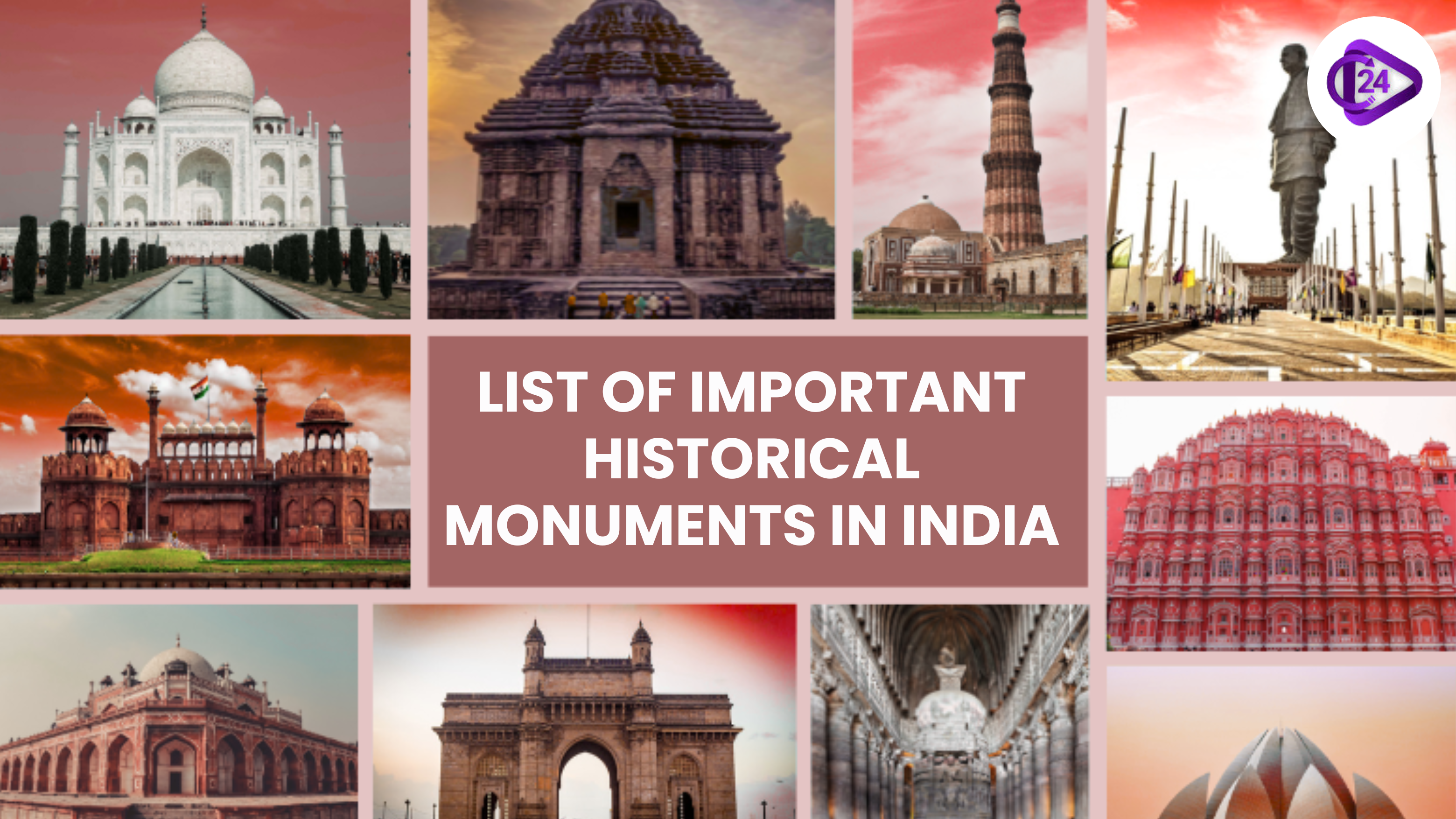
India is a country with an incredibly rich cultural and historical heritage. From ancient temples and grand forts to magnificent palaces and colonial structures, the historical monuments in India reflect the country’s glorious past. These monuments are not only architectural marvels but also symbols of India’s diverse history, culture, and traditions.
Many of these monuments are recognized as UNESCO World Heritage Sites in India, attracting millions of tourists every year. Whether built during the Mughal era, ancient Hindu dynasties, or the British colonial period, these monuments tell fascinating stories about India’s past.
Taj Mahal – One of the Most Famous Historical Monuments in India
One of the most famous historical monuments in India, the Taj Mahal is an iconic symbol of love and one of the most visited tourist attractions in the world. Built by Mughal Emperor Shah Jahan in memory of his beloved wife Mumtaz Mahal, the monument stands on the banks of the Yamuna River in Agra.
Constructed in white marble, the Taj Mahal is known for its stunning architecture, intricate carvings, and beautiful gardens. It took around 22 years to complete and involved thousands of artisans and craftsmen.
The Taj Mahal is also listed as a UNESCO World Heritage Site in India and is considered one of the Seven Wonders of the World, making it one of the most important monuments in Indian history.
Red Fort – Important Mughal Historical Monument in India
Another prominent monument in India is the majestic Red Fort, located in the heart of Delhi. This massive red sandstone fort was built by the Mughal emperor Shah Jahan in 1648 when he shifted the Mughal capital from Agra to Delhi.
The Red Fort served as the main residence of Mughal emperors for nearly 200 years. It is famous for its impressive walls, gates, palaces, and gardens. Some of the most notable structures inside the fort include the Diwan-i-Aam, Diwan-i-Khas, and Rang Mahal.
Today, the Red Fort is historically significant because the Prime Minister of India hoists the national flag here every year on Independence Day.
Qutub Minar – Tallest Historical Monument in India
The towering Qutub Minar is another remarkable historical monument located in Delhi. Built in the early 13th century by Qutb-ud-din Aibak, it is the tallest brick minaret in the world.
Standing at a height of 73 meters, Qutub Minar is a stunning example of Indo-Islamic architecture. The monument is decorated with intricate carvings and Quranic inscriptions, showcasing the craftsmanship of medieval Indian artisans.
The Qutub Minar complex also includes several historical structures such as the Iron Pillar and Alai Darwaza. Due to its historical and architectural importance, it has been designated as a UNESCO World Heritage Site.
Hampi – Ancient Historical Monuments in South India
The ruins of Hampi represent one of the most important archaeological sites in India. Hampi was once the capital of the powerful Vijayanagara Empire and was known for its magnificent temples, markets, and palaces.
Today, the site features more than 1,600 ancient structures, including temples, gateways, and stone chariots. The famous Virupaksha Temple and the Stone Chariot are among the most visited monuments in the region.
Hampi is widely regarded as one of the most important historical monuments in South India and is also recognized as a UNESCO World Heritage Site.
Ajanta and Ellora Caves – Ancient Rock Cut Historical Monuments in India
The remarkable Ajanta Caves and Ellora Caves are among the finest examples of ancient rock-cut architecture in India.
These caves were carved between the 2nd century BCE and the 10th century CE. They contain beautiful paintings, sculptures, and temples dedicated to Buddhism, Hinduism, and Jainism.
The Ajanta caves are especially famous for their exquisite murals depicting scenes from the life of Buddha. Meanwhile, Ellora is known for the magnificent Kailasa Temple carved out of a single rock.
Both cave complexes are UNESCO World Heritage Sites and represent the artistic and religious diversity of ancient India.
Konark Sun Temple – Famous Temple Monument in India
The magnificent Konark Sun Temple is one of the most impressive temple monuments in India. Built in the 13th century by Narasimhadeva I, the temple is designed in the shape of a giant chariot dedicated to the Sun God.
The temple is adorned with intricate carvings and sculptures that depict various aspects of life, culture, and mythology. The chariot design features 24 wheels and seven horses, symbolizing the movement of the sun across the sky.
Konark Sun Temple is an architectural masterpiece and a UNESCO World Heritage Site.
Gateway of India – Colonial Historical Monument in India
The grand Gateway of India is one of the most recognizable landmarks in India. Built in 1924 during the British colonial period, the monument was constructed to commemorate the visit of George V and Queen Mary to India.
Located on the waterfront in Mumbai, the Gateway of India combines Indo-Saracenic architectural elements with colonial influences. Over the years, it has become a popular tourist attraction and an important symbol of India’s colonial history.
List of Important Historical Monuments in India
Famous Monuments of India
Famous Monuments of India
| Monument | Location | Built By |
|---|---|---|
| Taj Mahal | Agra | Shah Jahan |
| Red Fort | Delhi | Shah Jahan |
| Qutub Minar | Delhi | Qutb-ud-din Aibak |
| Hampi | Karnataka | Vijayanagara Empire |
| Ajanta Caves | Maharashtra | Buddhist Monks |
| Ellora Caves | Maharashtra | Rashtrakuta rulers |
| Konark Sun Temple | Odisha | Narasimhadeva I |
| Gateway of India | Mumbai | British Government |
RRB Railways Exam Combo Test Series Pass 2026
Importance of Historical Monuments in India
Historical monuments play an important role in preserving the cultural and historical identity of the nation. They help us understand the political, social, and artistic achievements of past civilizations.
Some key reasons why historical monuments in India are important include:
- They preserve the country’s rich heritage
- They attract millions of tourists each year
- They promote cultural awareness and education
- They support the tourism industry and economy
Monuments also serve as symbols of national pride and historical continuity.
Conclusion
India is home to some of the most spectacular monuments in the world. From the timeless beauty of the Taj Mahal to the ancient rock-cut caves of Ajanta and Ellora, these important historical monuments in India represent centuries of artistic brilliance and cultural evolution.
Exploring these monuments allows us to connect with India’s past and appreciate the incredible achievements of earlier civilizations. Preserving and protecting these historical treasures is essential so that future generations can continue to learn from and admire them.
Whether you are a history enthusiast, a student preparing for competitive exams, or a traveler looking to explore India’s heritage, the list of famous historical monuments in India provides a fascinating glimpse into the country’s glorious history.
Frequently Asked Questions