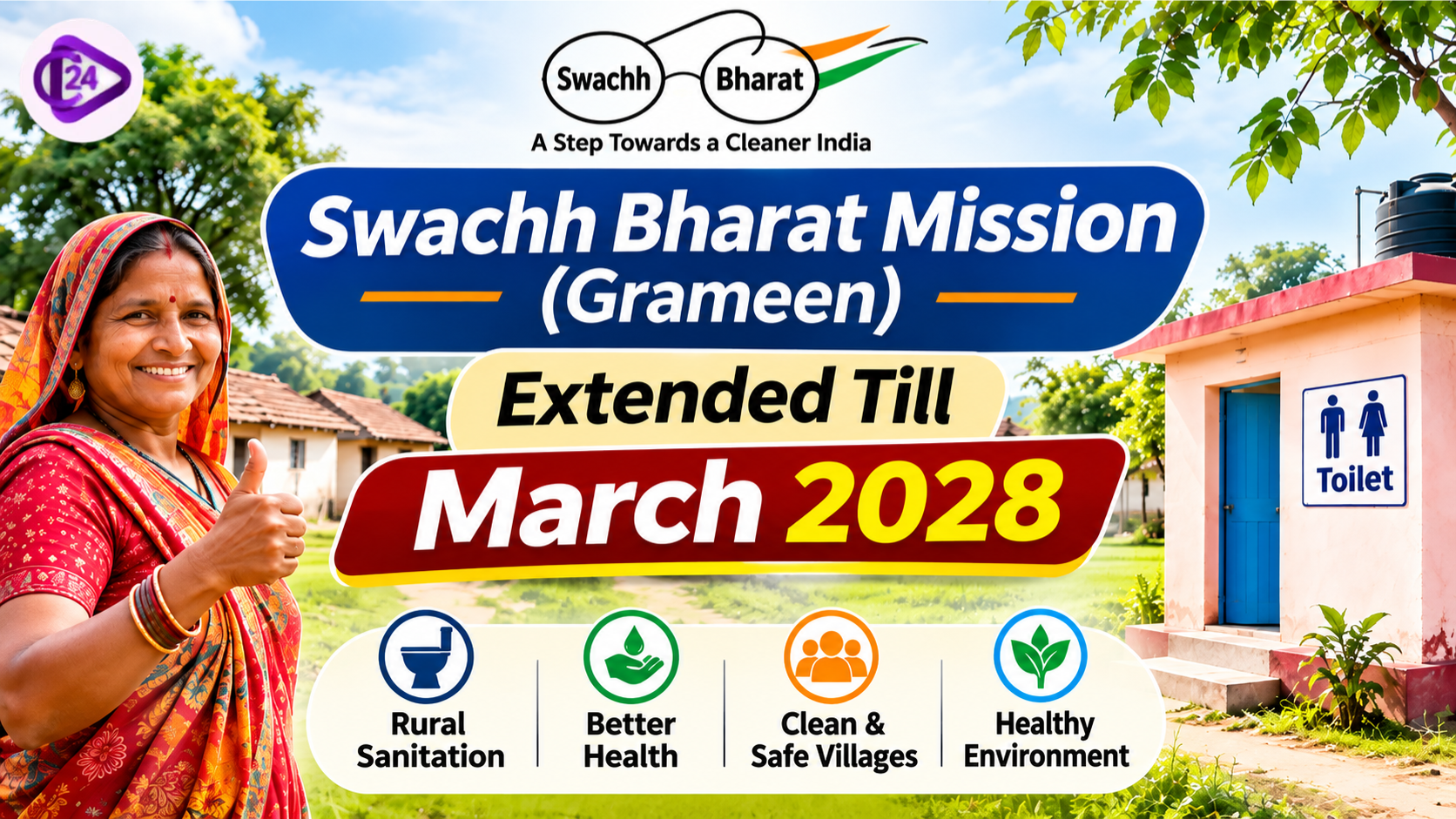


Rural sanitation is essential for improving public health, hygiene and the quality of life in villages. The Government of India launched the Swachh Bharat Mission to eliminate open defecation and provide better sanitation facilities across the country. Its second phase focuses on maintaining Open Defecation Free (ODF) status and improving solid and liquid waste management. The latest extension provides additional time to complete the remaining rural sanitation targets and promote sustainable cleanliness in villages.
Why in News?
On 3 November 2026, the Finance Ministry approved the extension of Swachh Bharat Mission (Grameen) Phase-II until 31 March 2028.
The extension will allow the government to make a provision of approximately ₹7,000 crore for the scheme in the Union Budget 2027-28.
The Department of Drinking Water and Sanitation (DDWS), under the Ministry of Jal Shakti, had sought approval for extending the programme.
The government has also set a deadline for the remaining villages to achieve the required ODF Plus certification by 31 March 2028.
Key Highlights of the Extension
- Extended Period: The scheme will continue until 31 March 2028.
- Financial Provision: Approximately ₹7,000 crore is expected to be provided in the Union Budget 2027-28.
- Nodal Ministry: Ministry of Jal Shakti.
- Implementing Department: Department of Drinking Water and Sanitation.
- Main Target: Achieving ODF Plus status in the remaining villages.
- Final Deadline: No further extension beyond 31 March 2028 will be considered under the Finance Ministry’s order.
What is Swachh Bharat Mission (Grameen)?
The Swachh Bharat Mission (Grameen) was launched on 2 October 2014 by the Government of India.
Its primary objective was to make rural India Open Defecation Free by providing access to household toilets and encouraging better sanitation practices.
After achieving the initial ODF target, the government introduced Phase-II in April 2020.
The second phase focuses on maintaining ODF status and developing proper solid and liquid waste management systems in villages.
Major Objectives of Swachh Bharat Mission Phase-II
- ODF Sustainability: Maintaining the Open Defecation Free status of villages and preventing a return to open defecation.
- Solid Waste Management: Promoting waste collection, segregation, recycling and proper disposal in rural areas.
- Liquid Waste Management: Developing drainage systems and arrangements for the safe treatment and disposal of wastewater.
- Visual Cleanliness: Maintaining clean public spaces, streets and surroundings in villages.
- Community Participation: Encouraging villagers to participate in sanitation activities and adopt hygienic practices.
What is ODF Plus Status?
ODF Plus is an important concept under Swachh Bharat Mission (Grameen) Phase-II.
An ODF Plus village is one that maintains its Open Defecation Free status, manages solid and liquid waste and maintains visual cleanliness.
There are three categories of ODF Plus villages:
| Category | Description |
| ODF Plus Aspiring | Sustains ODF status and has arrangements for either solid or liquid waste management |
| ODF Plus Rising | Sustains ODF status and has arrangements for both solid and liquid waste management |
| ODF Plus Model | Sustains ODF status, manages solid and liquid waste and maintains visual cleanliness |
Current Progress of the Mission
According to the Swachh Bharat Mission (Grameen) dashboard figures reported on 4 November 2026:
- Total villages: Approximately 5.86 lakh.
- Villages declared ODF Plus: Approximately 5.70 lakh.
- Remaining gap: Approximately 16,000 villages based on these rounded figures.
The extension aims to help complete the remaining ODF Plus targets by March 2028.
Financial Structure of Phase-II
In February 2020, the Union Cabinet approved an overall financial outlay of ₹1,40,881 crore for Swachh Bharat Mission (Grameen) Phase-II.
The funding pattern is:
| Region | Centre : State Share |
| North-Eastern and Himalayan States | 90:10 |
| Other States | 60:40 |
| Union Territories | 100:0 |
The programme also uses funds from Finance Commission grants, MGNREGS and other available funding sources for rural sanitation activities.
Significance of the Extension
- Improved Rural Health: Better sanitation reduces the risk of diseases associated with poor hygiene.
- Environmental Protection: Proper waste management helps reduce soil and water pollution.
- Sustainable Development: The mission promotes long-term sanitation facilities rather than focusing only on toilet construction.
- Community Participation: It encourages people to take responsibility for maintaining cleanliness in their villages.
- Better Living Conditions: Improved sanitation contributes to healthier and cleaner rural communities.
Important Facts at a Glance
| Particulars | Details |
| Scheme | Swachh Bharat Mission (Grameen) |
| Launch Date | 2 October 2014 |
| Phase-II Launch | April 2020 |
| Extended Until | 31 March 2028 |
| Nodal Ministry | Ministry of Jal Shakti |
| Implementing Department | DDWS |
| Approved Outlay | ₹1,40,881 crore |
| Main Objective | Sustainable rural sanitation |
| Key Concept | ODF Plus |
Conclusion
The extension of Swachh Bharat Mission (Grameen) Phase-II until March 2028 provides additional time to achieve the remaining rural sanitation targets. Its focus on ODF Plus certification, solid waste management and liquid waste management highlights the importance of sustainable sanitation. The programme aims to make rural villages cleaner, healthier and more environmentally sustainable.