

Philippines Earthquake Triggers Tsunami Warning: Coastal Areas Urged to Evacuate

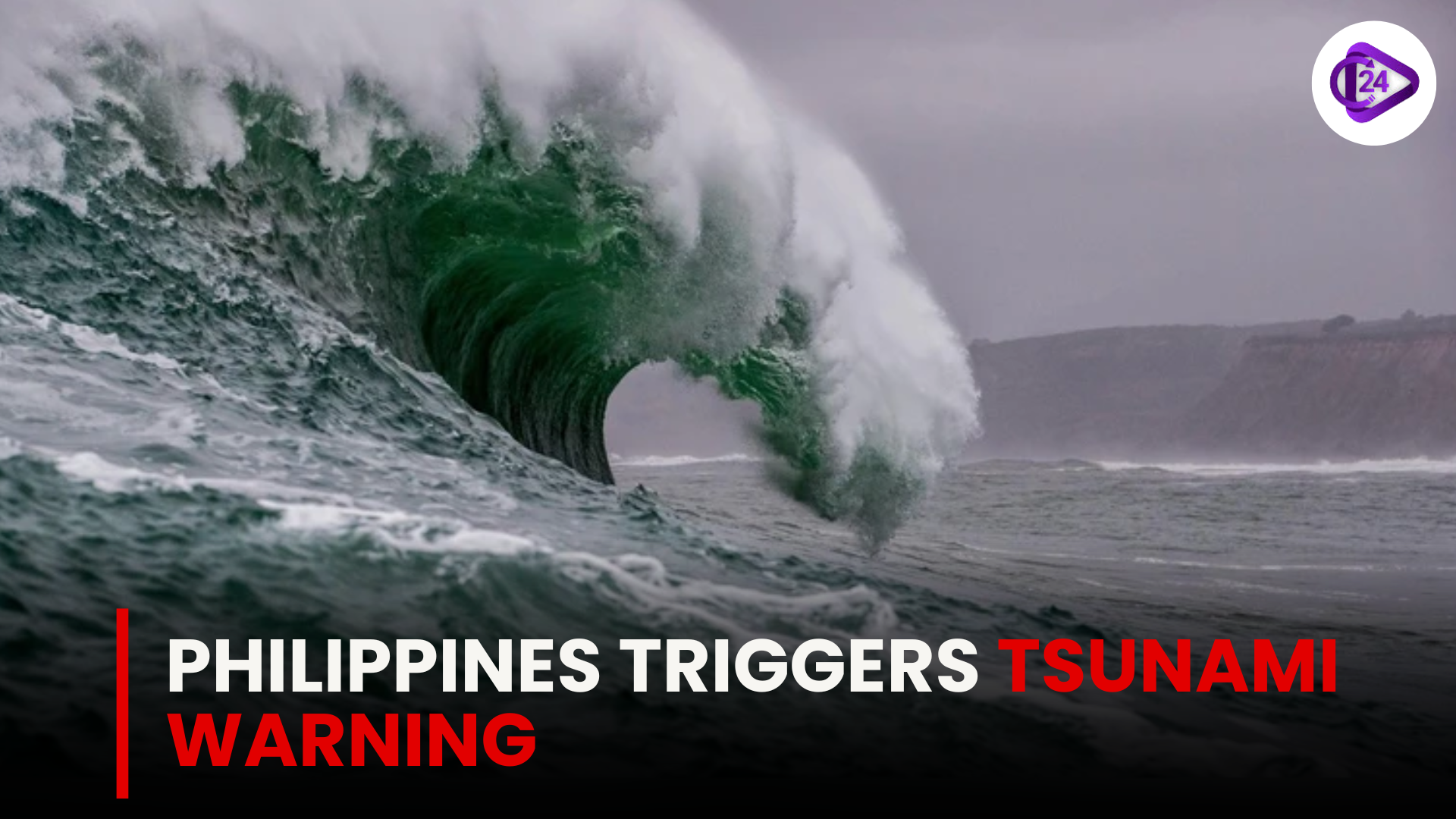
An earthquake with a magnitude of 7.5 was triggered off shore the Philippines, off Davao Oriental, yesterday, leading to alerts being given to communities along coastal areas of the tsunami attack. Citizens have been advised to move to higher places as the wave could measure over one meter, and a...

Philippines Earthquake Triggers Tsunami Warning: Coastal Areas Urged to Evacuate

An earthquake with a magnitude of 7.5 was triggered off shore the Philippines, off Davao Oriental, yesterday, leading to alerts being given to communities along coastal areas of the tsunami attack. Citizens have been advised to move to higher places as the wave could measure over one meter, and a warning has been declared to other neighboring areas, like a section of Indonesia and Palau. The quake resulted in an immense shimmer, damage to the construction, and the following tremors, part of which was a 5.9 magnitude salvo shortly following. There are emergency response and safety operations, which are initiated by the authorities, and local populations are secured. The risk in seismics in the Philippines and the value of preparedness are emphasized by this incident, and further surveillance of tsunamis, aftershocks, and coastal areas security to all susceptible locations.

Why the Philippines’ Location Intensifies Earthquake and Tsunami Risks?

  • The Philippines is an archipelago comprising 7,641 islands in Southeast Asia.

  • It is on the Pacific Ring of Fire, which is thus very seismic and volcanic.

  • Bordered by the Philippine Sea, the South china sea, and the Celebes sea.

  • Such mountain ranges as the Cordillera or Sierra Madre are enhancing the earthquakes.

  • Principal rivers are the Cagayan River, Agusan River, and Pampanga River, which are prone to floods following quakes.

  • Lowlands close to the coastlines make it susceptible to tsunamis.

  • The disaster risk is augmented by the volcanoes like Mayon and Taal.

  • Along the Philippine Fault System, earthquakes are common occurrences.

  • The city population is so high in concentrated in the coastal islands that it increases the risks.

  • Disaster preparedness and early warning systems are needed in strategic geography.

Tsunami Risks Globally

  • Tsunamis are huge waves in the sea and are the direct result of sub-oceanic earthquakes, volcanic or landslides.

  • In 426 BC, the first tsunami was recorded in Greece.

  • Japanese scientists named it the word tsunami, which was translated as harbor-wave.

  • India was also undergoing tsunamis such as the 2004 Indian Ocean tsunami.

  • The most common country to be affected is Indonesia.

  • Its origin is in seismic areas in the boundary of tectonic plates, particularly, the Pacific Ring of Fire.

  • Tsunamis are believed to be high-risk hazards, which need an early warning system and preparedness on the coasts.

Conclusion

The earthquake in the Philippines and the following tsunami alarm will reveal the vulnerability of the country to its location around the Pacific Ring of Fire. The communities living in the coastal areas were advised to leave the land for safer places, and this aspect reiterated the relevance of being prepared for the disaster. Although there were aftershocks and sometimes tremors that led to partial spread of the panic in the area and slight damage, the response and tracking efforts served to help save lives. This incident reminds us of the importance of early warning mechanisms, community education, and a robust community infrastructure to reduce earthquake and tsunami risks in this seismically prone area.

Bengaluru Records Highest Number of Cybercrime Cases in India
Shashi Shekhar Vempati Appointed New CBFC Chairman
India to Host First IBCA Summit in June 2026
Cabinet approves Emergency Credit Line Guarantee Scheme 5.0
Cabinet Approves Increase in Supreme Court Judge Strength to 37
Union Cabinet Approves Mission for Cotton Productivity in India
08 May 2026
07 May 2026
06 May 2026
05 May 2026
04 May 2026
02 May 2026
01 May 2026
30 April 2026
29 April 2026
18 April 2026

Start Learning Today with Class24

Buy a course

SSC

Railway

Banking

Teaching Exams

Rajasthan Exams

K12 Courses

Class24 Mobile Application

Class24 also has a mobile application so that it becomes easily accessible and convenient. This can be downloaded on an Android device. Users have appreciated this app and the content provided as 4.1 out of 5 is its rating in the App Store. People loved it because Class24 is giving content which is extremely rich in every sense. The app comprises a wide variety of features for smooth learning:

  • User-Friendly Interface: The app is categorized into various sections so that students can navigate and access various resources with ease.
  • Offline Access: The study materials can be downloaded and the student can access them even when not connected to the internet.
  • Inbuilt eBook Reader: There is a lightning-fast reader for eBooks within the app, so reading is seamless.
  • Progress Tracking: The app tracks student’s progress in preparation and keeps them organized and focused.

Courses and Subjects Offered

The total syllabus will be covered, and there are in-depth practice materials so as to give deep preparation in the courses designed to each one of them. All the subjects come under the aegis of courses offered by Class24 to meet different needs of various aspirants such as:

Preparation Tips for All Exams

Preparation tips for all exams mentioned below:

  • Previous Year Papers: Try to attempt at least 5-10 years of question papers to know the pattern of questions, how much difficulty one would face while answering, and how many frequently asked topics were in the examination.
  • Take Mock Tests: Attempt Mock Tests regularly in order to time and accuracy. You may analyze the performance and make an improvement for weak areas.
  • Focus on Time Management: Solve questions in the given time to make a habit of having speed and efficiency. Allocate time sensibly between Paper 1 and Paper 2, while appearing in the examination.
  • Current Affairs: For Current Affairs and TET exams, be updated about current affairs, teaching aptitude, and general awareness.
  • Regular Revision: Spend your daily and weekly time for revisions to not forget concepts and formulas. Use flashcards or do self-summary notes for quick revisions.
  • Understand the Exam Pattern and Syllabus: Understand the pattern of your exam paper and syllabus very well. Both Current Affairs and CSIR NET examinations are two-tier ones and involve both Paper 1, which consists of general aptitude and Paper 2 that involves specific aptitude subjects.
  • Make a Study Plan: Divide the preparation time into three phases of concept building, revision, and mock tests. Allocate more time to weaker areas while maintaining equilibrium with stronger sections.
  • Online Coaching or Study Groups: Enroll in online coaching programs like Class24 to get proper guidance and a structured approach to the study. Study groups will be useful to discuss doubts and share resources.
  • Stay Consistent and Motivated: Maintain a steady study schedule. Stay motivated by making small achievable goals.
  • Use Quality Study Materials: Suggested study material refers to a textbook, a set of previously published question papers, and web sources such as Class24.

Conclusion

Class24 is a one stop solution for aspirants preparing for Current Affairs, CSIR NET, SET, UP PGT English, UP TGT PGT, UPHESC Assistant Professor, TET, IGNOU B.Ed and other competitive exams. There are structured courses, live classes, mock tests along with the guidance of experts to assist candidates in achieving success in their respective fields.

Get success in your hand. Start study anytime anywhere.

The journey becomes simple and enjoyable when you start taking interest in it. And through our app “Class24”, we will be your trusted partners in developing that interest.

Daily Quizzes
Mock Tests
Ongoing

No ongoing tests right now.