


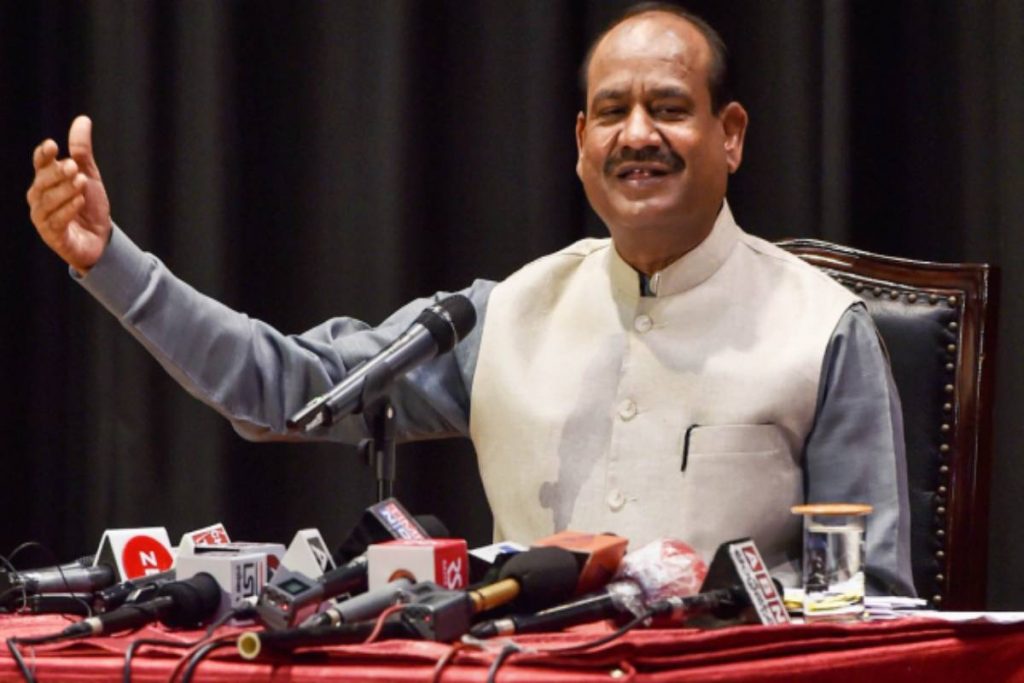
The 150th Assembly of the Inter-Parliamentary Union (IPU) was held in Tashkent, Uzbekistan, from 5 to 9 April 2025. Lok Sabha Speaker Shri Om Birla led the Indian Parliamentary Delegation to the Assembly, where parliamentarians from across the world discussed the role of legislatures in promoting social development and justice.
The central theme, “Parliamentary Action for Social Development and Justice,” focused on how national parliaments can contribute to inclusive development, democratic governance, peace and international cooperation. India’s participation highlighted its engagement in global parliamentary diplomacy and its relations with Uzbekistan.
150th IPU Assembly 2025: Important Highlights
| Particulars | Details |
| Event | 150th Assembly of the Inter-Parliamentary Union |
| Dates | 5–9 April 2025 |
| Venue | Tashkent, Uzbekistan |
| Indian Delegation Head | Shri Om Birla |
| Position | Speaker of the Lok Sabha |
| Main Theme | Parliamentary Action for Social Development and Justice |
| Organiser | Inter-Parliamentary Union (IPU) |
| Host | Parliament of Uzbekistan |
The Assembly provided a platform for national parliamentary representatives to exchange views on international issues and discuss ways to strengthen parliamentary cooperation.
Om Birla Leads India’s Parliamentary Delegation
Lok Sabha Speaker Shri Om Birla led a multi-member Indian Parliamentary Delegation to the 150th IPU Assembly. The delegation included representatives from both Houses of Parliament and senior parliamentary officials.
Some of the prominent members included:
- Shri Harivansh, Deputy Chairman of the Rajya Sabha
- Shri Bhartruhari Mahtab, Member of Parliament
- Shri Anurag Singh Thakur, Member of Parliament
- Shri Vishnu Dayal Ram, Member of Parliament
- Smt. Aparajita Sarangi, Member of Parliament
- Dr. Sasmit Patra, Member of Parliament
- Shri Ashok Kumar Mittal, Member of Parliament
- Smt. Kiran Choudhry, Member of Parliament
- Smt. Lata Wankhede, Member of Parliament
- Smt. Bijuli Kalita Medhi, Member of Parliament
The delegation also included the Secretaries-General of the Lok Sabha and Rajya Sabha.
During the Assembly’s General Debate, Om Birla was scheduled to address delegates on the theme of parliamentary action for social development and justice. Indian representatives also participated in meetings of IPU bodies, including the Governing Council, Executive Committee and Standing Committees.
Main Theme: Parliamentary Action for Social Development and Justice
The General Debate at the 150th IPU Assembly focused on the theme “Parliamentary Action for Social Development and Justice.”
The discussion highlighted the responsibility of parliaments to make development more inclusive and ensure that public policies respond to the needs of all sections of society.
Major areas of discussion included:
- Poverty reduction: Strengthening policies and legislative action to reduce poverty and improve living conditions.
- Employment generation: Promoting decent work and opportunities for sustainable livelihoods.
- Social inclusion: Ensuring that marginalised and vulnerable communities participate in social and economic development.
- Gender equality: Improving women’s participation in political decision-making and public institutions.
- Democratic governance: Making institutions more accountable, transparent and responsive.
- Sustainable development: Supporting long-term development while addressing the social impact of conflicts and other global challenges.
The IPU’s official announcement also highlighted poverty eradication, decent work and greater participation of marginalised groups in decision-making as important parts of the Assembly’s theme.
Om Birla’s Meetings and India’s Engagement with Uzbekistan
Alongside the formal Assembly sessions, Om Birla held interactions with parliamentary counterparts from other countries. These meetings provided opportunities to discuss issues of common interest and strengthen relations between national legislatures.
On 7 April 2025, Om Birla and the Indian delegation met Uzbekistan President Shavkat Mirziyoyev. The discussions covered India-Uzbekistan relations and opportunities to expand cooperation in areas such as digital technology, artificial intelligence, renewable energy, healthcare, pharmaceuticals, information technology and agriculture.
Birla also met the Chairperson of the Senate of Uzbekistan, Tanzila Narbayeva. The discussions highlighted the importance of closer parliamentary exchanges, committee-level contacts and youth platforms.
During the visit, the Indian delegation also paid tribute to former Indian Prime Minister Lal Bahadur Shastri at his bust in Tashkent.
An important part of the programme involved interaction with members of the Indian community and Indian students living in Uzbekistan. These engagements helped the delegation connect with Indians living and studying abroad.
What Is the Inter-Parliamentary Union (IPU)?
The Inter-Parliamentary Union (IPU) is an international organisation of national parliaments. It provides a platform for parliamentarians to discuss global issues, exchange legislative experiences and promote cooperation through parliamentary diplomacy.
The organisation was established in 1889 by two parliamentarians: Frédéric Passy of France and William Randal Cremer of the United Kingdom.
| Particulars | Details |
| Full Form | Inter-Parliamentary Union |
| Abbreviation | IPU |
| Established | 1889 |
| Founders | Frédéric Passy and William Randal Cremer |
| Headquarters | Geneva, Switzerland |
| Slogan | For democracy. For everyone. |
| Nature | Global organisation of national parliaments |
The IPU was created to encourage peaceful dialogue and cooperation among parliamentarians at a time when formal international mechanisms for parliamentary cooperation were limited. Its headquarters have been in Geneva since 1921.
Objectives and Functions of the IPU
The IPU works to strengthen democratic institutions and encourage parliaments to contribute to peace, equality and sustainable development.
Its major areas of work include:
- Democracy and governance: Supporting representative democracy and effective parliamentary institutions.
- Peace and security: Encouraging dialogue and parliamentary cooperation to address international conflicts.
- Sustainable development: Promoting legislative action on poverty, employment and inclusive growth.
- Human rights: Supporting the protection of human rights and humanitarian principles.
- Gender equality: Encouraging women’s participation and representation in politics.
- Youth participation: Promoting the involvement of young people in political and parliamentary processes.
- Education, science and culture: Supporting international cooperation in these areas.
The IPU also works with international organisations, including the United Nations, to ensure that the perspectives of national parliaments are represented in global discussions.
IPU Membership: Latest Figures
The IPU has expanded significantly since its establishment in 1889. According to its current official membership information, it has 184 Member Parliaments and 15 Associate Members.
Member Parliaments represent countries from different regions and political systems. India is among the participating members and takes part in the organisation’s assemblies and parliamentary activities.
Note: Membership figures can change over time. The figures above reflect the IPU’s current official website and should not be treated as the historical membership count for April 2025.
Outcome of the 150th IPU Assembly: Tashkent Declaration
One of the major outcomes of the 150th IPU Assembly was the adoption of the Tashkent Declaration on Parliamentary Action for Social Development and Justice on 9 April 2025.
The declaration called for renewed parliamentary efforts to address social development challenges. It highlighted three broad priorities:
- Investing in people to help lift them out of poverty.
- Making economic opportunities more inclusive, particularly for women and young people.
- Strengthening institutions and encouraging wider participation in decisions, including those related to digital technologies such as artificial intelligence.
The declaration also connected parliamentary action with the wider global social development agenda and preparations for the Second World Summit for Social Development, held in Qatar in November 2025.
Why Is the 150th IPU Assembly Important for India?
India’s participation in the 150th IPU Assembly was significant for several reasons:
- Global parliamentary diplomacy: It provided India with an opportunity to engage directly with parliamentary representatives from different countries.
- India-Uzbekistan relations: Meetings with Uzbek leaders and parliamentary representatives supported dialogue between the two countries.
- International cooperation: The Assembly offered a platform to discuss shared challenges, including poverty, employment, peace and sustainable development.
- Representation of Indian interests: India’s delegation presented its perspectives in a major international parliamentary forum.
- People-to-people connections: Meetings with Indian students and members of the Indian community in Uzbekistan strengthened engagement with the diaspora.
Conclusion
The 150th IPU Assembly in Tashkent was an important international parliamentary gathering held from 5 to 9 April 2025. Led by Lok Sabha Speaker Om Birla, India’s delegation participated in discussions on social development, justice, democratic governance and international cooperation.
The adoption of the Tashkent Declaration gave the Assembly a clear outcome by calling for stronger parliamentary action on poverty reduction, inclusive economic opportunities and institutional development. India’s participation also provided an opportunity to strengthen parliamentary and diplomatic engagement with Uzbekistan and other countries.