


The Supreme Court of India recently called on the government to reevaluate abortion laws, particularly for underage rape victims. The court noted that the strict time limit can leave victims without recourse when pregnancies are discovered late due to trauma, stigma or ignorance. The court noted the devastating physical and psychological consequences of being forced to continue a pregnancy, and that the law should be updated to consider dignity, choice, and mental health. This announcement has sparked renewed discussion about reproductive justice, law reform, and the need for a more empathetic approach to vulnerable victims.
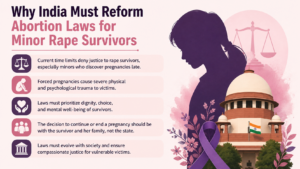
Why India Must Reform Abortion Laws for Minor Rape Survivors
- The Supreme Court has strongly urged the government to lift the time limit for abortion in rape cases, especially those involving minors, as the existing ones are too restrictive.
- Current legislation in the Medical Termination of Pregnancy (MTP) Act prohibits abortions after 20-24 weeks, unless under certain medical circumstances.
- The court noted that rape survivors, particularly minors, may discover or report pregnancies at an advanced stage, beyond the time limit.
- The judges noted that pregnancies forced on minors contravene their bodily autonomy and human rights.
- Judges noted the “agony and trauma” endured by victims, and said continuing these pregnancies can exacerbate trauma.
- It noted that laws need to be “organic” and responsive to social changes, particularly in sensitive areas such as rape.
- It also denounced rigid legal interpretations that fail to consider the specific circumstances of victims of sexual violence.
- The Supreme Court has recently allowed abortion after 30 weeks for minor rape victims, laying down significant precedents.
- The court emphasised that the decision to abort or continue a pregnancy should be left to the survivor and her family, not the state.
- The court dismissed the view that adoption must be an alternative option, and stressed the need for informed consent.
- The medical board cannot decide what the survivor should do with her pregnancy.
- The judgement is in line with the constitution’s guarantees of dignity, privacy and reproductive rights under Article 21.
- The court recommended the central government change the legislation to remove time limits on pregnancies resulting from rape.
- It also underscored the need for quicker medical and legal procedures to prevent delays in such sensitive matters.
- This could usher in improvements to existing abortion laws in India to be more survivor-friendly, experts say.
- The case has triggered national discussions on weighing the rights of the fetus against the rights of the survivor and her mental health.
- There has been a shift in court orders, allowing exceptions to the legal limit in rape cases.
- The Supreme Court’s approach assures that no underage girl should have to live with the lifelong effects of sexual violence.
- The proposed amendment may give vulnerable victims better access to safe and legal abortion.
- In all, the ruling is a step forward towards a more compassionate Indian law.
Conclusion
The Supreme Court’s advocacy to remove time limits on abortion for minor rape victims is an important step towards a more compassionate and rights-based justice framework in India. The court has acknowledged the special trauma and delays faced by the victim, and pointed to the need for legislative change. The abolition of rigid time limits would allow timely access to safe medical treatment, while preserving dignity, autonomy and well-being. As the debate unfolds, attention should be given to safeguarding victims and ensuring compassionate, practical and responsive justice for vulnerable populations facing challenges in society.