


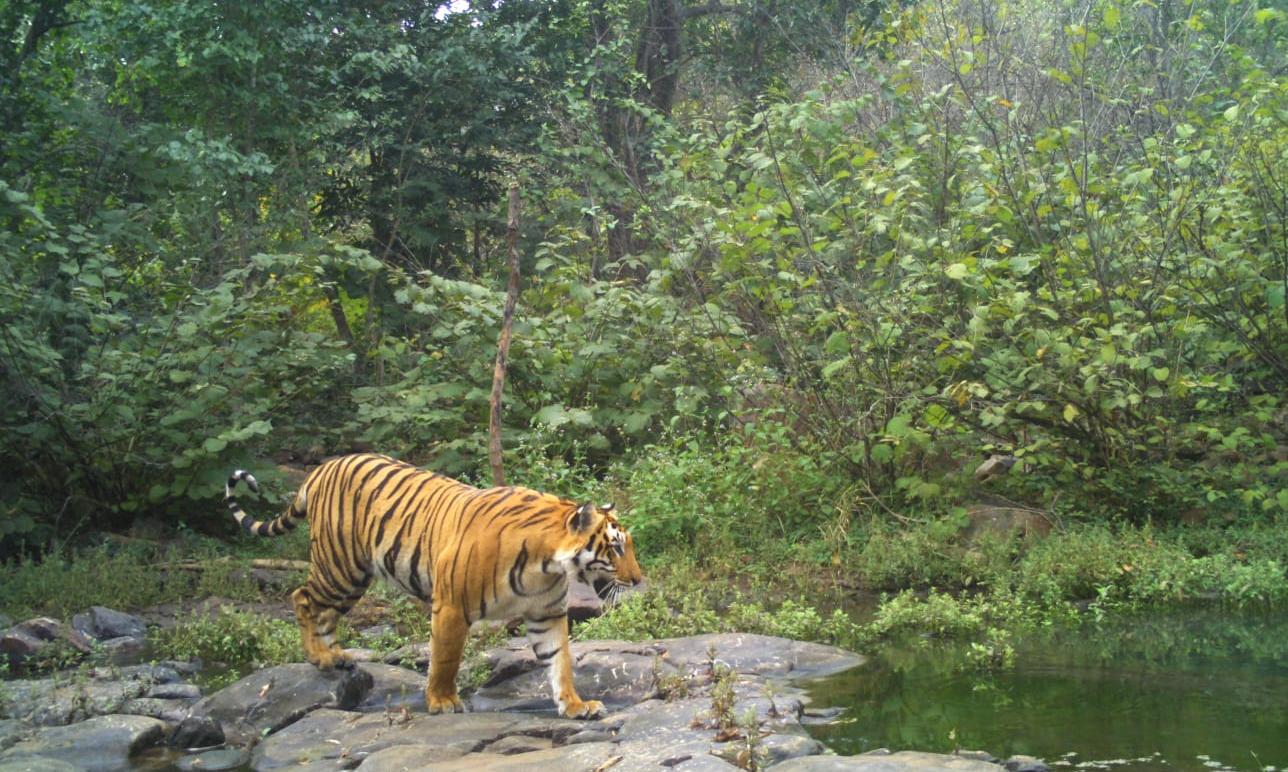
The "Tigers Outside Tiger Reserves" project is undergoing completion at the Ministry of Environment, Forest, and Climate Change (MoEFCC) as about 30% of the estimated 3,682 tigers reside in unnotified reserve areas. Under this initiative the department plans to check tiger populations outside protected areas while minimizing human-wildlife conflict and combating poaching and motivating local communities. A financial budget of Rs. 176.45 crore until 2026-27 supports Project Tiger funding through this project which will be deployed in 80 forest divisions across ten states.
Key Points
Need for monitoring Tiger's Outside reserve
-
A total of 30%of all Indian tigers live within non-reserve protected areas.
-
The thermal translocation of tigers into unprotected areas puts these animals at risk from both hunters and preventable animal-human confrontations.
-
The closer proximity of co-predators to human living areas elevates wildlife-related human conflicts.
Key Objectives of the Project
-
The establishment of an effective tiger management tracking system should take place for regions located beyond sanctuary boundaries.
-
Implement better anti-poaching protection systems while enhancing the management practices of habitats.
-
A program of awareness campaigns and community connection works to resolve conflicts between humans and tigers.
-
Establish methods to protect natural resources which welcome nearby population participation.
Implementation Strategy
-
The National Tiger Conservation Authority (NTCA) possesses oversight authority over implementing this project.
-
The project focuses its initiatives on the districts of Wayanad in Kerala, Chandrapur in Maharashtra and Pilibhit in Uttar Pradesh because these regions experience frequent conflict between humans and tigers.
-
During the first phase the project will start its operations in 80 forest divisions located across 10 states.
-
Project financing will be acquired through National Compensatory Afforestation Fund Management and Planning Authority (CAMPA).
-
The organization works together with Project Tiger to avoid double work on conservation programs.
Challenges and Concerns
-
Between 2020-2024 tiger-related fatalities killed 378 humans and most losses occurred in Maharashtra, Uttar Pradesh and Madhya Pradesh.
-
The compensation program for wildlife attack victims needs expansion through Rs. 70-80 crore as per parliamentary recommendations.
-
Two recent cases of wildlife poaching across Madhya Pradesh and Maharashtra demonstrate the importance of improving outside-reserve monitoring tasks.
India’s Current Tiger Population and Distribution
-
Estimated tiger population: 3,628 (as of 2025).
-
The country maintains 58 established tiger reserves throughout residential spaces which include the Shivalik Hills, Terai Plains and Central Indian Highlands, Eastern Ghats, Western Ghats, Northeastern Hills, Brahmaputra Plains and Sundarbans regions.
-
The regions of Central Indian Highlands together with Eastern Ghats contain the largest numbers of tigers.

About Tiger Reserve
-
Project Tiger and National Tiger Conservation Authority (NTCA) established the tiger reserves which need to follow protected area designations in India.
-
The present international count shows that India maintains 58 tiger reserves which occupy 2.3% of its total land area.
-
These reserves perform fundamental duties in preserving tigers because they maintain residence to nearly 70% of global tiger numbers.
Structure of Tiger Reserves:
-
Tiger reserves maintain two fundamental elements which consist of the Core Area where human activity is outlawed followed by the Buffer Area that allows controlled human presence.
-
The NTCA headquartered at the Ministry of Environment, Forests, and Climate Change controls all tiger reserves nationally.
Tiger Reserves in India:
-
India owns 58 tiger reserves as the government recently established the Madhav National Park in Madhya Pradesh.
-
Palamau Tiger Reserve gained its status as the inaugural tiger reserve of Jharkhand during 1973.
-
The biggest tiger reserve in India exists as Nagarjunsagar-Srisailam Tiger Reserve with 3,728 square kilometers spread throughout Andhra Pradesh.
-
Bor Tiger Reserve stands as the smallest of all the Indian reserves with 138 km² covering Maharashtra state.

Tiger Population in India:
-
The annual growth rate of Indian tigers reached 6% starting from 2006 yet the 2018-19 Tiger Census revealed 2967 tigers throughout the country.
-
The five distinguished tiger habitats in India are Shivalik Hills & Gangetic Plains and Central India & Eastern Ghats and Western Ghats and Northeastern Hills & Brahmaputra Plains and Sundarbans.
-
The Indian wildlife contains 15 species of wild cats but 9 species within this total are considered threatened.

National Tiger Conservation Authority (NTCA):
-
According to the Wildlife (Protection) Act of 1972 the authority received its establishment under amendments made in 2006.
-
Tiger conservation policies as well as scientific monitoring and funding reserve support are the primary tasks of this organization.
-
The Minister of Environment Forests and Climate Change chairs this authority which works under the provisions of Wildlife (Protection) Act of 1972.

Project Tiger:
-
The program started its work in 1973 for national animal conservation purposes.
-
Monitors 58 tiger reserves covering 2.21% of India's land.
-
This centrally sponsored scheme offers funding support for conservation projects throughout the country.

Tiger Density and Habitat Challenges:
-
Approximately all areas within Sundarbans now approach their maximum sustainable population of tigers.
-
The survival of tigers depends on three key factors: fragmentation of their territory along with declining prey numbers and conflicts between humans and wildlife.
-
Ecosystem management stands as an essential approach to support sustainable tiger population increases.
International Conservation Efforts:
-
Global Tiger Day (July 29th) raises awareness on tiger conservation.
-
The St. Petersburg Declaration (2010) established a commitment to double the worldwide tiger population during the time period of 2022.
-
The 13 Tiger Range Countries among them India promised to implement improved conservation initiatives.

Conclusion
The "Tigers Outside Tiger Reserves" project stands as a vital component for achieving national tiger conservation throughout all of India. This initiative will strengthen conservation efforts outside reserved areas because it addresses gaps in monitoring capabilities as well as reduces human-tiger conflicts and decreases cases of wildlife poaching. This project's success depends on proper implementation together with well-developed funding foundations and engaged community participation for maintaining long-term tiger survival throughout India's varied wilderness areas.