

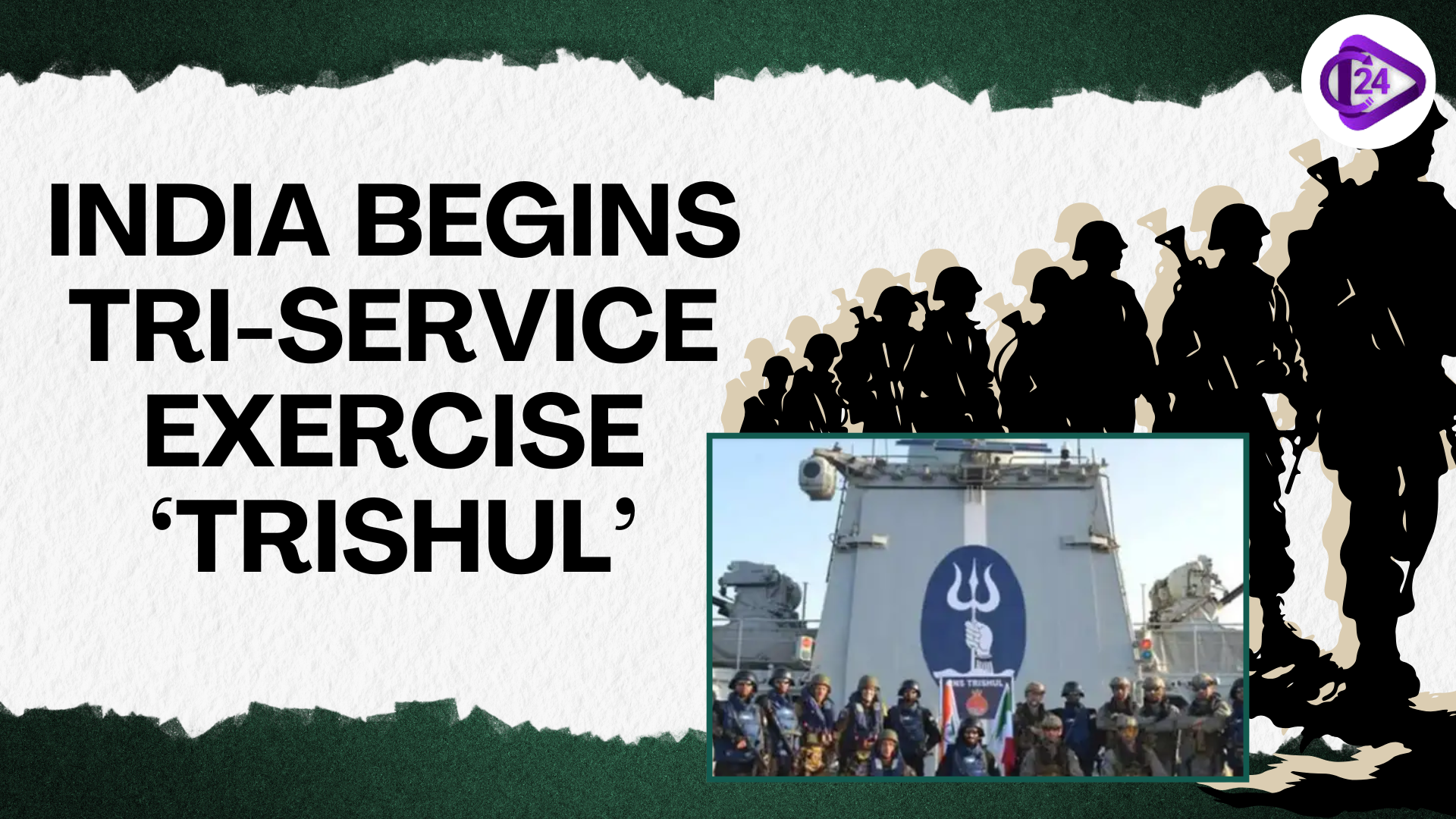
India launched Exercise Trishul, a large-scale tri-service military exercise involving the Indian Army, Indian Navy, and Indian Air Force, along the western front in November 2025. The exercise aims to strengthen joint operational capabilities, improve coordination among the three services, and enhance India’s defence preparedness in a changing security environment.
Ex Trishul focuses on integrated warfare, rapid response, and coordination across land, air, and maritime domains. It also provides an opportunity for the armed forces to evaluate their operational strategies and improve their ability to conduct coordinated missions in complex situations.
Objectives of Exercise Ex Trishul
The primary objective of Exercise Ex Trishul is to strengthen cooperation among India’s three armed services. Modern military operations require different branches of the armed forces to share information, coordinate resources, and respond collectively to emerging threats.
Improving Inter-Service Coordination
The exercise aims to improve interoperability between the Army, Navy, and Air Force. Joint planning and coordinated operations help ensure that all three services can work effectively during complex military missions.
Strengthening Combat Readiness
Ex Trishul provides an opportunity to assess operational preparedness, test strategies, and improve rapid-response capabilities. It also helps the armed forces identify areas where coordination and tactical planning can be improved.
Major Highlights and Military Assets
Exercise Ex Trishul involves activities across different operational environments, including desert areas, coastal regions, and the Sir Creek region. These areas present different geographical and strategic challenges, making coordinated military planning essential.
Role of the Indian Army
The Indian Army contributes ground-based operational capabilities, including main battle tanks, missile systems, and attack helicopters. These assets support ground manoeuvres and help strengthen the Army’s coordination with air and naval forces.
Contribution of the Indian Air Force
The Indian Air Force supports the exercise through fighter aircraft, drones, and airborne surveillance capabilities. Aircraft such as the Rafale and Su-30MKI can contribute to air operations, while surveillance systems help improve situational awareness and coordination.
Role of the Indian Navy
The Indian Navy contributes maritime capabilities through warships, including destroyers and frigates, along with other naval assets. Its participation supports coordination between maritime operations and activities conducted by the Army and Air Force.
Importance of Multi-Domain Warfare
Coordinated Land, Air, and Sea Operations
Modern warfare increasingly requires simultaneous coordination across multiple domains. Ex Trishul helps the three services practise joint planning and coordinated responses, enabling them to use their respective capabilities more effectively.
Use of Technology and Real-Time Information
Advanced surveillance, communication systems, and information-sharing capabilities play an important role in modern military exercises. Better access to operational information can help commanders make informed decisions and coordinate responses more efficiently.
Significance for India’s National Security
Exercise Ex Trishul reflects India’s focus on strengthening integrated defence preparedness along its western frontier. Joint exercises help assess the effectiveness of military planning and improve cooperation among different service branches.
The exercise also demonstrates the importance of regular training in preparing the armed forces for changing regional security challenges. Improved interoperability can support more coordinated responses during complex operational situations.
Conclusion
Exercise Ex Trishul is an important initiative aimed at enhancing coordination among the Indian Army, Navy, and Air Force. By focusing on joint operations, combat readiness, and multi-domain warfare, the exercise helps strengthen India’s defence preparedness along the western front. It also highlights the growing importance of integrated military capabilities in addressing modern security challenges.