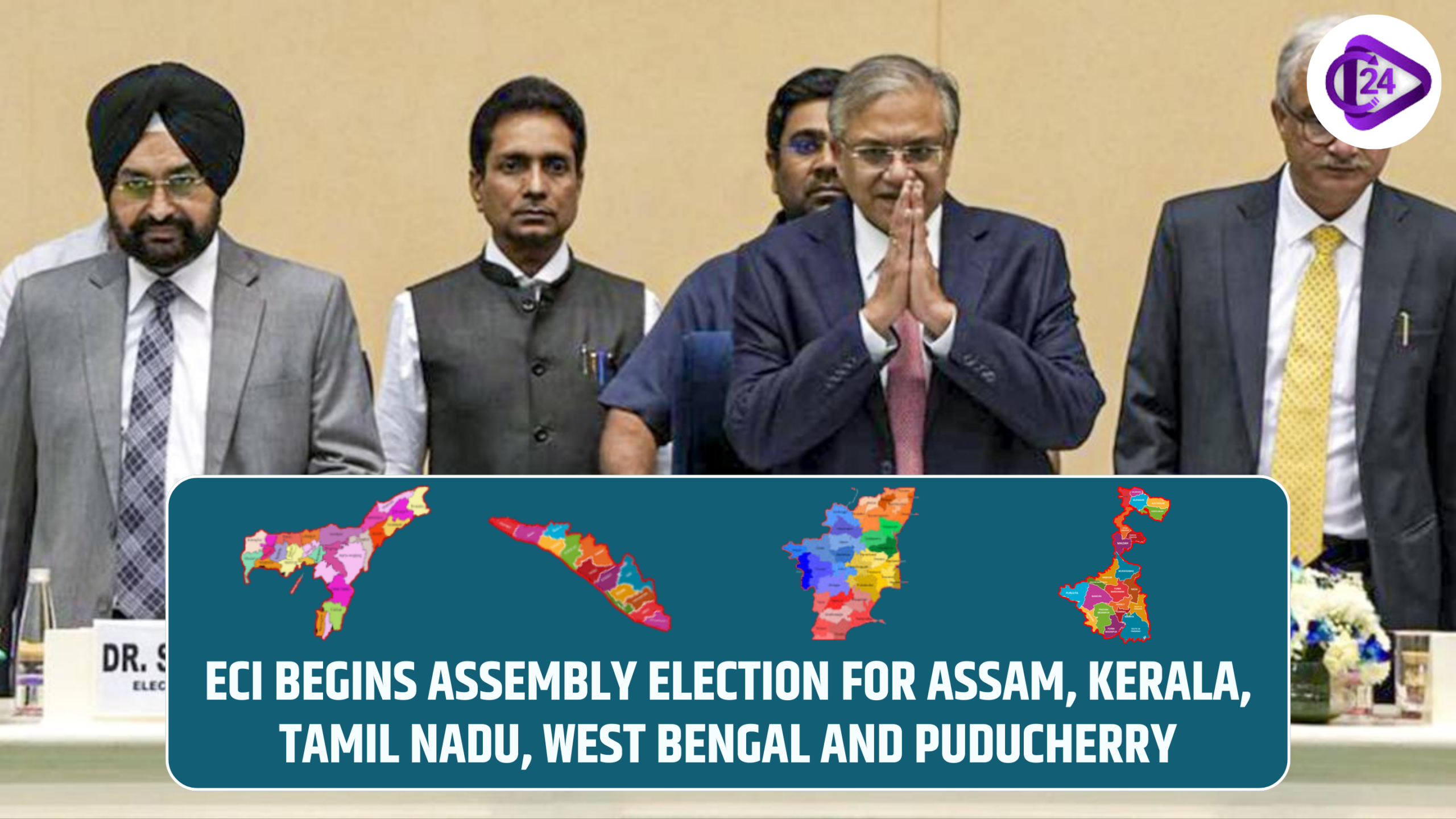
The Election Commission of India has begun the process for the Assembly Elections in several key regions including Assam, Kerala, Tamil Nadu, West Bengal, and the Union Territory of Puducherry. These elections are significant as they determine the formation of new state governments and shape regional political dynamics. The announcement of the election schedule marks the start of the democratic process, including candidate nominations, campaigning, and voting phases. Political parties and voters across these states are now preparing for the electoral process, which plays a crucial role in strengthening democratic governance in India.
Key Highlights of the Assembly Election Process
-
The election process is conducted by the Election Commission of India, which is responsible for ensuring free, fair, and transparent elections across the country.
-
Assembly elections will take place in five regions: Assam, Kerala, Tamil Nadu, West Bengal, and Puducherry, each with its own political landscape and electoral significance.
-
The election schedule includes important stages such as notification of elections, filing of nominations by candidates, scrutiny of nomination papers, withdrawal of candidatures, and the final voting date.
-
The elections will be conducted using Electronic Voting Machines (EVMs) along with Voter Verifiable Paper Audit Trail (VVPAT) systems to ensure transparency and voter confidence.
-
Security arrangements are strengthened during the election period, especially in sensitive constituencies, to maintain law and order and ensure peaceful voting.
-
Political parties will actively campaign across the states, presenting their manifestos and development agendas to attract voters.
-
The Model Code of Conduct comes into effect immediately after the announcement of the election schedule, regulating government announcements and campaign practices.
-
Voters play a crucial role in the democratic process by participating in the elections and choosing their representatives in the legislative assemblies.
-
The results of these elections will determine the formation of new state governments and influence regional and national political trends.
PYQs – Assembly Elections
| Exam | Year | Question | Answer |
|---|---|---|---|
| UPSC Prelims | 2017 | The Election Commission of India conducts elections to which of the following? (A) Lok Sabha (B) State Legislative Assemblies (C) President and Vice-President (D) All of the above | All of the above |
| SSC CGL | 2019 | The elections to the State Legislative Assembly are conducted by which authority? (A) State Government (B) Election Commission of India (C) Supreme Court (D) Parliament | Election Commission of India |
| SSC CHSL | 2018 | The normal term of a State Legislative Assembly in India is: (A) 4 years (B) 5 years (C) 6 years (D) 7 years | 5 years |
| RRB NTPC | 2019 | Which article of the Constitution deals with the duration of State Legislative Assemblies? (A) Article 170 (B) Article 172 (C) Article 356 (D) Article 368 | Article 172 |
| UPSC Prelims | 2014 | The minimum age required to contest an election to the State Legislative Assembly is: (A) 21 years (B) 25 years (C) 30 years (D) 35 years | 25 years |
| SSC GD | 2021 | Which body conducts elections to the State Legislative Assembly in India? (A) State Election Commission (B) Election Commission of India (C) Parliament (D) Supreme Court | Election Commission of India |
| State PCS (UPPCS) | 2016 | The maximum strength of a State Legislative Assembly can be: (A) 400 (B) 450 (C) 500 (D) 550 | 500 |
| SSC MTS | 2020 | Who can dissolve the State Legislative Assembly before the completion of its term? (A) Prime Minister (B) President (C) Governor (D) Speaker | Governor |
| RRB Group-D | 2018 | Which of the following represents the lower house of the State Legislature? (A) Legislative Council (B) Legislative Assembly (C) Rajya Sabha (D) Lok Sabha | Legislative Assembly |
| UPSC Prelims | 2019 | Which constitutional authority is responsible for superintendence, direction and control of elections to Parliament and State Legislatures? (A) President (B) Prime Minister (C) Election Commission of India (D) Supreme Court | Election Commission of India |
India’s Supreme Court Allows First-Ever Passive Euthanasia Death
Conclusion – ECI Begins Assembly Election for Four States
The beginning of the assembly election process marks an important phase in India’s democratic system. Conducted by the Election Commission of India, these elections allow citizens to choose their representatives and shape state governments. Transparent procedures, voter participation, and fair campaigning remain essential to ensure credible outcomes and strengthen democratic governance across the states involved.