


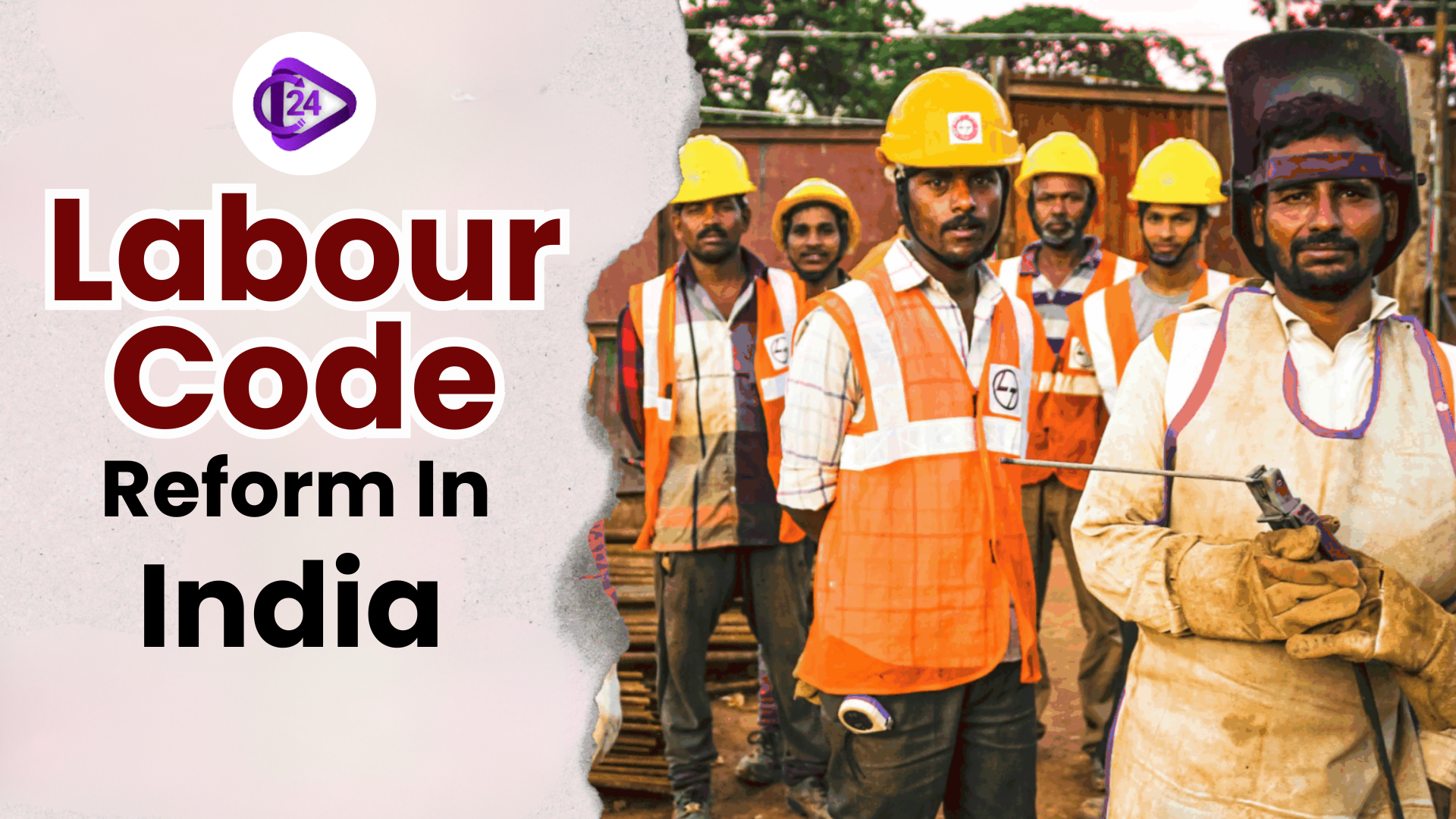
The Four Labour Codes in India mark a major transformation in the country’s labour law framework. The Government of India implemented four comprehensive labour codes on 21 November 2025, consolidating 29 existing Central labour laws into a simplified legal framework.
The reform aims to improve workers’ wages, strengthen social security, enhance workplace safety and simplify compliance requirements for employers. It also addresses changes in the modern employment market, including the growing number of gig workers, platform workers and fixed-term employees.
These reforms cover almost every major aspect of employment, from minimum wages and industrial disputes to employee benefits and occupational health and safety.
The four labour codes are designed to create a more organised, transparent and inclusive labour ecosystem. They seek to balance workers’ welfare with the needs of businesses and industries.
Let’s understand the four new labour codes, their important provisions, implementation date, benefits and significance for India.
What Are the Four Labour Codes in India?
The Four Labour Codes in India bring several existing labour laws under four major legislations. The objective is to reduce legal complexity, improve compliance and provide better protection to workers.
The four codes cover wages, industrial relations, social security and occupational safety.
Important Highlights of the Four Labour Codes
| Particulars | Details |
| Country | India |
| Reform | Four New Labour Codes |
| Total Existing Central Laws Consolidated | 29 |
| Implementation Date | 21 November 2025 |
| Total Labour Codes | 4 |
| Ministry | Ministry of Labour and Employment |
| Main Objective | Simplification of labour laws and improved worker welfare |
| Major Beneficiaries | Employees, organised and unorganised workers, gig workers and platform workers |
| Central Rules | Notified on 8 May 2026 |
| Constitutional Subject | Concurrent List |
The four codes were introduced to replace the fragmented labour law structure with a unified framework.
List of Four New Labour Codes in India
The four labour codes and their respective years are:
| No. | Name of Labour Code | Year | Main Focus |
| 1 | Code on Wages | 2019 | Minimum wages, payment of wages and bonus |
| 2 | Industrial Relations Code | 2020 | Trade unions and industrial disputes |
| 3 | Code on Social Security | 2020 | Social security and employee benefits |
| 4 | Occupational Safety, Health and Working Conditions Code (OSHWC) | 2020 | Workplace safety, health and working conditions |
Let’s examine each code in detail.
1. Code on Wages, 2019
The Code on Wages, 2019 aims to simplify wage-related regulations and provide a more uniform framework for employees across different industries.
It combines provisions from four earlier Central labour laws:
- Payment of Wages Act, 1936
- Minimum Wages Act, 1948
- Payment of Bonus Act, 1965
- Equal Remuneration Act, 1976
The main objective is to ensure fair wages, timely payment and equal remuneration.
Key Provisions of the Code on Wages
- Universal Minimum Wages
The code extends minimum wage protection to employees across different sectors. It also empowers the Central Government to fix a floor wage.
State governments cannot fix minimum wages below the applicable floor wage determined by the Central Government.
- Timely Payment of Wages
The code provides a legal framework for timely payment of wages and regulates wage deductions.
- Equal Remuneration
It prohibits discrimination in wages on the ground of gender for the same work or work of a similar nature.
- Standardised Wage Definition
The code introduces a common definition of wages to reduce differences in the interpretation of wage-related provisions across labour laws.
- Payment of Bonus
It consolidates provisions relating to statutory bonuses for eligible employees.
Benefits of the Code on Wages
- Better protection against unfair wage practices.
- Wider coverage of minimum wage provisions.
- Improved transparency in wage payments.
- Reduced complexity for employers.
- Stronger provisions for equal remuneration.
2. Industrial Relations Code, 2020
The Industrial Relations Code, 2020 focuses on improving relations between employers and employees.
It combines provisions from three earlier labour laws:
- Trade Unions Act, 1926
- Industrial Employment (Standing Orders) Act, 1946
- Industrial Disputes Act, 1947
The code aims to simplify industrial dispute resolution, establish clear rules for trade unions and improve the overall industrial environment.
Key Provisions of the Industrial Relations Code
- Recognition of Trade Unions
The code provides a framework for recognising negotiating unions and negotiating councils to represent workers in discussions with employers.
- Industrial Dispute Resolution
It simplifies the process of resolving industrial disputes through mechanisms such as conciliation and industrial tribunals.
- Fixed-Term Employment
The code recognises fixed-term employment and provides eligible fixed-term employees with benefits comparable to permanent employees doing similar work, subject to applicable provisions.
- Standing Orders
It provides a framework for standing orders that define employment conditions and workplace rules for covered industrial establishments.
- Reskilling Fund
The code provides for a worker reskilling fund for retrenched workers to support their transition into new employment opportunities.
Benefits of the Industrial Relations Code
- More structured employer-employee relationships.
- Simplified industrial dispute resolution.
- Clearer trade union recognition procedures.
- Better employment-related documentation.
- Support for workers affected by retrenchment.
3. Code on Social Security, 2020
The Code on Social Security, 2020 aims to expand social security protection and bring different employee welfare provisions under one legal framework.
It consolidates provisions from nine earlier Central labour laws, including legislation relating to provident funds, employee insurance, gratuity and maternity benefits.
One of its important features is the recognition of gig workers and platform workers within the social security framework.
Key Provisions of the Code on Social Security
- Social Security for Gig Workers
The code recognises gig workers and provides a framework for introducing social security schemes for them.
- Protection for Platform Workers
Platform workers, including people working through digital platforms and app-based services, are included within the social security framework.
- Provident Fund Benefits
The code provides a consolidated legal framework for provident fund-related provisions for eligible employees.
- Employees’ State Insurance
It provides for Employees’ State Insurance (ESI) benefits under the applicable conditions.
- Maternity Benefits
The code consolidates provisions relating to maternity benefits and protections for eligible women employees.
- Gratuity Benefits
Eligible fixed-term employees can receive gratuity after completing one year of service under the applicable provisions, instead of the general five-year requirement.
Benefits of the Code on Social Security
- Wider social security coverage.
- Recognition of gig and platform workers.
- Improved access to employee welfare schemes.
- Consolidated provisions for provident fund and insurance.
- Better protection for eligible fixed-term employees.
- Continued focus on maternity and retirement benefits.
Important: Recognition of gig and platform workers under the code does not mean every worker automatically receives every benefit. Actual benefits depend on the applicable schemes, eligibility conditions and notifications.
4. Occupational Safety, Health and Working Conditions Code, 2020
The Occupational Safety, Health and Working Conditions Code, commonly known as the OSHWC Code, focuses on improving workplace safety, employee health and working conditions.
It consolidates provisions from 13 earlier Central labour laws.
The code covers important areas such as workplace safety, working hours, leave, health examinations and the welfare of workers across different sectors.
Key Provisions of the OSHWC Code
- Workplace Safety Standards
The code provides for better safety standards in factories, mines, construction sites and other covered establishments.
- Annual Health Check-ups
It provides for free annual health examinations for eligible employees aged 40 years and above, as prescribed under the applicable rules.
- Appointment Letters
Employers are required to issue appointment letters to employees in covered establishments, helping improve transparency in employment relationships.
- Working Hours and Overtime
The code provides a framework for working hours, weekly rest and overtime payments, subject to applicable provisions.
- Employment of Women
It enables women to work in all establishments and during night shifts, subject to their consent and prescribed safety conditions.
- Protection of Contract Workers
The code includes provisions relating to contract labour, licensing and responsibilities of employers and contractors.
Benefits of the OSHWC Code
- Improved workplace health and safety.
- Better employment documentation.
- Health examination provisions for eligible workers.
- Improved protection for women employees.
- Clearer working condition requirements.
- Better regulation of contract labour.
Comparison of the Four Labour Codes
The following table provides a quick comparison of all four codes.
| Labour Code | Main Area | Earlier Laws Consolidated | Major Objective |
| Code on Wages, 2019 | Wages | 4 | Fair wages and timely payment |
| Industrial Relations Code, 2020 | Industrial Relations | 3 | Better employer-employee relations |
| Code on Social Security, 2020 | Social Security | 9 | Wider employee welfare coverage |
| OSHWC Code, 2020 | Safety and Working Conditions | 13 | Safer and healthier workplaces |
| Total | 29 | Simplified labour law framework |
Major Benefits of the Four Labour Codes in India
The implementation of the four labour codes is expected to bring changes to India’s employment and industrial environment.
Some of the important benefits are explained below.
1. Simplification of Labour Laws
Earlier, employers had to comply with several different labour laws. Consolidating 29 Central labour laws into four codes aims to reduce legal complexity and make compliance more systematic.
2. Better Protection for Workers
The new framework includes provisions relating to wages, social security, workplace safety and employment conditions.
3. Social Security for Gig and Platform Workers
The recognition of gig and platform workers is an important development because employment patterns are changing with the growth of digital platforms.
4. Improved Workplace Safety
The OSHWC Code strengthens the legal framework for workplace health, safety and employee welfare.
5. Gender Equality
The labour codes include provisions relating to equal remuneration and employment opportunities for women, including night shifts subject to prescribed safeguards.
6. Improved Business Compliance
The consolidation of multiple laws aims to simplify registration, licensing, returns and other compliance-related processes.
7. Support for Industrial Growth
A more structured labour law framework can help improve transparency, employment practices and industrial relations.
Implementation of Four Labour Codes: Important Dates
Understanding the timeline is important for competitive examinations.
| Event | Date |
| Code on Wages passed | 2019 |
| Three other Labour Codes passed | 2020 |
| Four Labour Codes came into effect | 21 November 2025 |
| Central Rules notified | 8 May 2026 |
The Central Government brought the codes into effect on 21 November 2025. The Central Rules were subsequently notified on 8 May 2026.
Since labour is included in the Concurrent List of the Indian Constitution, both the Central and State Governments have responsibilities in this area. States and Union Territories also need to frame and notify their respective rules for effective implementation within their jurisdiction.
Therefore, the commencement of the codes and the practical implementation of every provision should not be treated as exactly the same thing.
Significance of the Four Labour Codes for the Indian Economy
The four labour codes are important not only for employees but also for India’s economic development.
A modern economy requires a labour framework that can respond to traditional employment as well as emerging forms of work.
The reforms are significant in the following ways:
- Formalisation of employment: Appointment letters and standardised employment provisions can improve employment transparency.
- Worker welfare: Wage protection and social security provisions strengthen the legal framework for employee welfare.
- Industrial development: Simplified compliance can help businesses manage labour-related requirements.
- Changing employment patterns: Recognition of gig and platform workers addresses developments in the digital economy.
- Gender inclusion: Provisions relating to equal remuneration and women’s employment support more inclusive workplaces.
- International alignment: The reforms aim to modernise India’s labour regulations in line with changing global employment practices.
Important Facts for UPSC, RAS, SSC and Other Competitive Exams
The four labour codes are an important topic for General Awareness, Indian Economy and Current Affairs.
Remember the following facts:
- The four labour codes consolidate 29 existing Central labour laws.
- The Code on Wages was introduced in 2019.
- The other three labour codes were introduced in 2020.
- All four codes came into effect on 21 November 2025.
- The Code on Wages consolidates four earlier laws.
- The Industrial Relations Code consolidates three earlier laws.
- The Code on Social Security consolidates nine earlier laws.
- The OSHWC Code consolidates 13 earlier laws.
- The Code on Social Security recognises gig and platform workers.
- The OSHWC Code contains provisions relating to workplace safety and health.
- The Ministry of Labour and Employment is responsible for labour-related policy at the Central level.
- Labour is included in the Concurrent List of the Indian Constitution.
- The Central Rules under the four codes were notified on 8 May 2026.
Conclusion
The implementation of the Four Labour Codes in India represents a major reform in the country’s labour law framework. By consolidating 29 existing Central labour laws into four comprehensive codes, the government aims to simplify compliance, strengthen worker protection and modernise employment regulations.
The four codes address important areas such as minimum wages, industrial relations, social security and occupational safety. Their provisions also recognise the changing nature of employment, particularly the growth of gig and platform-based work.
However, effective implementation requires coordination between the Central and State Governments, employers and workers. Overall, the reforms provide a new legal framework for building a more transparent, inclusive and future-ready labour ecosystem in India.