


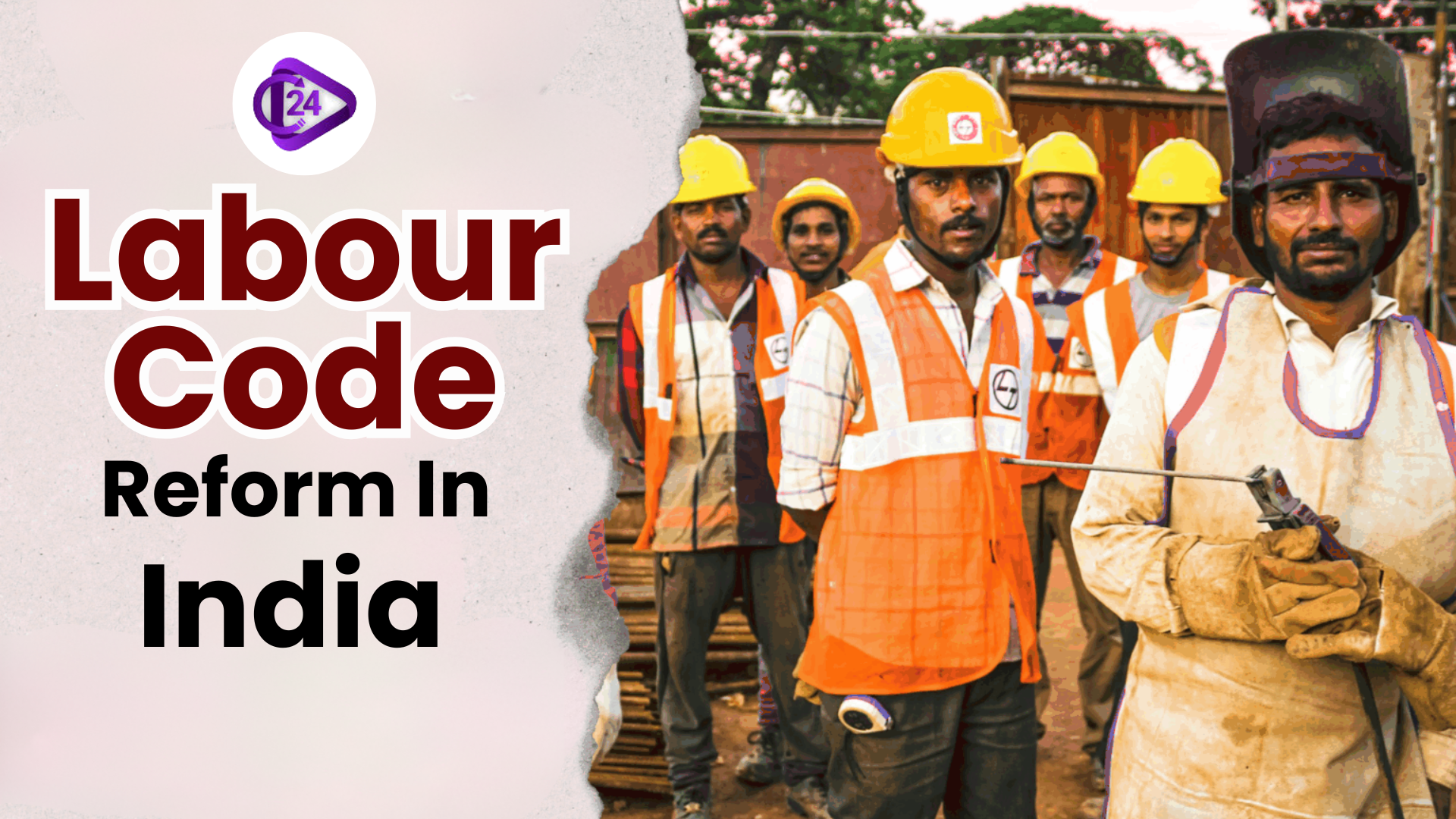
The Centre has made a landmark move by adopting all four labour codes, replacing 29 outdated labour laws,
marking one of the most significant labour reforms in Indian history. These comprehensive codes cover wages, industrial
relations, social security, and occupational safety to modernize the country’s labour policies and make it easier for
businesses to comply. The reform improves worker protection, extends coverage to gig and platform workers, and raises
safety standards across industries. This unified framework will help India develop a more transparent, efficient, and
future-ready labour ecosystem aligned with global best practices.
Highlights of the New Four Labour Codes
- The Code on Wages, 2019 — establishes a national floor wage, ensures timely payment of wages, and
standardizes appointment letters for employees. - The Industrial Relations Code, 2020 — simplifies dispute resolution, provides for industrial tribunals,
and formalizes processes for unions and negotiating councils. - The Code on Social Security, 2020 — extends social security benefits to gig workers, platform workers,
fixed-term employees, and workers in the unorganised sector. - The Occupational Safety, Health and Working Conditions (OSHWC) Code, 2020 — raises workplace safety
standards, requires periodic health examinations for older employees, and allows more flexible work arrangements. - Other benefits include simplified registration systems, lower compliance costs, gender-neutral policies, and improved
labour transparency.
Conclusion
Implementation of the Four Labour Codes marks a major step in transforming India’s economic and social framework. The reform
strengthens worker protection while simplifying compliance with laws that were introduced decades ago. These changes help
build a transparent, effective, and forward-looking labour ecosystem that supports sustainable development and better
employment practices.