

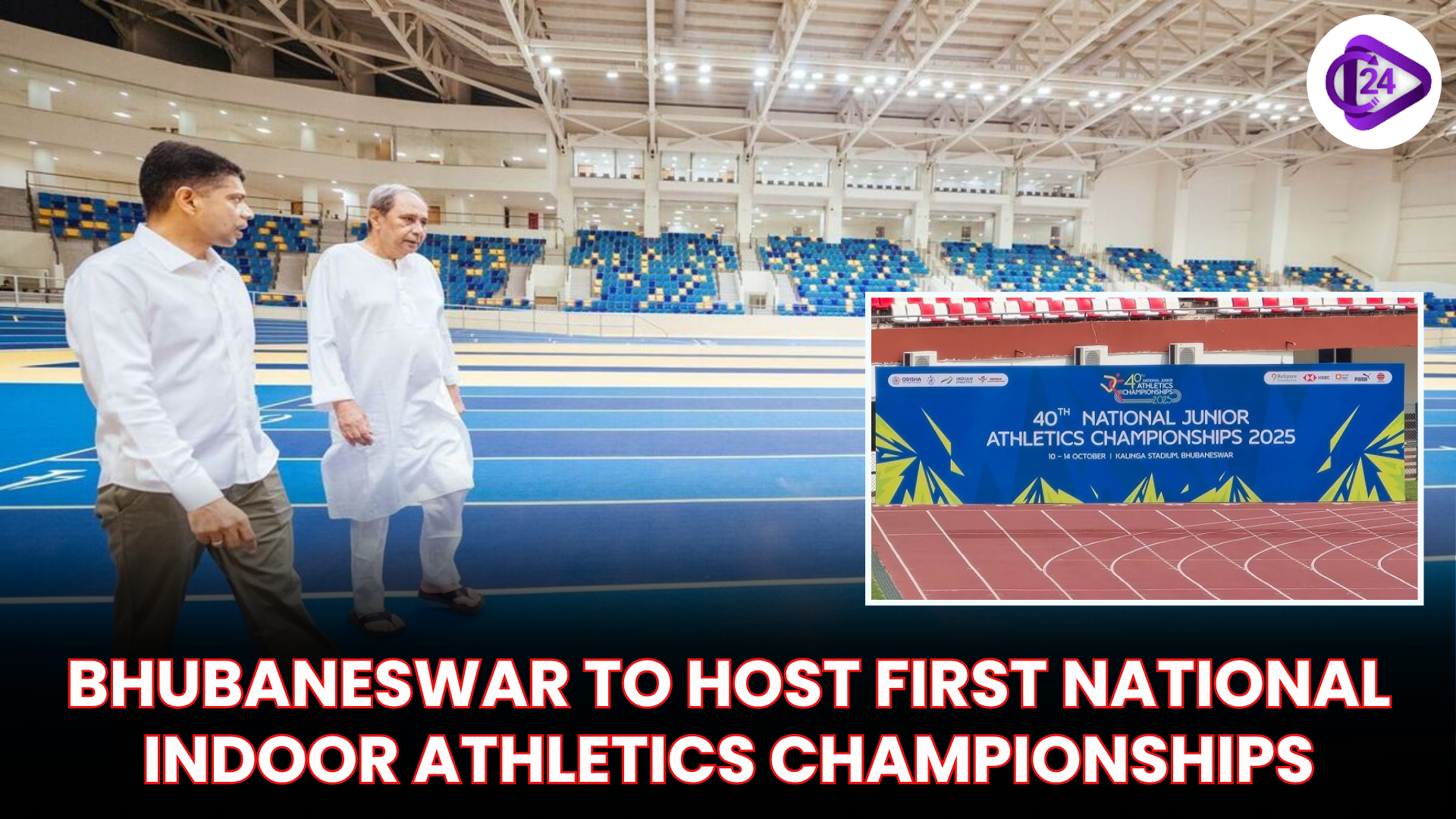
Indoor Athletics Championships: India marked an important milestone in its sporting journey with the first National Indoor Athletics Championships, held on 24 and 25 March 2026 at the Kalinga Stadium in Bhubaneswar, Odisha. Organized under the Athletics Federation of India (AFI), the two-day competition introduced a new platform for Indian track and field athletes to compete in an indoor setting.
The event brought together senior and under-20 athletes and gave them an opportunity to experience a format that is widely used in international athletics. It also highlighted the growing importance of modern sports infrastructure in India, particularly facilities that allow athletes to train and compete throughout the year.
The inaugural National Indoor Athletics Championships 2026 was more than a new competition on the domestic calendar. It represented an opportunity for athletes to improve their technical skills, test their speed and strength, and gain experience in a specialized indoor environment.
National Indoor Athletics Championships 2026: Key Highlights
Here are the important facts about the championship:
- Event: 1st National Indoor Athletics Championships
- Dates: 24–25 March 2026
- Venue: Kalinga Stadium, Bhubaneswar, Odisha
- Organizing body: Athletics Federation of India (AFI)
- Competition format: Two-day indoor track and field competition
- Categories: Senior and Under-20
- Track facility: 200-meter indoor athletics track
- Main objective: To expand competitive opportunities and strengthen India’s indoor athletics program
The Athletics Federation of India announced the inaugural championship as part of its 2026 domestic athletics calendar. The competition provided a dedicated platform for athletes to experience indoor events alongside the traditional outdoor season.
Why Were the First National Indoor Athletics Championships Important?
Most athletics competitions in India take place on outdoor tracks. Indoor athletics offers a different competitive environment, with a shorter track and specialised arrangements for sprinting, jumping and throwing events.
The introduction of the National Indoor Athletics Championships gives Indian athletes more opportunities to develop skills that are important for both domestic and international competition.
Indoor events can help athletes work on acceleration, race positioning, technique and consistency. Shorter sprint races demand a strong start and quick reactions, while field events require precise timing, coordination and control.
The championship also gives coaches a useful opportunity to assess athletes early in the competitive season. Performances in indoor competitions can help them identify areas for improvement before major outdoor events later in the year.
For younger athletes, competing alongside experienced senior participants can provide valuable exposure to professional competition standards and event management.
Kalinga Stadium: The Venue for India’s First Indoor Athletics Championship
Bhubaneswar has developed a strong reputation as a sporting destination, and Kalinga Stadium is an important part of that development.
The stadium complex includes a specialised indoor athletics facility designed for track and field competitions. According to the Odisha government’s Sports and Youth Services Department, the indoor centre features a 200-metre synthetic track, an additional running track described as 80m+20m, and dedicated areas for long jump, triple jump, pole vault and shot put. The venue has seating for approximately 1,700 spectators and has received Category 1 certification from World Athletics.
These facilities allow athletes to train and compete in a more controlled environment, reducing their dependence on outdoor weather conditions.
For the inaugural National Indoor Athletics Championships 2026, the venue provided a suitable setting for sprinting, middle-distance running, hurdles and field events. It also demonstrated how specialised infrastructure can support the development of athletics beyond conventional outdoor competitions.
Which Events Were Included in the Championship?
The competition programme covered a range of track and field disciplines for senior and Under-20 athletes. The official Athletics Federation of India event page lists events for both men and women, with the exact programme varying by category.
Track Events
Track competitions included:
- 60-metre sprint
- 400-metre race
- 800-metre race
- 1,500-metre race
- 3,000-metre race
- 60-metre hurdles
Indoor sprinting is particularly demanding because athletes have less distance to build up speed. The 60-metre race places considerable emphasis on reaction time, acceleration and running technique.
The 400-metre event tests speed endurance, while the 800-metre, 1,500-metre and 3,000-metre races require a combination of pace control, stamina and tactical decision-making.
Field Events
The championship also included several field events:
- High jump
- Long jump
- Triple jump
- Pole vault
- Shot put
These events require a combination of strength, technique, balance and coordination. Indoor facilities also provide an opportunity for athletes to practise and compete in specialised areas built for individual disciplines.
Athletes and Participation
The championship attracted interest from athletes across different age groups and sporting backgrounds. In its pre-event announcement, the Athletics Federation of India reported 278 entries, including 97 female athletes. The official results page subsequently listed 276 athletes for the competition.
The field included both developing competitors and experienced athletes. Odisha sprinter Animesh Kujur was among those expected to compete in the men’s 60-metre event, while Tamil Nadu jumper Praveen Chithravel was set to participate in the men’s long jump.
The opening day’s programme included the men’s 3,000-metre race as the first medal event. The championship then continued across two days, with track and field events scheduled for the senior and Under-20 categories.
The participation of athletes from different regions helped make the inaugural meet an important addition to India’s domestic athletics calendar.
How Indoor Athletics Can Help Indian Athletes
The introduction of a national indoor championship can benefit athletes in several ways.
- Better competitive exposure: Athletes can experience a different format and learn how to adjust their race strategies and techniques.
- Improved sprint performance: Short indoor sprints place a strong emphasis on the starting phase, acceleration and efficient running mechanics.
- More opportunities for young athletes: Under-20 events provide a platform for emerging competitors to gain experience and measure their progress.
- All-weather training and competition: Indoor facilities can help athletes continue training when outdoor conditions are difficult.
- Stronger preparation for major competitions: Indoor meets can form part of a broader training plan, helping coaches assess performance before important outdoor events.
Indoor competitions do not replace outdoor athletics. Instead, they add another opportunity for athletes to develop their abilities and maintain a more varied competition schedule.
Role of the Athletics Federation of India
The Athletics Federation of India is the national governing body responsible for the development and administration of athletics in the country. It organises national competitions and works to provide athletes with opportunities to compete across different age groups and disciplines.
By including the National Indoor Athletics Championships 2026 in its domestic calendar, the federation expanded the range of competitive opportunities available to Indian athletes.
A structured competition calendar is important because athletes need regular opportunities to test their fitness, evaluate their performance and prepare for higher-level events.
The championship also forms part of a wider effort to develop athletics through improved facilities, regular competition and greater exposure for emerging talent.
Significance for Indian Sports and Current Affairs
The inaugural championship is relevant to sports current affairs because it combines sports administration, infrastructure development and athlete preparation.
For Odisha, hosting the competition strengthened Bhubaneswar’s profile as a venue for major athletics events. For India, the championship added a new format to the national athletics calendar and gave athletes access to a specialised indoor competition environment.
The event is also relevant for students preparing for government examinations and sports-related general knowledge tests. Questions may focus on the venue, dates, organising body, event format and the importance of indoor athletics.
Students should remember that the championship took place in March 2026, rather than treating it as an upcoming event.
Conclusion – Indoor Athletics Championships
The first National Indoor Athletics Championships marked a new chapter in Indian athletics when it was held at Kalinga Stadium in Bhubaneswar on 24–25 March 2026. With senior and Under-20 competitions across track and field disciplines, the event provided athletes with a new platform to test their skills and gain competitive experience.
The championship also highlighted the importance of specialised sports infrastructure and a well-planned national competition calendar. As India continues to develop its athletics ecosystem, indoor competitions can play a useful role in athlete preparation, technical development and the discovery of emerging talent.
For current affairs preparation, the key facts to remember are the inaugural edition, the March 2026 dates, Kalinga Stadium in Bhubaneswar, and the role of the Athletics Federation of India.