

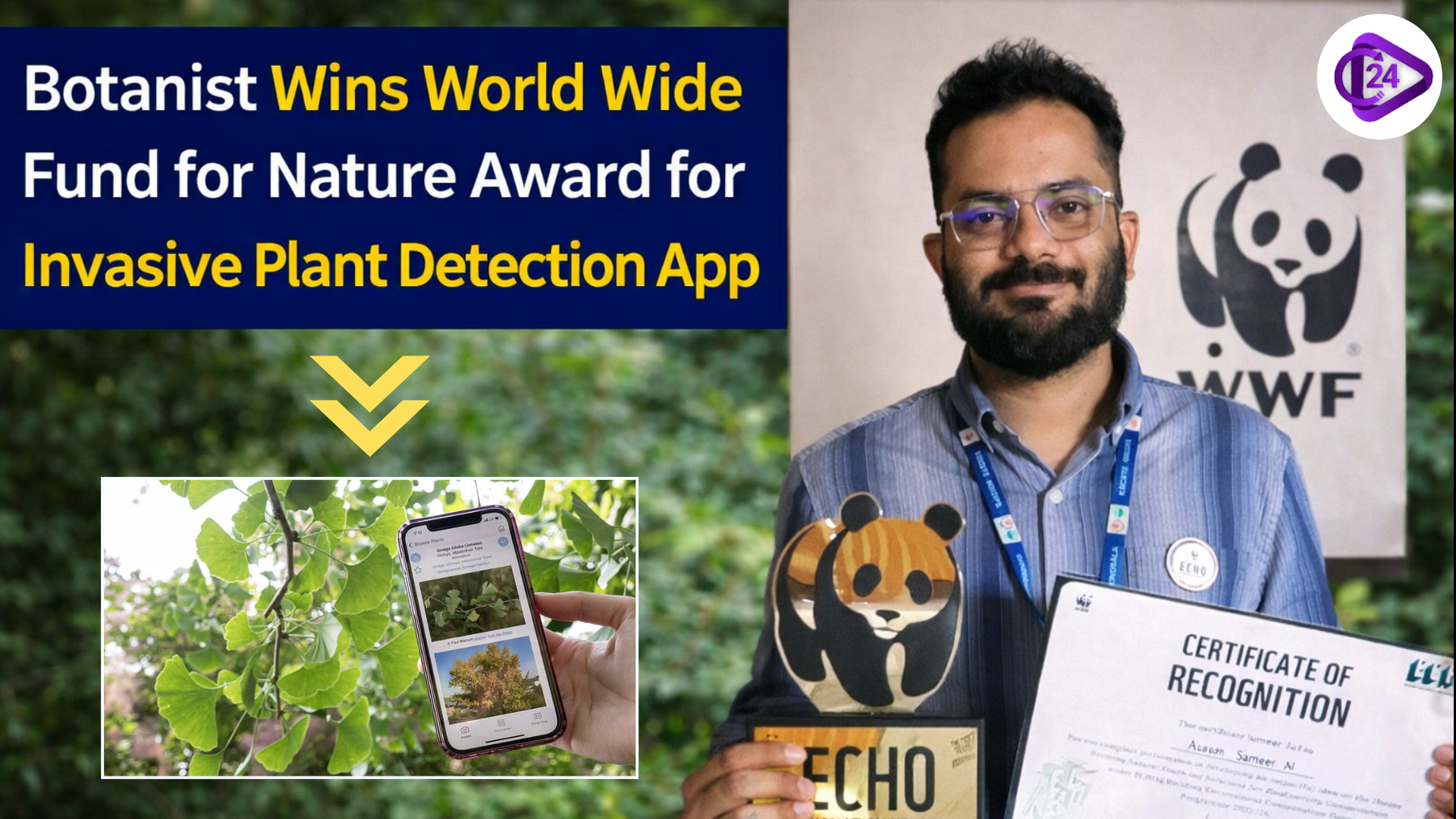
One botanist has even been awarded a prize by the World Wide Fund for Nature for creating an innovative application that can identify invasive plants. The artificial intelligence-based app can be used to detect dangerous plant species which pose a risk to biodiversity and ecosystems. These technological measures would prove very important in contemporary conservation activities, where early detection is important in managing ecological destruction. This is emphasised as a way of showing the increasing essentiality of integrating science and technology to solve environmental issues, as well as contributing to the preservation of the sustainable biosphere of biodiversity and conservation efforts in the world.
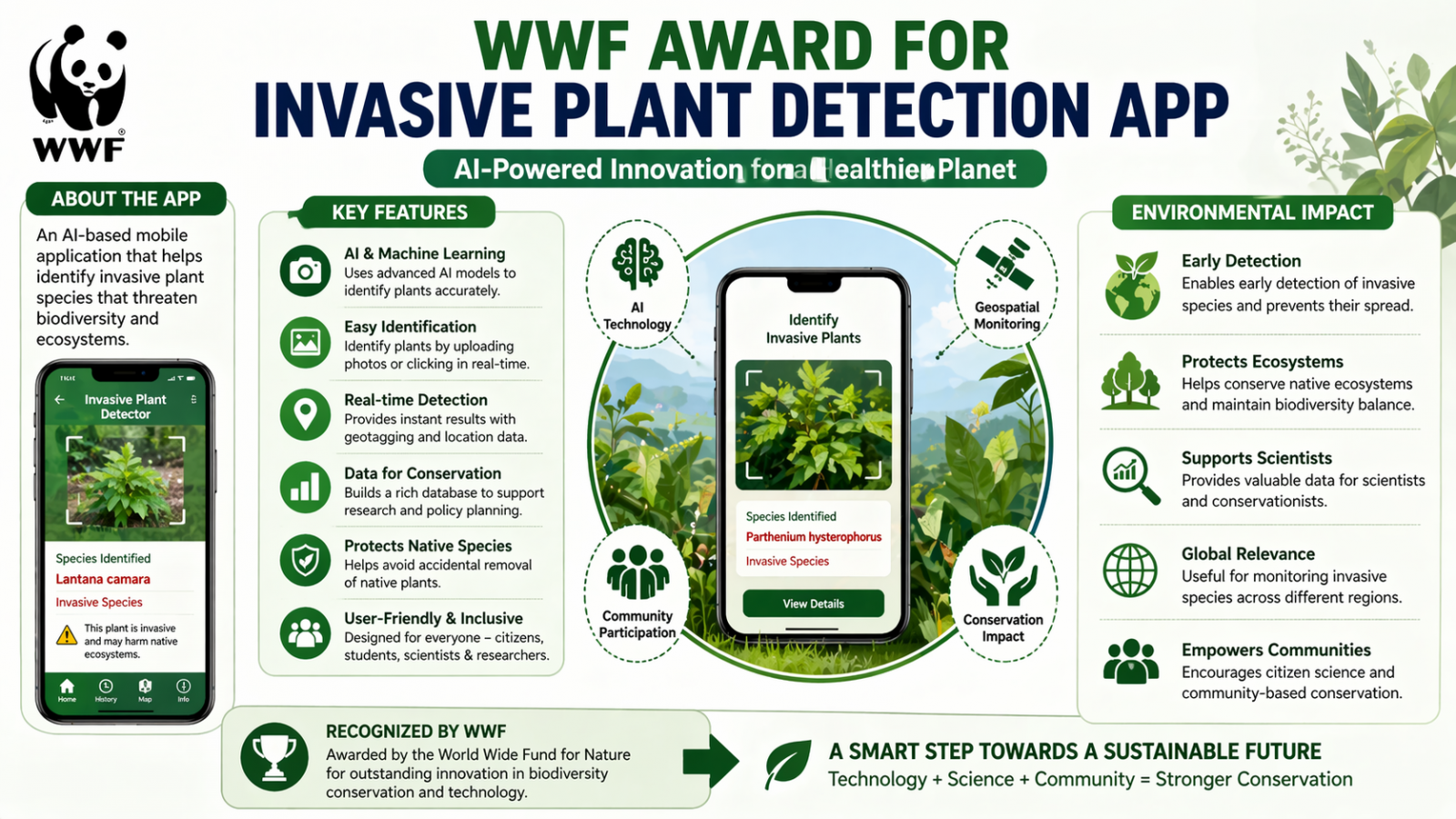
WWF Award for Invasive Plant Detection App: Key Environmental Impact
-
The World Wide Fund for Nature awarded it the innovation in biodiversity conservation.
-
The application is aimed at identifying intrusive plant species, which pose a threat to native ecosystems and biodiversity.
-
It follows the Artificial Intelligence (AI) and machine learning models that identify plants correctly.
-
The technology will enable users to recognise the plants through a simple upload or by clicking on images.
-
The app is designed to offer real-time detection and geospatial monitoring of invasive species.
-
It aids in conservation by aiding scientists in monitoring the invasiveness of plants in various areas.
-
The instrument helps in the establishment of an informative data-based biodiversity database for research and policy planning.
-
It will assist in avoiding the unintentional elimination of native species by eradication efforts.
-
The app is user-friendly, and it allows citizens, students, and researchers to participate.
-
It leads to community-based surveillance and citizen science efforts.
-
The app is multilingual, which enhances accessibility for the local people.
-
It details almost 100 invasive plants, increasing ecological awareness.
-
The project is in line with sustainable development and international conservation of biodiversity.
-
It emphasises how digital tools can contribute to environmental protection and climate action.
-
These kinds of innovations enhance the cooperation between environmental organisations, the government, and scientists.
What is World Wildlife Fund and How Does it Work?
-
WWF, World Wide Fund, is a global non-government organization, which deals with the protection of the environment.
-
It was formed in 1961 to safeguard wildlife and natural places.
-
Its base is in Gland, Switzerland.
-
Global conservation activities enable WWF to operate in 100 or more countries.
-
Its primary objective is to preserve biodiversity and decrease environmental degradation.
-
It works with governments, businesses and the local communities.
-
WWF finances and encourages the projects based on climate change, forests, oceans and wildlife protection.
-
It applies science, technologies and policy making to practice conservation policies.
-
The organisation encourages natural resources to be used sustainably.
-
It is currently one of the biggest environmental organisations in the world.
Australia Appoints Lt Gen. Susan Coyle
Conclusion – Indian Botanist Wins WWF Award for Invasive Plant Detection App
The identification of an Indian botanist by the World Wide Fund for Nature underscores the increasing contribution of technological advancement to the conservation of the environment. The invasive plant detecting application shows how new technologies can be used to resolve important ecological problems such as biodiversity loss and habitat destruction. Such tools provide scientists, policymakers, and citizens with the power to act in time by making it possible to identify and monitor the situation early. The success is not only creating attention to Indian research throughout the world, but also motivates the further incorporation of AI in conservation. On the whole, it is an important step towards sustainable management of the ecosystem and biodiversity conservation for future generations.