


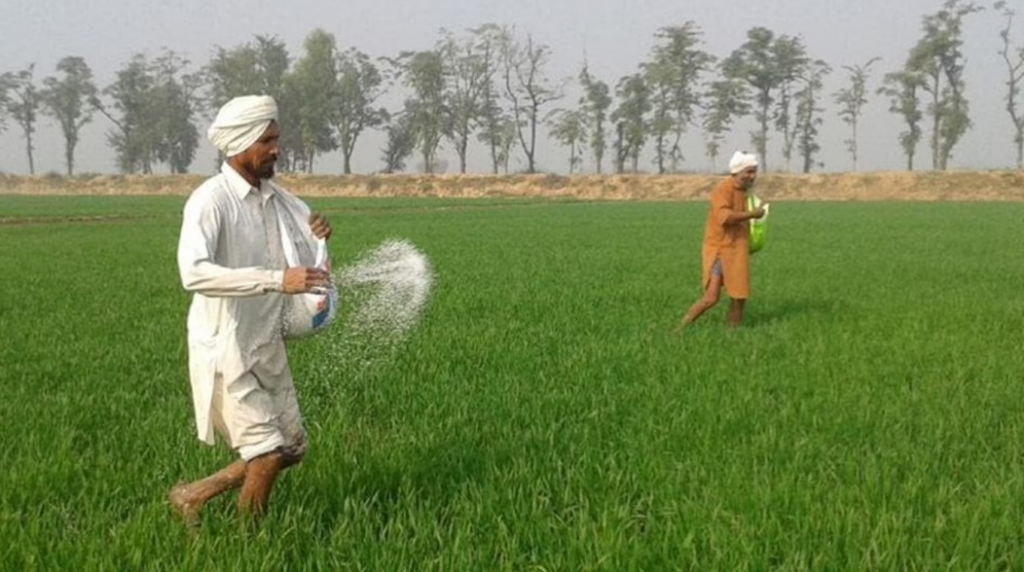
There has been significant progress in India’s urea industry, especially in the capacity creation which has a positive implication for the agenda of Atmanirbharta in the fertilizer sector. However, challenges like scarcity of di-ammonium phosphate (DAP) and overall poor investment in factory-related sub-sectors, particularly the manufacturing industry and the urea industry have recorded some progress in efforts to cut on the importation list. This has made the recent efforts to boost domestic production through greenfield plants to achieve the target of achieving self-sufficiency in urea production. However, there is still a controversy on whether India should go ahead with the production of urea domestically or import the commodity to meet the increasing demand.
Current Scenario of Urea Industry
-
Increase in Domestic Urea Production:
-
Domestic production of urea in the Indian market has risen rapidly over the last decade.
-
It has increased from 22 million tonnes in 2011-12 to 31.4 million tonnes in 2023-24.
-
-
Reduction in Dependency on Urea Imports:
-
During the period, domestic production of urea has improved thus increasing the production of the product within the country and decreasing import dependency.
-
Urea imports were reduced from 7.8 metric tonnes in 2022-23 to 7 metric tonnes in 2023-24.
-
-
Significant Improvement in Import Reduction:
-
India’s urea import reached its highest level of over 9.8 metric tonnes in the year 2020-21.
-
Urea imports likewise have reduced to 31.7% in the current fiscal year from the previous year indicating better production within the country.
-
Advantages of Greenfield Projects in the Urea Industry
Some of the green field projects that have been helpful in the enhancement of urea production facilities in India which include many of these projects started in FY 2019 and later and have significantly helped diversify import dependence for urea.
-
Increased Production Capacity:
-
Six new plants have been set up by entities such as Hindustan Urvarak & Rasayan Ltd (HURL), Chambal Fertilisers & Chemicals, Matix Fertilisers & Chemicals, and Ramagundam Fertilizers & Chemicals Ltd (RFCL).
-
These units have a production capacity of 1.27 metric tonnes each which will help increase domestic capacity substantially.
-
-
Climate-friendly and Energy-efficient:
-
These plants use natural gas as a somewhat cleaner burning fuel and these plants operate with high efficiency in terms of energy. Today’s units can produce one tonne of urea for 5 GCal, while the previous units needed between 5.5-6.5 GCal to achieve that.
-
It makes the new plants environmentally sustainable and energy efficient as the company seeks to achieve the sustainability goals set in India.
-
-
Strategic Location:
-
These new plants are located in areas that are in the Green Revolution zones such as eastern Uttar Pradesh, West Bengal, Bihar, Jharkhand, and Telangana. This guarantees that urea is manufactured near the outlets to cut transportation costs to Bosnia and put it within the reach of crop growers.
-
-
Indigenous Feedstock:
-
A new plant is coming up in Talcher in the Odisha state to utilize coal feedstock from the Talcher mines. This plant will be unique from others that employ natural gas, it will have a diversified feedstock strategy.
-
Make vs. buy debate
Indian domestic production of urea and ammonium sulfate is increasing but continues to raise the question as to whether it would be cheaper to make urea or to purchase it from another company.
Arguments Supporting “Buy” (Import):
-
Investment Costs: The establishment of new plants involves an investment of approximately ₹61,575 crore.
-
Price Disparity: The imported urea costs between $370 to $403 per tone, while home-produced urea from greenfield plants costs $493 per tone; this makes imported urea seem cheaper.
Arguments Supporting “Make” (Domestic Production):
-
Transportation Costs: This is because the transportation of imported urea is expensive. Urea has to be unloaded at the ports and then transported to the consumption points located mostly in the northern and eastern parts of India for which extra charges of $ 30- $ 35 per tonne are involved.
-
Narrowing Price Gap: Given this, when the levies on domestic feedstock are subtracted the cost of producing urea domestically comes close to $427 per tonne effectively closing the price differential between buying and making.
-
Economic Benefits: Making products at home creates jobs and helps the Make-in-India plan. This boosts the economic growth and development of the nation.
-
Balanced Approach: This practice might concentrate on giving a push to homegrown production in the north and eastern parts of India. At the same time, it could look into bringing in more goods from outside for the southern peninsula. To make the industry work better, we could close down older plants that waste energy and cut back on urea use.
Conclusion
India's urea industry has made great progress in becoming self-sufficient. It has built new plants and worked hard to cut down on imports. People still argue about whether to make urea at home or buy it from other countries. The solution is to make more urea in India with a little dependence on imports from other countries. It may help indigenous production as well as farming in India. Also, as India works towards its Panchamrit climate goals, these new plants help in two ways: by boosting production and by protecting the environment.