


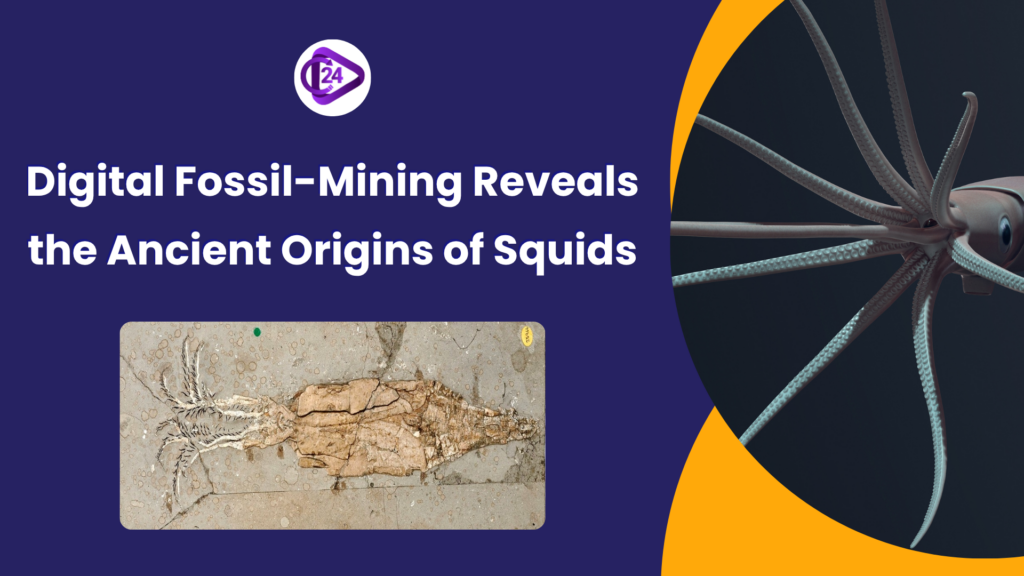
Digital fossil-mining of a new study revealed valuable data on the evolutionary history of squids, which is hard to trace since it has a soft body. Through non destructive scanning of rocks through complex technology scientists managed to extract small beaks of squid using a scan and were able to retrieve them and extract the beaks of the ancient squid in Cretaceous era rocks that were millions of years old. This discovery can shed light on the fact that squidelines existing far in a deeper sea and coast were in existence much earlier than what the world had thought before.
Context
The evolutionary history of Squid had been unveiled by a computerized fossil-mining process which discovers fossils subsumed within the rocks. The paper indicates that squids, which include the contemporary deep-sea and near-shore squids, lived 100 million years ago as against what was predicted, which is 30 million years earlier.
Key Points
-
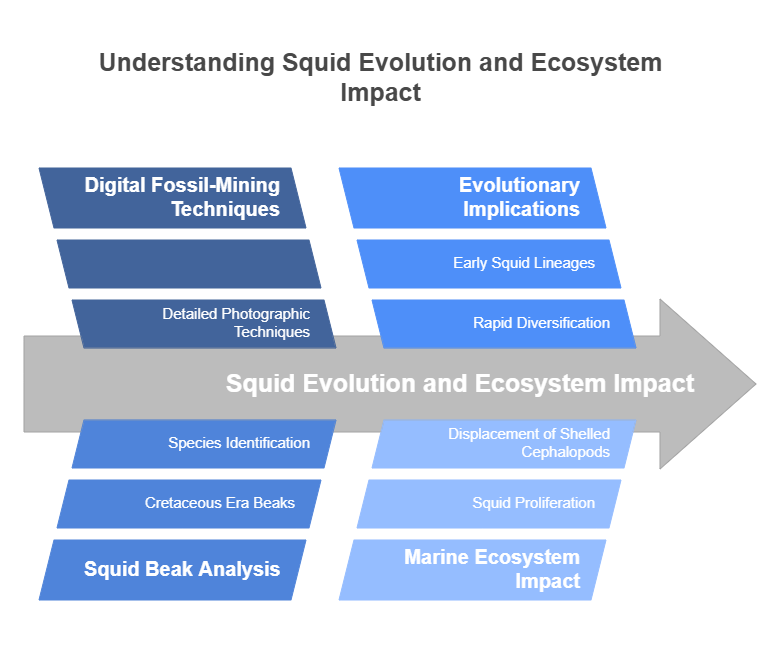
Digital fossil-Mining: Scientists employed something termed digital fossil-mining, where we grind rocks through but with detailed photographic techniques. Such images were merged to come up with 3D models of these contents such as fossils.
-
Fossil beaks: The researchers concentrated on squid beaks, tiny yet vital chitin mouthparts. With the method, they were able to pull out digitally 263 lower squid beaks in rocks during the Cretaceous era.
-
Finding Species: The squid beaks were found in at least 40 species (23 genera and 5 families) and this indicates an earlier and far wider diversity in the evolution of squids than was traditionally believed.
-
Evolutionary Implications: The results demonstrate that existing squids, in the modern lineages such as deep-sea and coast-based species, existed as early as 100 million years ago with the high rate of diversification in only 6 million years.
-
Effect on a Marine Ecosystem: By the Late Cretaceous, squids had proliferated and were overtaking shelled cephalopods such as ammonites. This shows that the squids existed in the marine ecosystem long before the mass extinction that occurred 66 million years ago.
What are the Squids?
-
Squids are a wide range of cephalopods, most of which (more than 300) belong to the order Teuthoidea (or Teuthida).
-
Squids live in the coastal and the ocean waters and differ in size, habitat, and life styles to include rapid swimming and floating plankton.
-
They are ecologically relevant and very essential in the food chain.
-
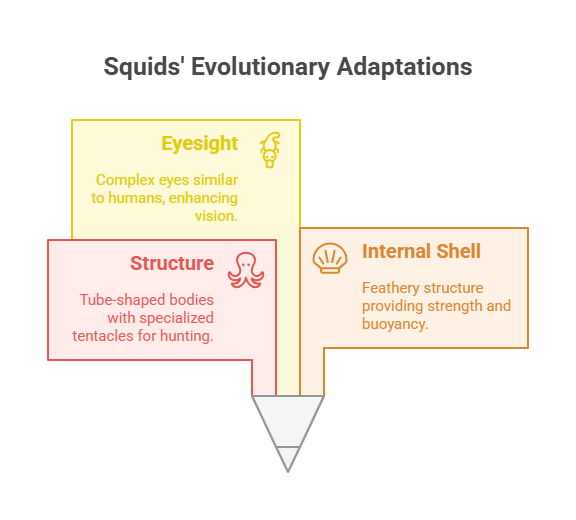
Structure: Squids are tube-shaped with double-headed bodies which are compact. They have two of their 10 arms specialised in the form of long slender tentacles each with four rows of suckers and toothed and horny rings.
-
Internal Shell: The majority of squids have an internal, feathery-shaped structure that is shaped out of a horny material and this gives them strength and buoyancy.
-
Eyesight: The squid eyes are very complicated which is nearly similar to the human one; the eyes are usually placed on the sides of the head.
Reproduction and Life Cycle
-
Egg Attachment: The location and mode of attachment of eggs in different species of squids occur differently. Others have them fastened to floating weeds and others on the sea bed.
-
Development: In some species the young squid are used at hatching and the others have a planktonic larval phase.
-
Bioluminescence: some of the squids have light organs and a fascinating part of their behavior is known as bioluminescence, and it assists them in communication, prey attraction and to recognize various things.
Ecological Role
-
Food Source: Squids are food to a large number of predators such as the sperm whales, bony fishes, and human beings.
-
Size Diversity: The vastness of squid distribution begins with the size because the smallest squid species, i.e. Southern pygmy squid, is only 1.6 cm in length and on the other end, we have the squids that cannot get larger than 43 feet i.e. the giant and colossal squids, and the latter has been reported to grow much bigger at approximately over 65 feet although there are unconfirmed records of it growing to over 65 feet.
Giant squid (Architeuthis)
-
Size and Rarity: The giant squid is one of the largest living invertebrate forms. An entire giant squid carcasses have been discovered that were 3.2 meters long but there are reports to suggest that they could have been as long as 5.5 meters without losing their tentacles.
-
Place and Research: Giant and colossal squid have been estimated to live in the deep ocean waters, and many studies on biology and behavior are ongoing, but work to find these and study them continues.
Conclusion
The fossil-mining innovation made by this digital breakthrough also expands the squid evolutionary history and emphasizes their initial dominance within the marine food webs. It is found that squids were major sea actors in the oceans way before marine mammals emerged, and this has made marine wildlife so diverse and intelligent than it was before.